

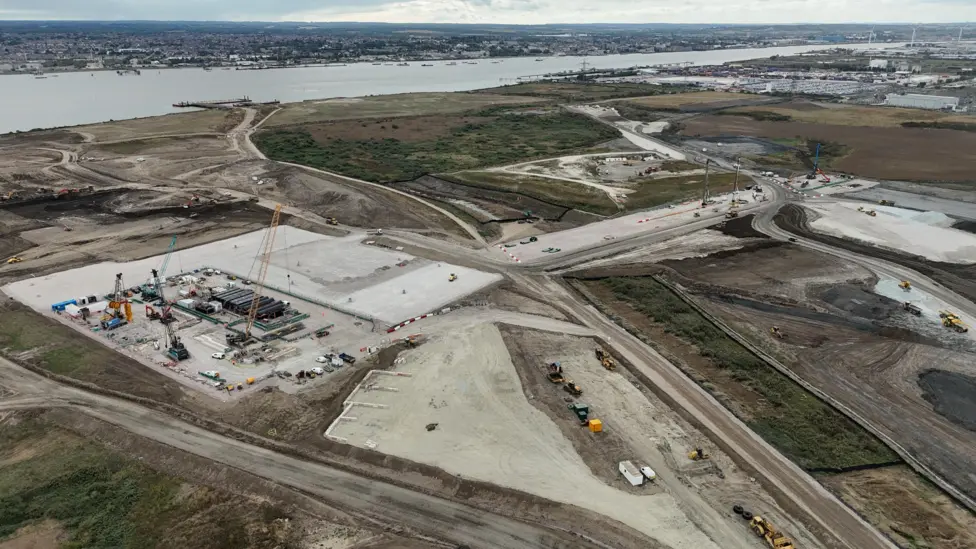
Construction activity is becoming increasingly visible along the route of the £10.6bn Lower Thames Crossing, with environmental works, new construction roads and preparations for the future Thames tunnels progressing in Kent and Essex.
The Lower Thames Crossing is beginning to make its mark on the landscape as National Highways moves ahead with early works for one of the UK’s largest road infrastructure projects.
Activity is now under way at several locations along the planned 14.5-mile route between Kent and Essex, including habitat creation, construction access routes and preparatory work associated with the twin tunnels beneath the River Thames.
The BBC has been given access to some of the initial works, highlighting the transition of the project from years of planning and consenting towards physical delivery.
Among the most visible activity is taking place at Coalhouse Point, where substantial earthworks are creating a new wetland habitat.
National Highways says the wetland will cover an area comparable to approximately 50 football pitches and forms part of a wider environmental programme associated with construction of the crossing.
The work is intended to establish new habitats as areas along the route are transformed during construction.
National Highways has described the Lower Thames Crossing as its most environmentally ambitious major construction project, with measures covering habitat creation, landscaping and efforts to reduce the carbon impact of construction.
However, environmental organisations continue to challenge aspects of the scheme, particularly the impact on ancient woodland and the wider consequences of providing additional highway capacity.
Construction network starts to emerge
Preparations are also advancing for the major civil engineering programme that will follow.
Dedicated haul roads are being established to allow construction vehicles, equipment and materials to move between working areas without relying entirely on the existing local highway network.
Where practical, these routes are also intended to provide connections for construction materials arriving through nearby docks, reducing the number of project-related HGV movements using local roads.
The emerging construction network will become increasingly important as activity intensifies and significantly larger volumes of materials need to be moved around the project.
The centrepiece of the Lower Thames Crossing will be two tunnels carrying traffic beneath the Thames between Kent and Essex.
Tunnel boring is currently expected to begin in autumn 2028. The crossing itself is scheduled to open during the mid-2030s, following development consent being granted in 2025.
Once completed, the new connection will provide an alternative road crossing of the Thames east of London and is intended to relieve pressure on the existing Dartford Crossing.
Environmental debate continues
Opposition to the project has continued despite construction preparations moving forward.
Campaigners argue that the environmental consequences of the new road cannot be fully offset through habitat creation and have questioned whether alternative investment, including greater use of rail for freight, could have reduced demand for additional highway capacity.
Andrea Griffiths of the Campaign to Protect Rural England told the BBC that the organisation remained concerned about both the project’s cost and the loss of ancient woodland in Kent.
Those concerns contrast with National Highways’ argument that the crossing is required to address longstanding capacity and resilience problems around Dartford while providing additional connectivity between the South East, ports and the wider strategic road network.
After years in which the Lower Thames Crossing existed primarily through consultations, planning documents and engineering designs, its physical presence is now becoming considerably more apparent.
With environmental works progressing, construction routes being established and preparations advancing for the tunnels, the project is entering a phase in which its impact on the landscape of Kent and Essex will become increasingly visible ahead of the main construction programme.