

Lancashire’s first Local Transport Delivery Plan has been approved, setting out how £643.1m of devolved transport funding is intended to be invested between 2026/27 and 2029/30.
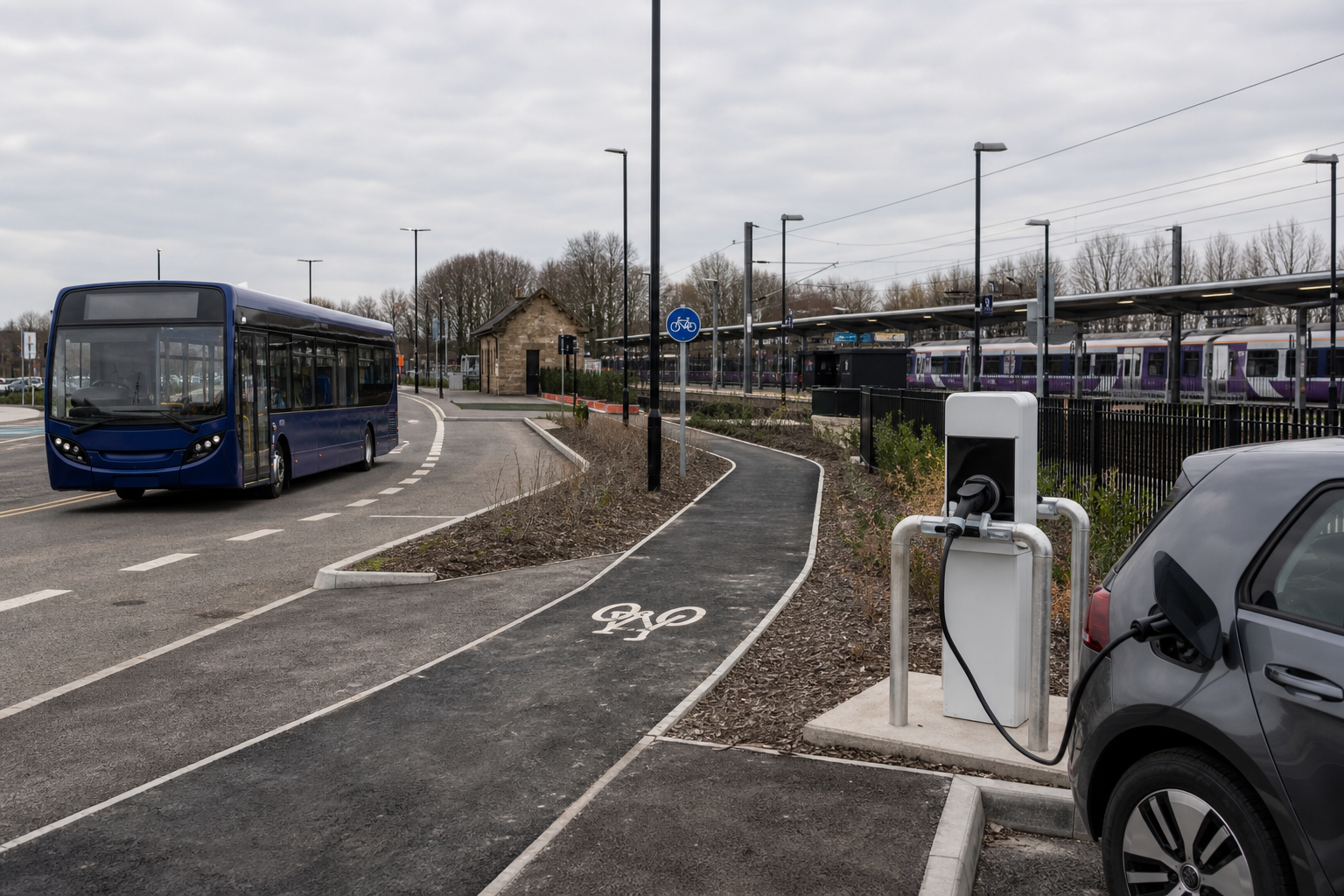
The Lancashire Combined County Authority’s four-year programme contains 20 priorities spanning bus services, active travel, rail and electric vehicle infrastructure. It is a wider transport package rather than a dedicated highways programme.
Capital and revenue funding
The funding package comprises £571.5m of capital funding for the period from 2026/27 to 2029/30, alongside £71.6m of revenue funding running through to 2028/29.
Most of the funding is allocated to wider project areas rather than individual schemes. The plan separately identifies £28.2m for the proposed Cottam Parkway railway station.
The authority’s wider Local Transport Plan includes priorities around public transport, east-west connectivity, rural access, safer streets and the use of technology across the transport network.
Delivery will determine impact
The range of priorities means the funding will support different types of intervention, from physical infrastructure and railway facilities to transport services and improvements to accessibility. Changes to bus provision, active travel routes and rail infrastructure may also influence how people use Lancashire’s road network.
The plan provides a framework for investment, but individual projects will still need to progress through design, approvals, procurement and construction before benefits are delivered to road users and passengers.
The Local Transport Delivery Plan sits alongside an implementation plan setting out how transport improvements are intended to be delivered locally over the same period. The authority’s performance will therefore be judged not only by the scale of the allocation, but by how effectively the priorities are turned into completed schemes and improved day-to-day journeys.