

Delays of up to a decade for new electricity connections could deter infrastructure investment in the UK, according to a report from Centrica and Ceres.
The companies said demand for reliable power is increasing as investment accelerates in data centres and other electricity-intensive developments. Their whitepaper, Solid oxide fuel cells: Enabling growth in a power-constrained world, was published on 17 September.
Power demand outpacing connections
Centrica said Ofgem had warned that grid delays were deferring projects, increasing costs and, in some cases, contributing to cancellations. The report cited forecasts that global data centre capacity will increase from 76GW in 2026 to 182GW by 2030.
It said that, without faster access to electricity, the UK risked falling behind markets that were better positioned to provide power. Centrica and Ceres called for long-term grid investment to be combined with technologies that could meet demand in the near term.
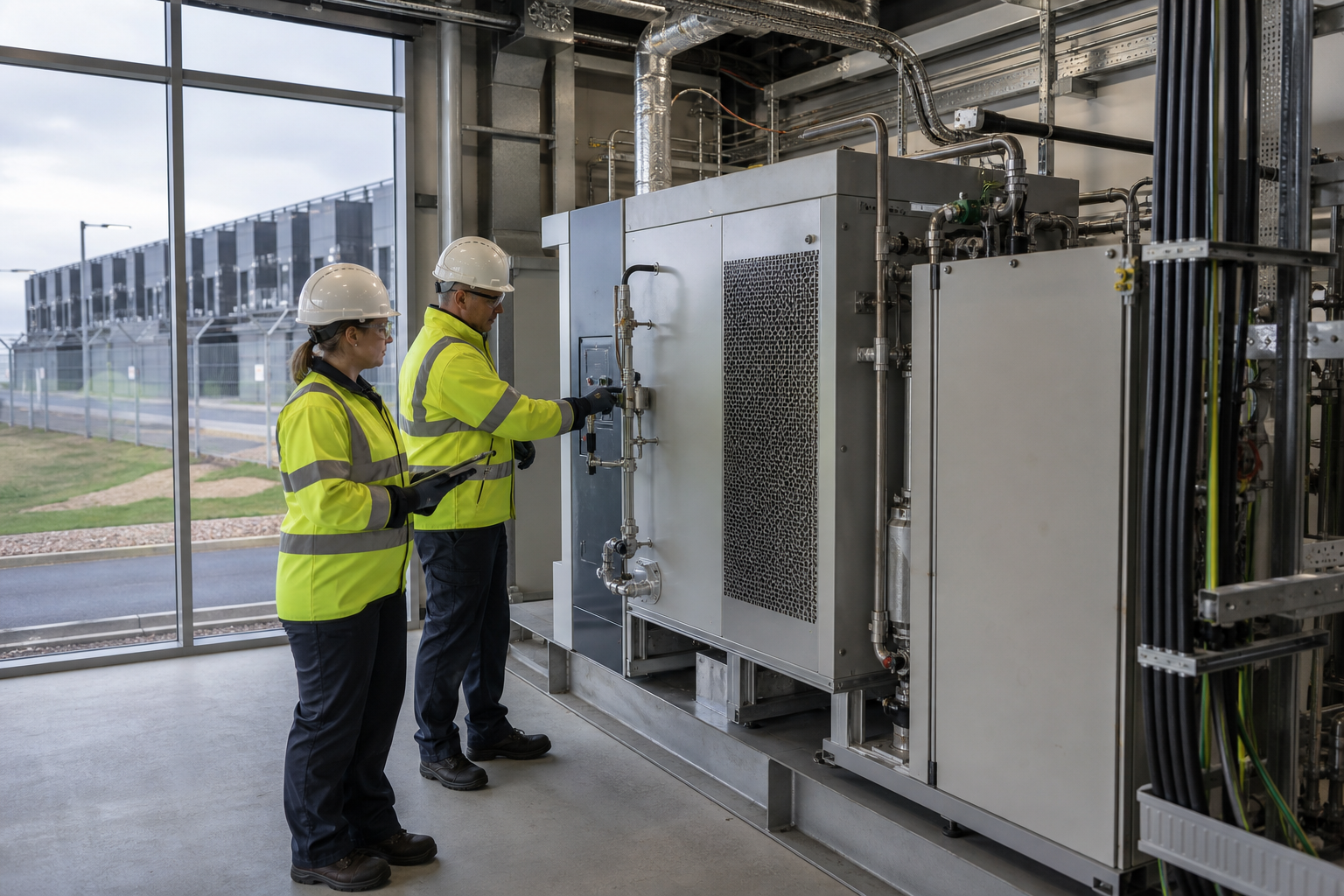
The whitepaper promotes solid oxide fuel cells (SOFCs) as one option for organisations waiting for grid capacity. It claims the systems can be deployed in under 12 months and can achieve electrical efficiency of 60% to 65%, compared with around 35% to 40% for the open-cycle gas turbines typically used for on-site and back-up generation.
Ceres licenses its solid oxide technology to global partners for power generation and hydrogen production. In March 2026, it signed a strategic partnership with Centrica to accelerate the deployment of on-site solid oxide power systems.
Industry and government response
Centrica chief executive Chris O’Shea said: “The UK cannot afford for power connections to become the reason investment goes elsewhere. Grid upgrades, renewables and nuclear are all essential, but they will take time and businesses making investment decisions today need confidence that reliable power will be there when they need it.”
He added that fuel cells could provide dependable on-site power for data centres, hospitals, manufacturers and other critical users, describing the technology as a way to allow the UK to continue growing while the grid catches up.
Ceres chief executive Phil Caldwell said the paper showed how SOFC technology could accelerate access to power, strengthen energy resilience and support sustainable growth.
A Department for Energy Security and Net Zero spokesperson said investment in energy infrastructure would bring more renewable generation on to the grid and reduce reliance on volatile fossil fuel markets. The department said it was working with Ofgem and network companies to reform the connections process and speed up new infrastructure.
Neso said it recognised the importance of connecting viable projects quickly as electricity demand grew. It said reforms led by the government and Ofgem, with support from Neso, network companies and industry, would prioritise projects ready to progress and aligned with strategic energy needs while maintaining system security.
Ofgem targets connections queue
Ofgem said it was working with the government and Neso on reforms to help viable demand projects secure timely and efficient connections. Measures include stronger commitment requirements for speculative applications and consideration of how large energy users, including data centres, could support a more flexible electricity system.
On 17 September, Ofgem also launched a consultation on removing excess battery energy storage system projects from the connections queue. Its proposed Oversubscribed Technologies Commitment Fee would require battery projects to demonstrate a minimum financial commitment, starting at £3,000 per MW and rising to a maximum of £25,000 per MW if the queue remains significantly oversubscribed.
Ofgem director for energy system design and development Eleanor Warburton said Britain had three times more battery capacity in the connections queue than the system was expected to need by 2035. She said the proposed changes were intended to create a more credible queue, allowing viable storage to connect and networks to invest with greater confidence.