

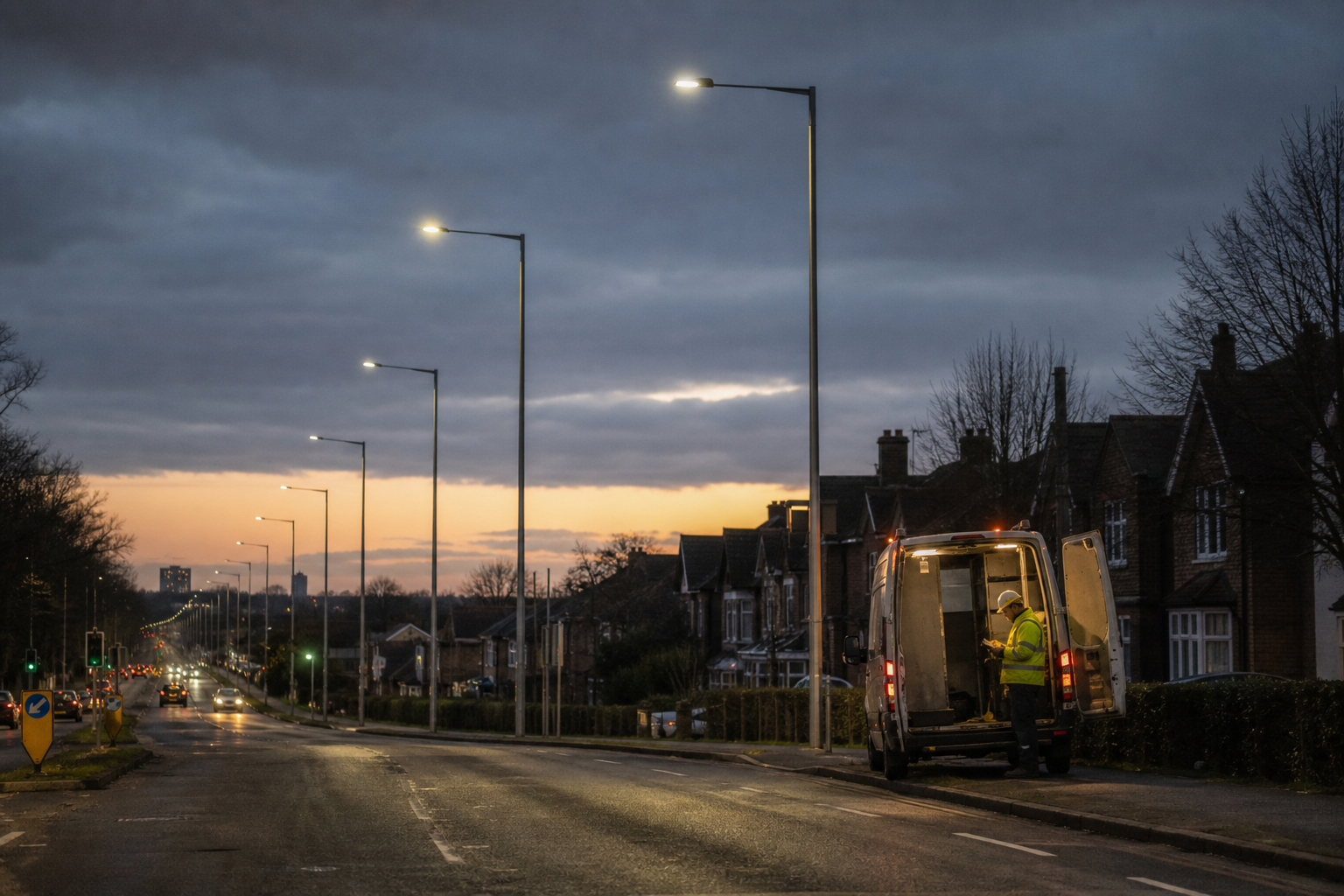
The global installed base of individually controlled smart street lights is forecast to rise from 38.5 million units at the end of 2025 to 87.6 million by the end of 2030, according to research company Berg Insight.
The projected increase of 49.1 million connected lights is being driven by LED renewal programmes, demand for remote controls and pressure to reduce energy use and operating costs.
Europe remains the largest market
Europe accounted for 36% of the global installed base in 2025, ahead of North America on 29%. China represented around 15%.
Smart lighting systems typically use control units that allow individual lights to be monitored and managed remotely. Depending on the system, operators can switch or dim lights and identify faults without relying solely on routine physical inspections.
Berg Insight said lighting control units are becoming part of the standard specification for new LED projects in a growing number of markets. Installing connectivity during an LED replacement programme can avoid delivering remote control as a separate infrastructure project.
Changing maintenance and connectivity
For highway authorities and other infrastructure operators, connected lighting can provide more detailed information about the condition and operation of individual assets. Faults may be identified remotely, allowing maintenance teams to target site visits more effectively, although physical inspection, repair and replacement will remain necessary.
Proprietary radio-frequency mesh networks still make up a large proportion of the installed base, reflecting their use in major projects during the past decade. However, Berg Insight expects cellular technologies to be the fastest-growing connectivity category in the coming years.
The expansion means lighting networks will increasingly require communications infrastructure, control equipment and systems capable of managing large numbers of distributed assets. The core purpose of street lighting remains unchanged, but the equipment is becoming a more connected and remotely managed part of the highway estate.