

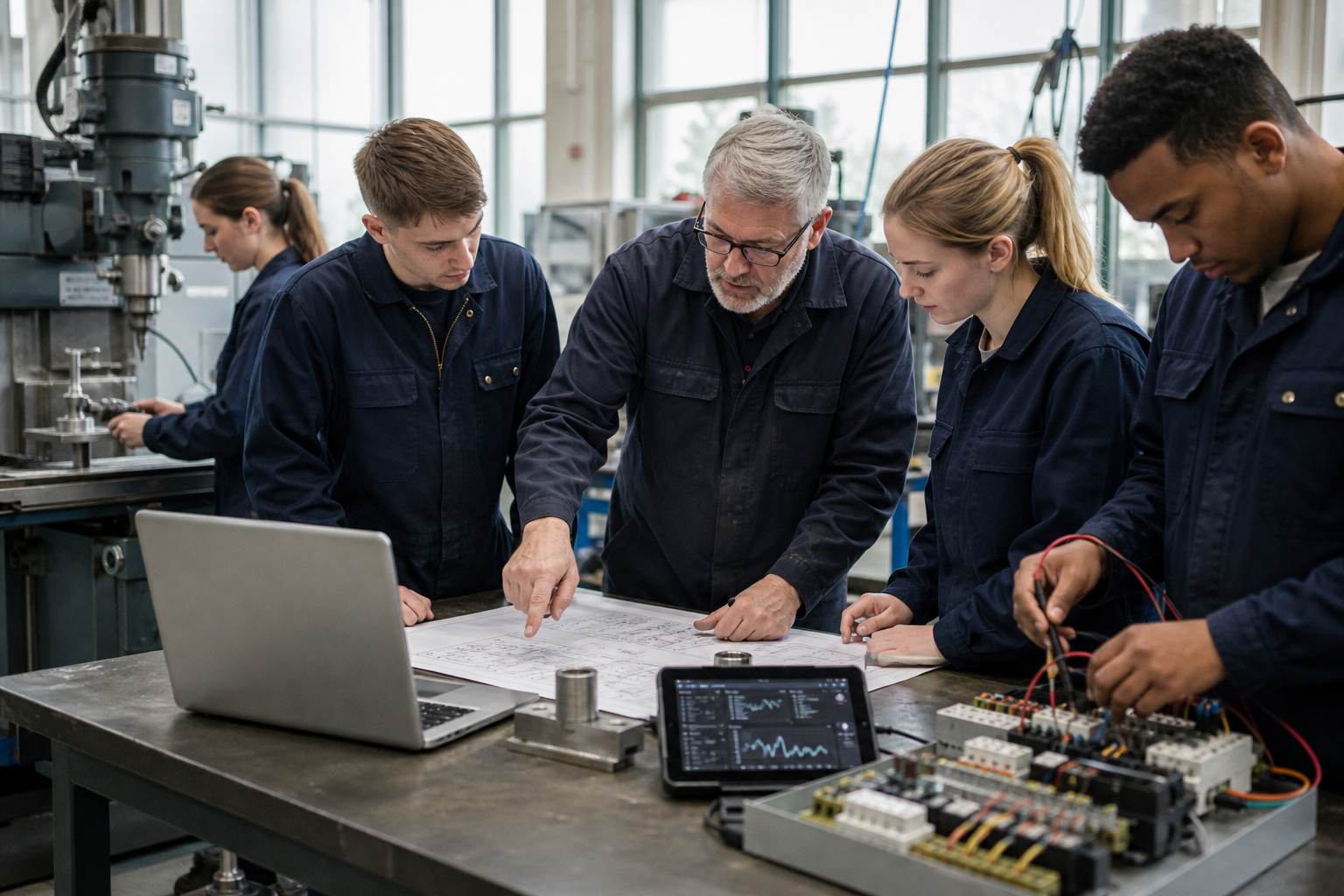
UK engineering employers are being forced to rethink recruitment and retention as demand for skilled workers continues to outpace supply, according to Salko UK operations manager Sim Sharphouse.
Industry bodies estimate that around 124,000 new engineers and technicians are needed each year to meet current and future demand, while the annual shortfall is running into the tens of thousands. The pressure is being felt across sectors including energy, industrial engineering and manufacturing.
Demand for specialist skills
According to the Institution of Engineering and Technology (IET), 76% of UK engineering employers struggle to recruit for key roles. Technical and specialist sustainability capabilities are among the most difficult to find, with electrical and maintenance positions particularly affected.
These roles support the upkeep of existing infrastructure as well as the delivery of net zero objectives and major government projects. At the same time, digitalisation is changing the skills employers require, with capabilities such as predictive maintenance and data-led equipment monitoring increasingly being combined with traditional engineering expertise.
More focus on developing existing staff
Sharphouse said organisations were responding by investing more heavily in internal development rather than relying solely on experienced hires. Apprenticeships provide practical, sector-specific training, although they require employers to make a long-term commitment before the benefits are realised.
He also advocated “improverships” for existing employees. These would use skills assessments to identify knowledge gaps and determine where additional training is needed across a team.
Salko UK offers work experience placements, apprenticeships and improverships. Sharphouse said he began his own career as an apprentice with the company before progressing to become operations manager.
Retention becomes a strategic priority
Sharphouse said tackling the talent gap depended on retaining existing employees as well as recruiting new ones. In his view, this required more than competitive pay, with career progression, workplace culture and support structures also influencing whether staff remained with an organisation.
Measures introduced by Salko UK include regular check-ins, bonuses and incentives, team activities, access to an on-site gym and personal training classes, counselling and trained mental health first aiders.
Sharphouse said earlier support was intended to help employees before they reached a crisis point. He added that closing the wider skills gap would require cooperation between businesses, educational institutions and government, while employers and recruiters would need to modernise their approach to remain competitive.