

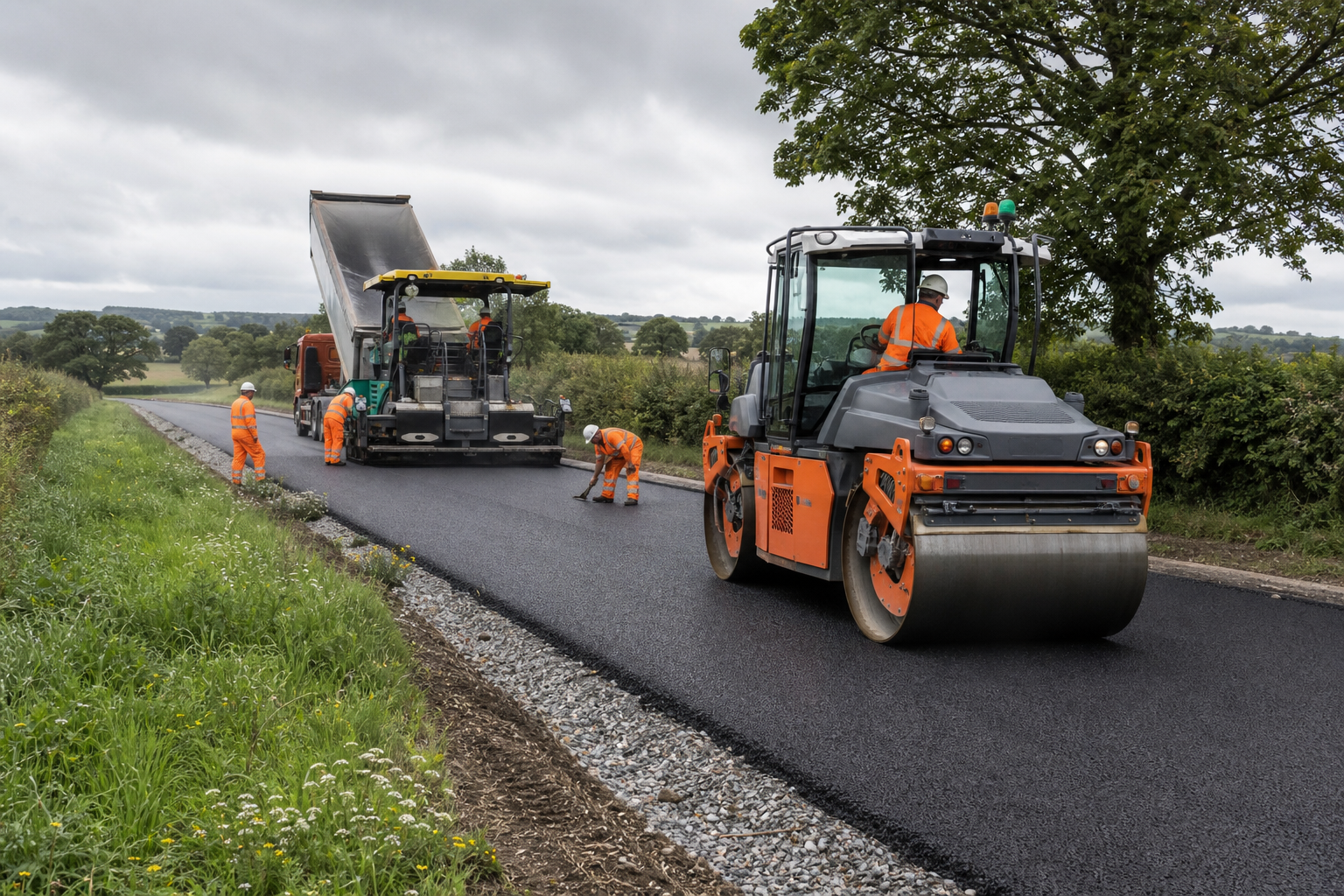
A road renewal project in Cheshire has cut embodied carbon by 54.1% by combining recycled aggregates, biochar and a plant-based binder in a 5,330m² carriageway resurfacing scheme.
The project on Corkscrew Lane was delivered by Colas in partnership with Cheshire West and Chester Council, Breedon and Multipave Infrastructure. It has received the Steve Berry Innovation Award at the Highways Awards and has been shortlisted for the Highways UK Excellence Awards.
Recycled and bio-based materials
According to the project team, lifecycle assessment and independent analysis found that the installed solution produced 54.1% less embodied carbon than traditional hot-laid construction, measured from material production through to laying.
The scheme also reduced virgin material use by 55%. Its binder course used Colas’ Valorcol cold recycled bound material, incorporating reclaimed asphalt pavement, incinerator bottom ash aggregate and biochar. The material was produced and laid at ambient temperature using bitumen emulsion manufactured at Colas’ Warrington plant.
The surface course used Colas’ Vegeroad bio-binder, introduced to the UK through the project, alongside plant-based lignin. The materials reduced the requirement for fossil-derived bitumen while enabling biogenic carbon storage within the road.
Colas said the technologies had been developed in France and adapted for use in the UK. The project is intended to demonstrate how low-carbon techniques can be applied to routine highways maintenance without reducing performance, durability or resilience.
“This project demonstrates how innovation can help transform the way we maintain and renew our road networks. What makes this scheme particularly exciting is the collaboration behind it. Working closely with Cheshire West and Chester Council, Breedon and Multipave Infrastructure, we have successfully adapted technologies already used in France for the UK market, creating a practical pathway towards more sustainable road maintenance. The results achieved on Corkscrew Lane highlight the potential for these solutions to be deployed at scale and support the industry’s journey towards net zero,” said Oliver Thomas of Colas.
Karen Shore, Cheshire West and Chester Council’s cabinet member for transport and highways, said: “As a Council, we are committed to finding innovative ways to maintain and improve our roads while reducing our impact on the environment. This project demonstrates how partnership working and new technologies can help us make significant progress towards our carbon reduction goals without compromising the quality and resilience of our highway network.
“The results achieved on Corkscrew Lane show the potential for sustainable solutions to play an increasingly important role in the future of highways maintenance, helping us deliver better outcomes for both residents and the environment.”