

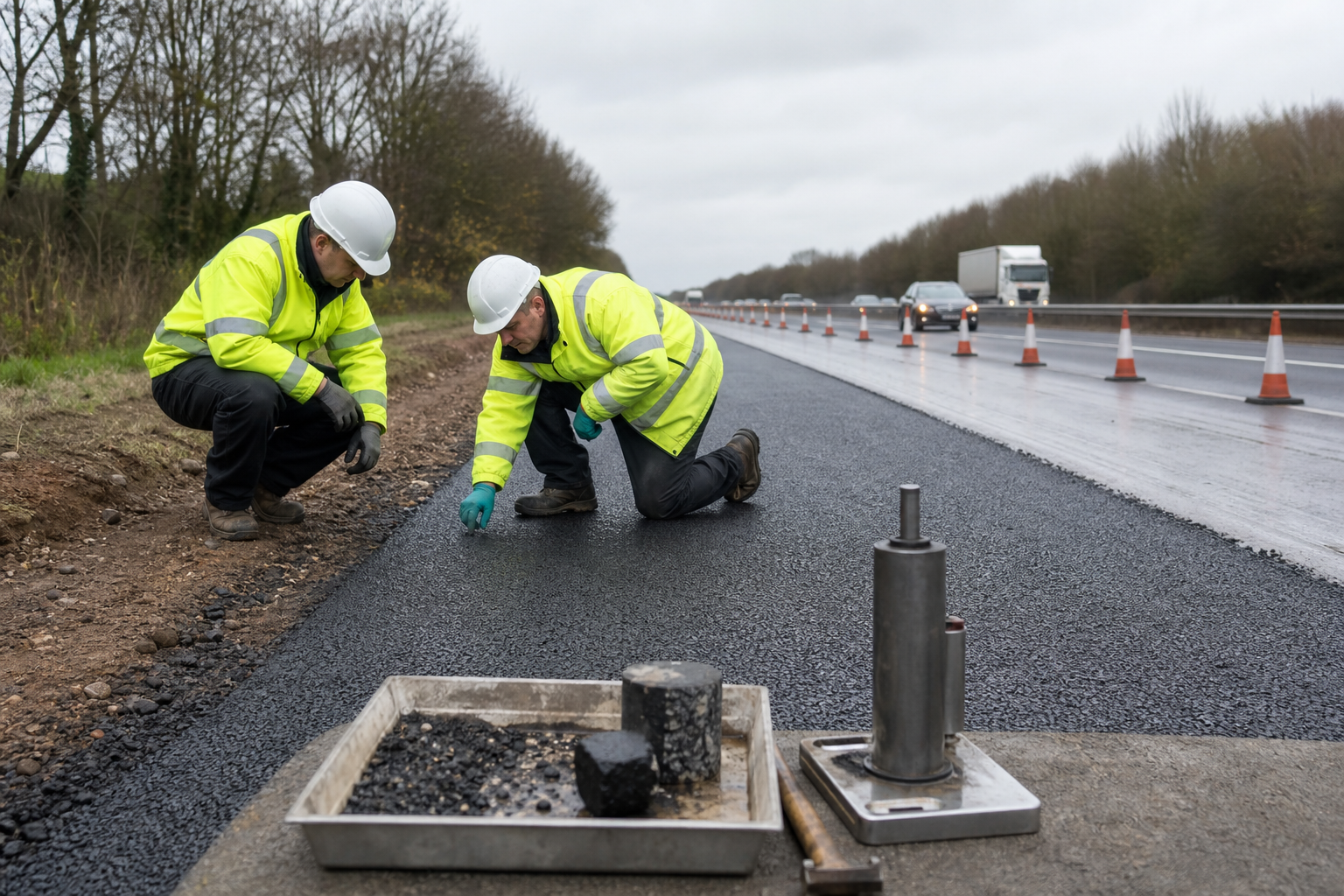
Graphene is back in the UK highways debate, but its route from advanced material to routine road product remains dependent on evidence from construction, traffic and maintenance conditions.
The renewed interest follows a UK technology growth story, although the available information does not identify a specific project, product or road scheme. The central question for highway authorities and contractors is whether graphene can deliver measurable improvements in durability, service life or maintenance performance.
From material properties to road performance
Graphene is a form of carbon that has attracted research and commercial interest across several industries. In highways, it would generally be incorporated into another material, meaning the relevant test is not the material’s properties in isolation but the performance of the resulting road product.
Carriageways face repeated loading from traffic, water and changing weather throughout their service life. A material that reduced deterioration could potentially lower the frequency of interventions, disruption and repeat use of construction materials.
However, those benefits cannot be assumed from graphene’s underlying characteristics. They need to be demonstrated in the specific road application and under conditions that reflect how the network is built, used and maintained.
Evidence remains the adoption hurdle
Before a new product can become standard practice, it must be manufactured consistently, integrated into existing construction processes and laid reliably by contractors. It also needs to meet relevant specifications and generate enough performance evidence for clients and asset managers to justify choosing it over established alternatives.
Long-term economics will be equally important. Even if graphene-enhanced materials offer better technical performance, adoption could be limited if the additional cost exceeds the value of the improvement. That calculation is particularly significant for local highway authorities managing extensive networks and constrained maintenance budgets.
The industry is increasingly assessing materials through whole-life value, including potential reductions in waste, intervention and service disruption. A longer-lasting carriageway could support that approach, but only if the claimed improvement is demonstrated over a sufficiently meaningful period.
Potential is not yet standard practice
Commercial growth can indicate continuing confidence and investment, but it does not by itself establish that graphene-based road materials are ready for widespread deployment. The decisive evidence will come from consistent supply, successful installation and performance under real traffic and weather conditions.
For drivers, the chemistry matters less than whether a carriageway lasts longer and needs fewer repairs. For highways professionals, the immediate issue is whether the available evidence is strong enough to support specification and procurement decisions.
Graphene therefore remains an area to watch, but its transition from promise to practice will depend on proving value on the road rather than in the laboratory alone.