

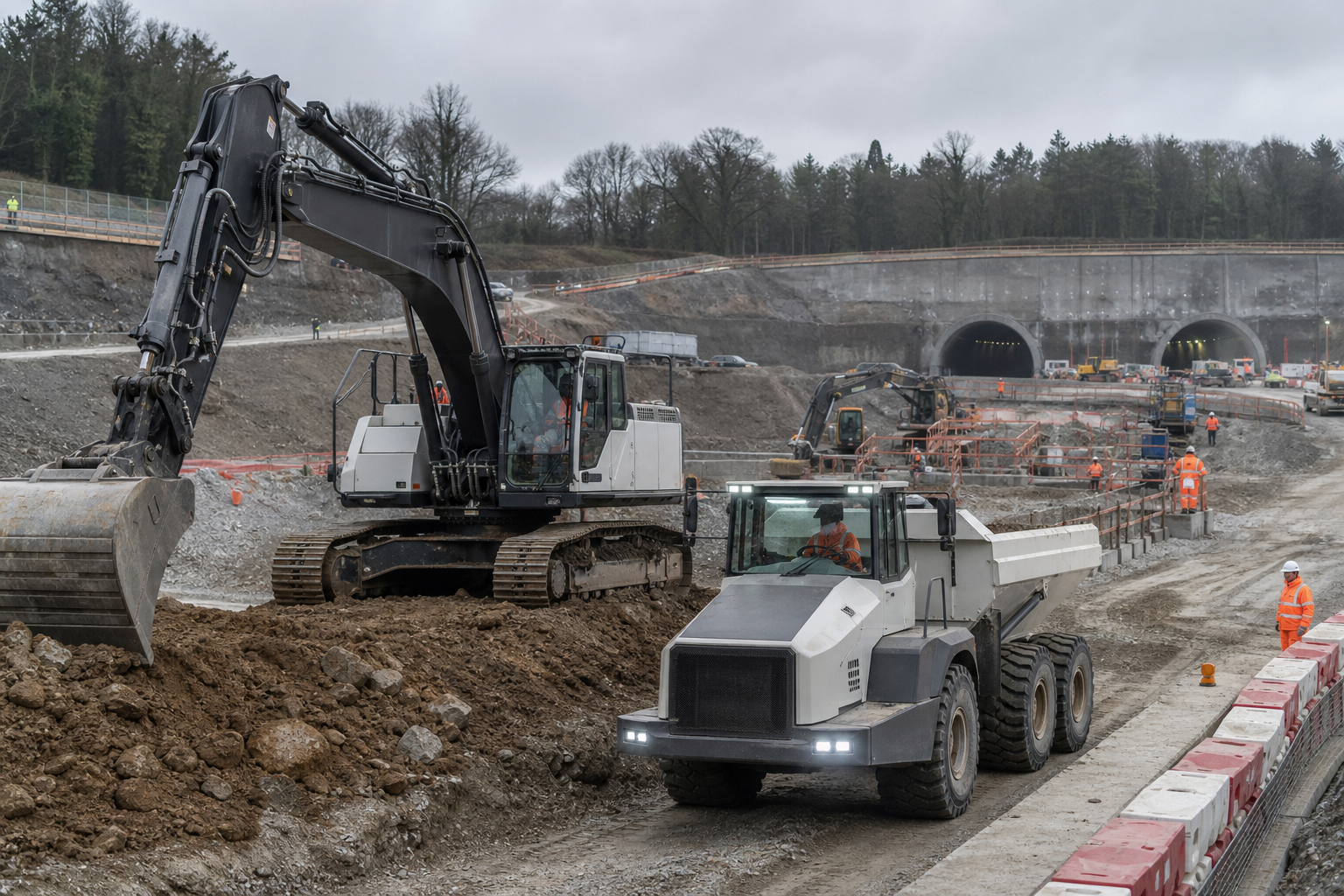
More than 30 electric, HVO- and hydrogen-powered machines are now operating on the Lower Thames Crossing, with the fleet expected to grow to around 150 during peak construction in 2028.
National Highways said the project, which began work in early 2026, is targeting carbon-neutral construction and is intended to become the first major infrastructure project in the UK to achieve that goal. The Construction Equipment Association has predicted that the deployment could be one of the largest of its kind for an infrastructure project anywhere in the world.
Diesel-free construction sites
Equipment currently in use includes 20-tonne excavators, rollers, tractors, telehandlers and hydrogen generators. Diesel has not been permitted on the project’s construction sites since 2025, according to the project’s 2025–26 Sustainability Report.
Matt Palmer, chief executive officer of the Lower Thames Crossing, said: “We’re making real progress on the Lower Thames Crossing, and our ambition to make this the greenest road ever built in the UK means we’re cutting carbon on a scale that hasn’t been tried before. By putting these zero-emissions machines to work, we’re showing that the construction industry can break its reliance on diesel and these innovative low-carbon approaches can become normal practice on projects across the UK.”
The crossing was designated as a carbon pathfinder project, with the aim of demonstrating how lower-carbon construction methods could be applied at scale. The approach has since been adopted by more than £30bn of planned projects, including Sizewell C, Anglian Water and East West Rail schemes.
Hydrogen and local investment
Green hydrogen is being supplied by British firm GeoPura, which has invested in a production facility at the Port of Tilbury. Construction at the northern tunnel portal is being powered entirely by hydrogen, the report said.
The sustainability report also highlights the opening of the project’s first Skills Hub in Gravesham. More than 150 local people have received free construction training, while the project team has spoken to more than 600 local businesses about opportunities to win work.
A new nature site near Thong has also been completed. It is described as the first of more than 3,000 acres of green space planned as part of the crossing, alongside archaeological investigations across the area.
The Lower Thames Crossing is intended to reduce congestion at the Dartford Crossing and provide a more reliable route between ports in the South East, the Midlands and the North. It received planning permission in March 2025 and was allocated the final part of its public funding in November 2025, enabling construction to begin and private investment to be sought.
The new road is expected to open in the early to mid-2030s.