

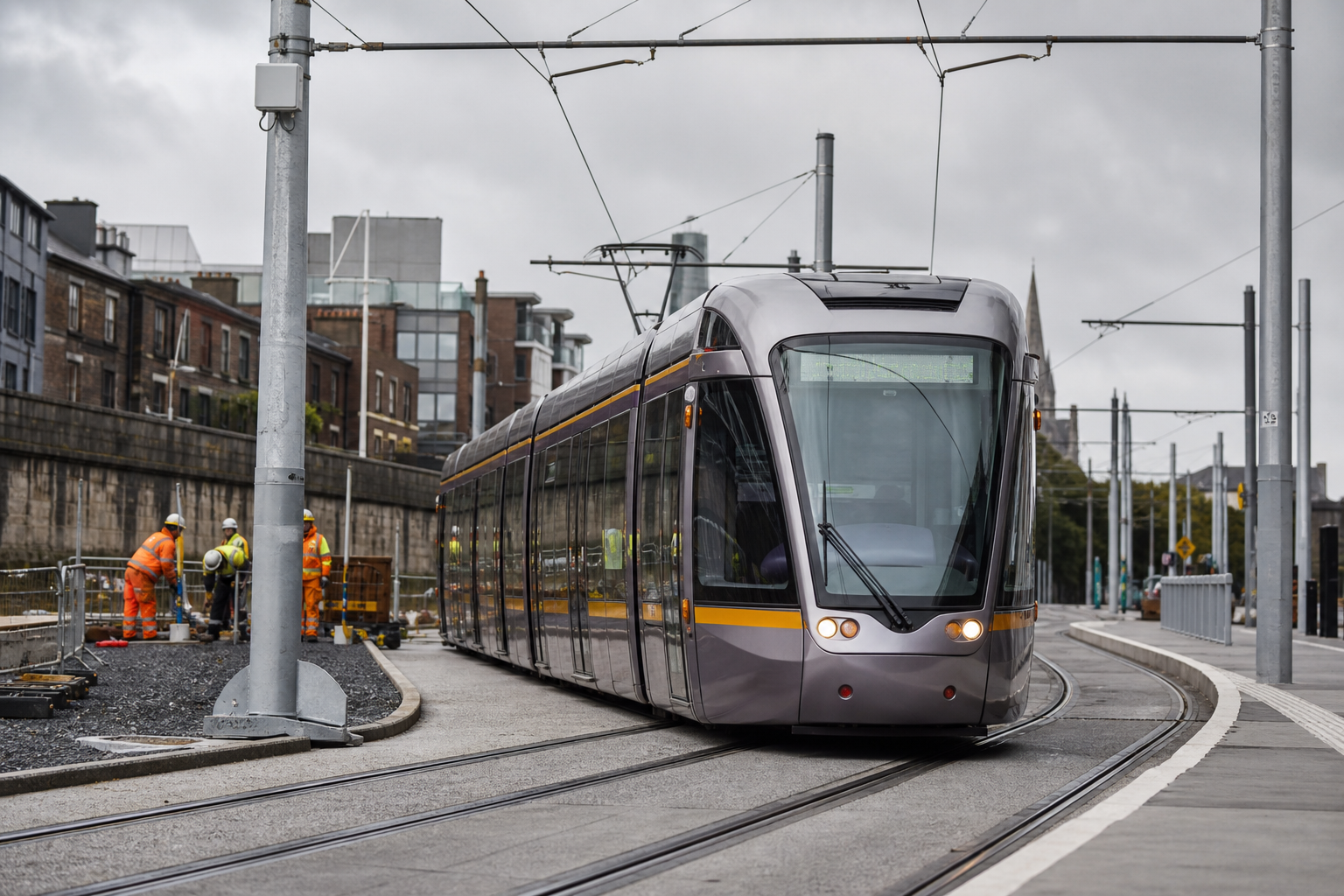
Amey Infrastructure Ireland has been appointed to Transport Infrastructure Ireland’s (TII) Luas Overhead Contact System Works Framework.
The four-year framework is valued at approximately €5 million a year and covers the design, supply, installation, testing and commissioning of overhead contact system renewals, upgrades and new works across the full Luas network. It includes options to extend for up to a further four years.
Works across both Luas lines
The framework covers the 70km Luas system, including the Red Line and Green Line. Amey will produce detailed construction designs and deliver safety-critical overhead contact system works in a live operational environment.
TII said the programme would support the safe and reliable operation of one of Ireland’s most heavily used urban transport networks, while strengthening its light rail engineering and asset management capability.
“This new partnership with Amey, which is part of a broader initiative by TII to strengthen its light rail engineering and asset management capabilities and capacity, will facilitate the renewal of the ageing overhead catenary systems in the coming years to safeguard existing light rail services, as well as to facilitate further enhancements of services across Dublin in the coming years,” said Cathal Masterson, TII’s director of commercial operations.
Amey said its work would draw on its experience in electrification and operating on busy passenger rail systems, with delivery planned to minimise disruption to Luas services.
“The Luas is part of everyday life for people across Dublin, so being trusted to deliver overhead line works on this network is a responsibility we take seriously,” said Ewen Morrison, account director Ireland at Amey.
“This framework reflects our experience delivering complex electrification projects safely, efficiently and with minimal disruption. Our focus will be on keeping the Luas running reliably for passengers today while supporting the long-term resilience of the system for a growing city.”