

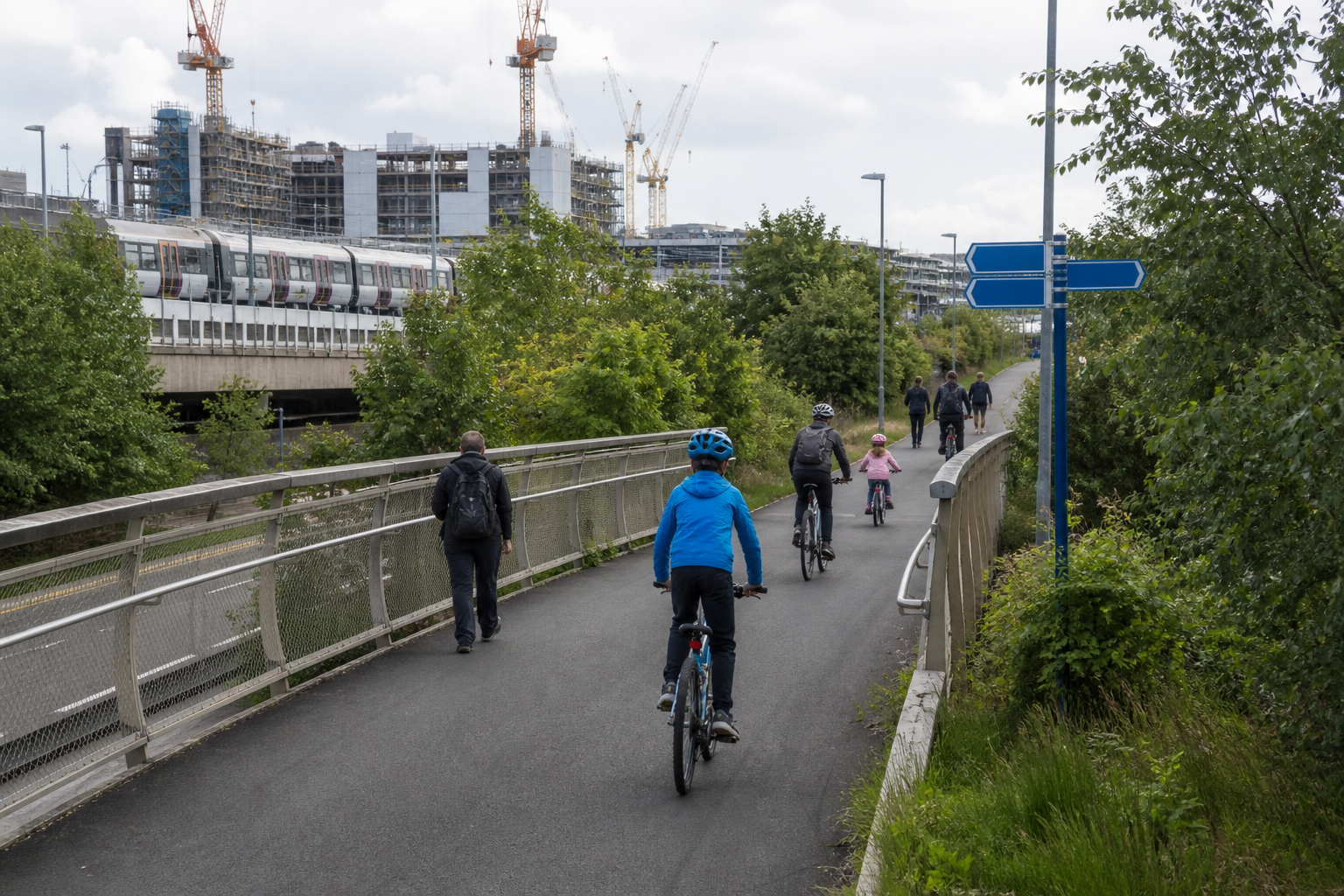
The Government is to invest £104m in the National Cycle Network, supporting the maintenance and expansion of routes across the UK as part of a wider active travel programme.
The funding will be used for work including bridge repairs, updated signage and new routes around the HS2 line. The network covers about 12,000 miles.
Local delivery
Transport Secretary Heidi Alexander announced the investment at the Making Active Places conference, where she said walking, wheeling and cycling should be treated as core elements of the transport system rather than an additional consideration.
“The days of active travel being an afterthought, or a bolt-on, must end,” Alexander said. “Instead, I think we need to see walking, wheeling and cycling for what they are: essential parts of everyday journeys.”
The announcement forms part of a wider commitment to invest billions in active travel by 2030, with most funding expected to be devolved to local authorities. The Government also wants at least 60% of children to walk or cycle to school by 2035.
Ministers have agreed with mayors to deliver 3,500 miles of footways, safer crossings and cycle lanes. Alexander said decisions on pavement parking, school streets and local walking and cycling routes should be made by local leaders, within a national framework and with support from Active Travel England.
Bee Network cited as example
Alexander highlighted Greater Manchester’s Bee Network as an example of active travel being integrated with wider transport planning. She said it recorded 700 million active travel trips last year, with schemes including the Chorlton Cycle Way and Oxford Road contributing to increased use.
The Transport Secretary said active travel could help reduce congestion, support high streets and improve health, as well as easing pressure on the NHS. She also argued that better connections should give people more choice over how they travel.
“I’ve always felt the levers of power must be held locally,” Alexander said. “The aim is to give people greater choice over how they travel, while making different parts of the transport network work together.”