

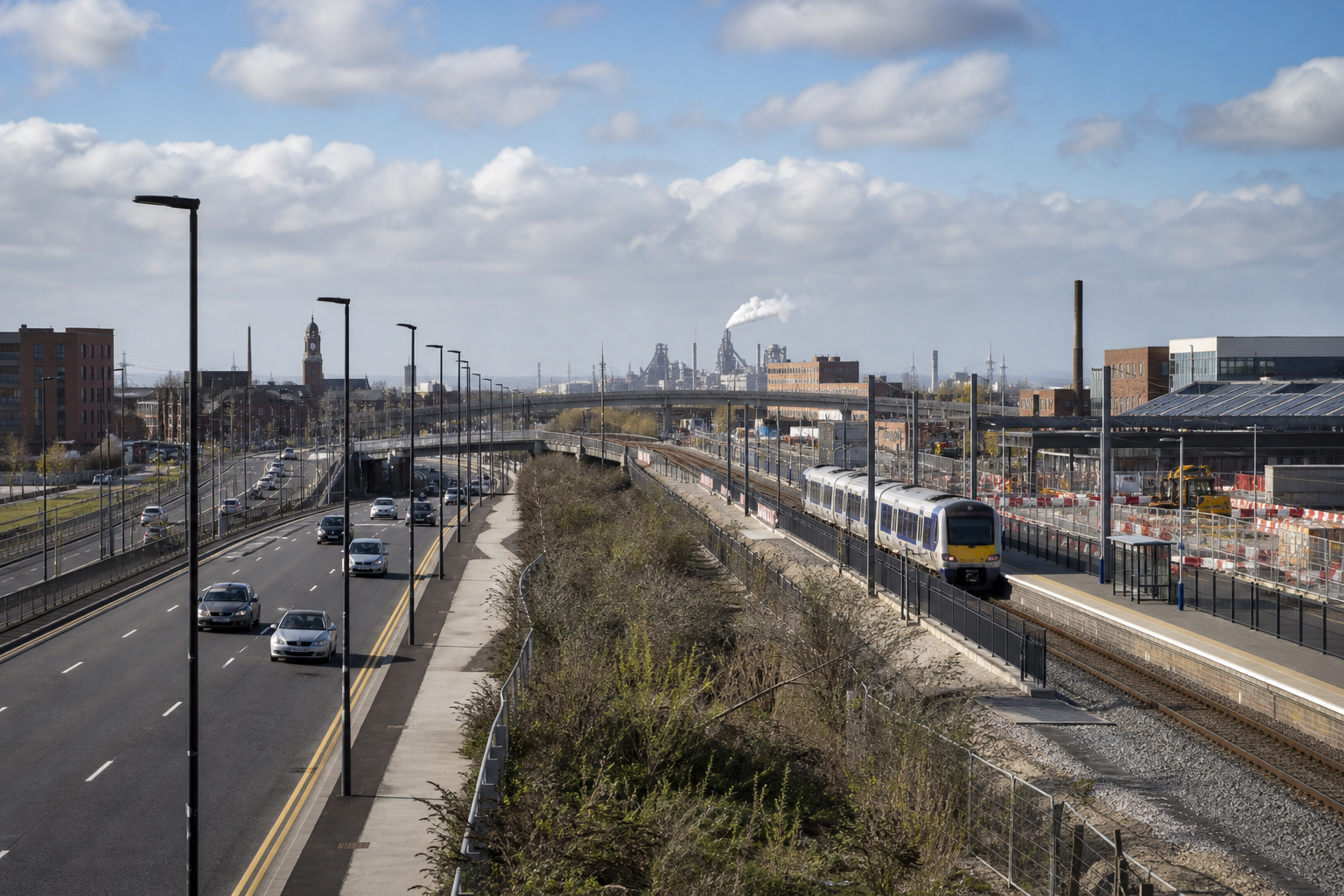
The Tees Valley Combined Authority (TVCA) has approved a transport investment programme worth almost £1.34bn through to 2031/32.
The authority will now finalise its Local Transport Delivery Plan before submitting it to the Department for Transport. More than 20 projects are included, with most of the funding previously allocated through the second round of the City Region Sustainable Transport Settlement (CRSTS2).
Major schemes
CRSTS2 has committed £978m to Tees Valley, including £916m in capital funding. The programme includes:
- the £250m Darlington Northern Link Road;
- a £20m trackless tram scheme;
- improvements to Middlesbrough bus station;
- a new station at Teesside International Airport; and
- maintenance and other works associated with the Transporter Bridge.
Across the wider programme, TVCA has identified £987m of capital funding and £98m of revenue funding. A further £136m is earmarked for spending beyond the end of the current Mayoral Transport Fund allocation in 2031/32.
TVCA expects spending to reach about £104m in 2026/27, increasing to between £200m and £300m a year over the following five years.
Delivery and affordability risks
An independent review by consultants Stantec described the investment plan as “strategically ambitious and generally deliverable”, but raised concerns about the scope, cost and programme requirements of several projects.
Middlesbrough bus station and the proposed Teesside International Airport station were among the schemes identified as needing further design work, business-case development, stakeholder engagement and funding certainty.
The review also highlighted affordability pressures, with the estimated cost of several projects exceeding their indicative funding allocations. Maintenance work on the Transporter Bridge is among the schemes affected.
TVCA said delays to several projects had left funding available that was originally expected to be spent between 2022 and 2026. That unspent money has been incorporated into the wider programme.
The authority has included 20% over-programming in its capital plan to provide headroom against rising project costs.