

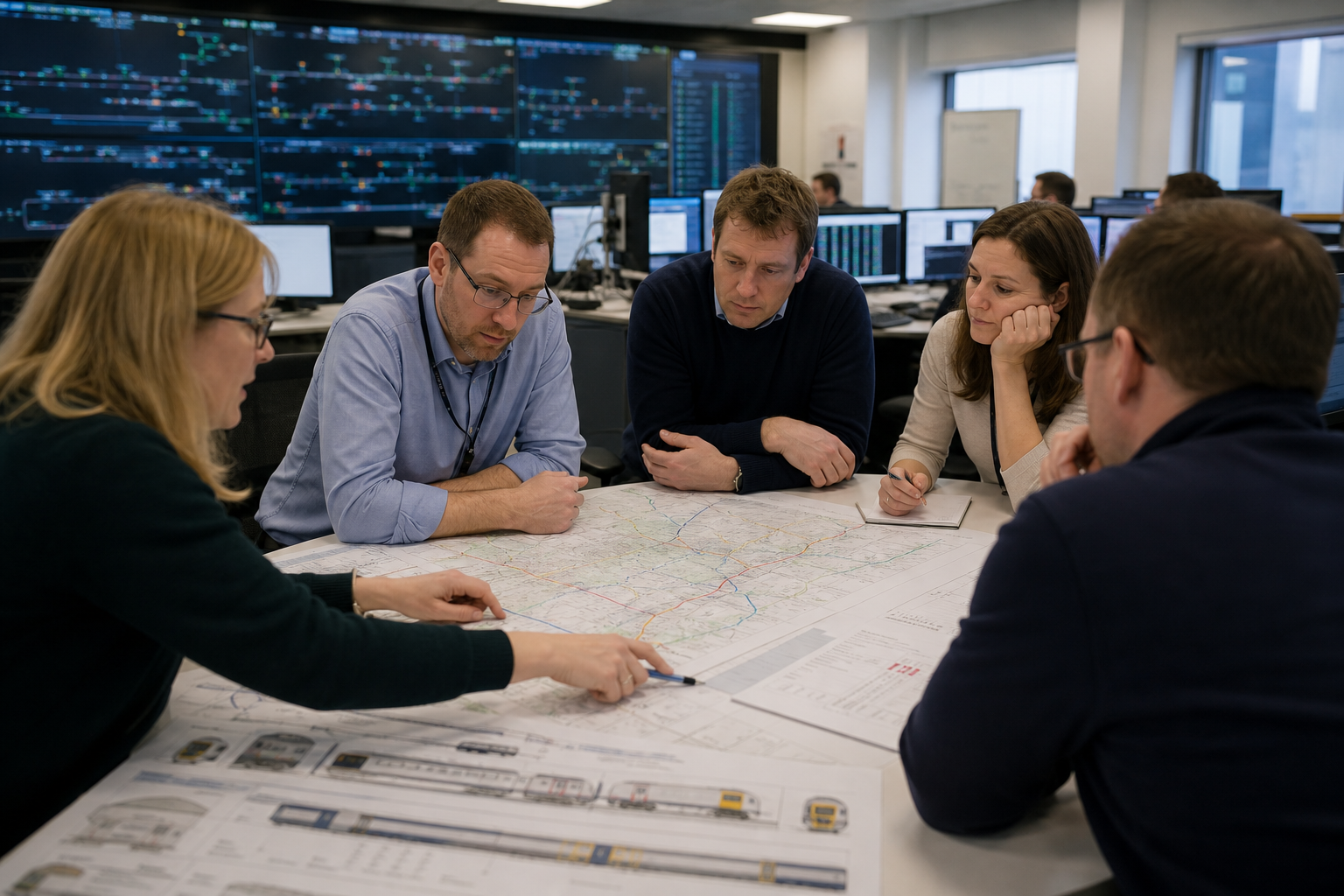
The Railway Industry Association (RIA) has called for clearer funding and delivery plans as the Government moves towards public ownership of rail and greater regional control over transport investment.
In a guest article, RIA policy and public affairs director Robert Cook said the Railways Bill’s proposed creation of Great British Railways (GBR) as a single “directing mind” for track and train could reduce fragmentation and support longer-term planning.
Fleet strategy needs delivery detail
The Rolling Stock and Infrastructure Strategy, published on 28 September, proposes standard fleet families to replace the current range of train designs. The RIA said this could create a more predictable pipeline for procurement, refurbishment and enabling works, but warned that the strategy is not yet a funded delivery plan.
Cook said the forthcoming Fleet & Infrastructure Plan should set out indicative fleet volumes, timescales, electrification priorities and funding status. He also called for further analysis of freight requirements, noting the Government’s target to increase rail freight by 75% by 2050 and the likely need for a core electrified freight network to support decarbonisation.
GBR’s potential role in maintenance, depots and rolling stock will also need to be coordinated with devolved authorities and operators outside its direct control, according to the RIA.
Suppliers seek longer-term visibility
The association said suppliers want early engagement, outcome-based specifications, visible workbanks, simpler procurement and longer-term partnerships from GBR. It added that more than two-thirds of rail investment flows through the supply chain, making the new organisation’s commercial approach important to the industry’s capacity and planning.
The RIA is also pressing for protection of five-year funding settlements and for GBR to be designed to accommodate private investment alongside public funding. It said decisions on direct train purchases and long-term maintenance would need to be assessed case by case, including their wider cost and risk implications.
Devolution widens the investment landscape
Cook said the expansion of mayoral strategic authorities would require suppliers to engage with more regional decision-makers and delivery bodies. He pointed to the Liverpool–Manchester Railway Board, established by Prime Minister Andy Burnham and Liverpool City Region mayor Steve Rotheram, as an example of greater regional collaboration.
The RIA is proposing Station Investment Zones to bring together funding from beneficiaries including mayors, developers and investors. It said the Rail Minister had welcomed the proposal and that it was working with Network Rail to identify potential pathfinder schemes.
Cook argued that the long-term funding case for rail will depend on its contribution to wider priorities, including jobs, housing, health, education, decarbonisation and commercial development. In his view, GBR’s success will depend not only on reducing internal interfaces but also on integrating rail planning with broader economic and public policy objectives.