

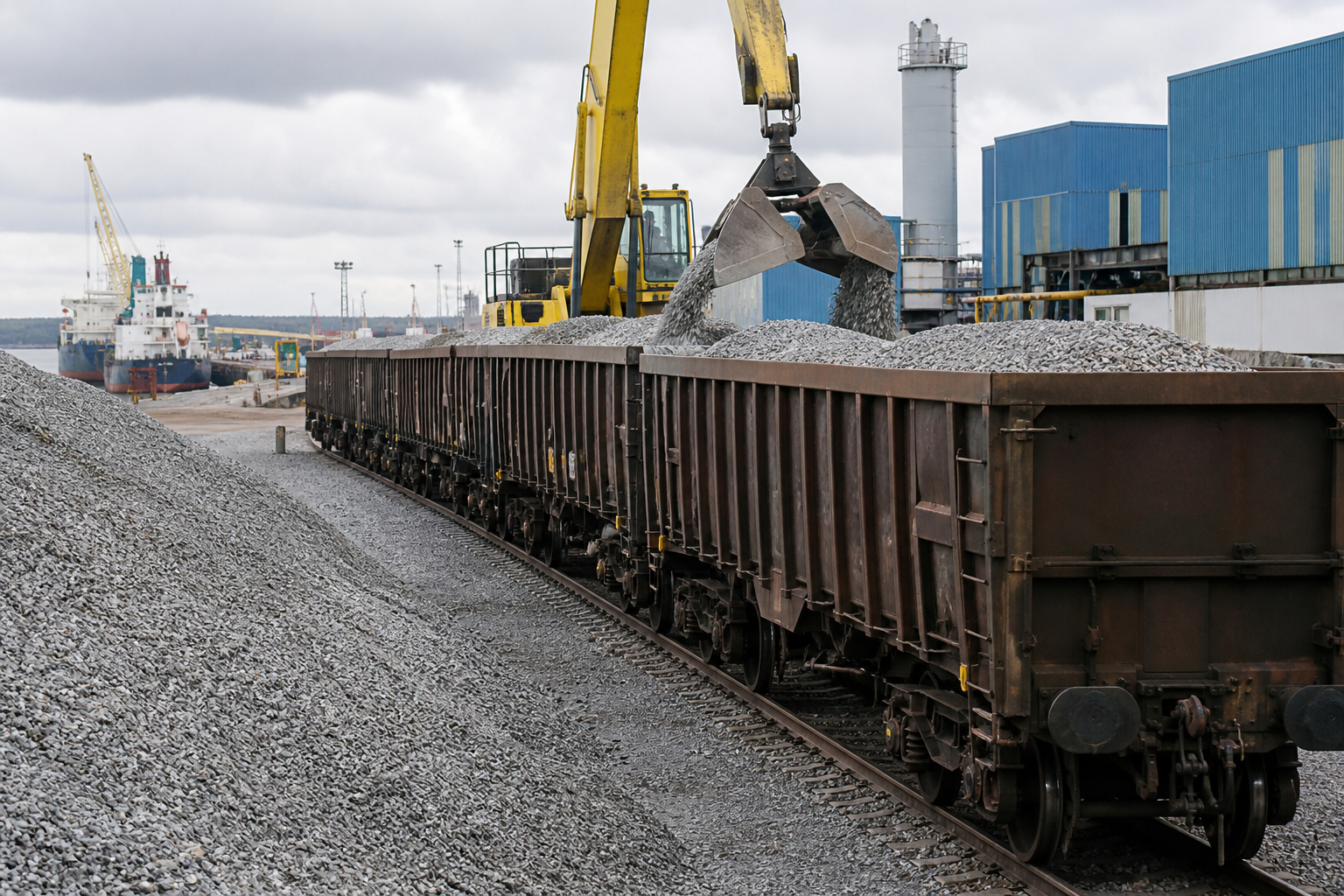
Holcim UK has launched a rail freight service into the Port of Sunderland, with plans to move approximately 100,000 tonnes of aggregate during its first year.
The service began operating this summer and currently runs around once a week. Holcim said 14 services have so far delivered nearly 20,000 tonnes of material to the port.
Existing railhead put to work
Each train consists of 19 open-box wagons and carries about 1,425 tonnes of aggregate. The material will be used to produce asphalt for Holcim’s Northumbrian roads business, contractor Hulands Asphalt and other customers across the North East.
Holcim said the route was developed in response to changing arrangements at the nearby Port of Tyne and increasing pressure on established road and sea logistics routes. It identified Sunderland’s existing railhead as an alternative that could reduce dependence on road haulage while using the port’s current handling and storage facilities.
The Port of Sunderland can store up to approximately 6,000 tonnes of material, according to Holcim. The open-box wagons require more manual handling than bottom-discharge wagons, but can be unloaded using the equipment already available at the port.
Holcim developed the service with logistics partner GB Railfreight after agreeing terms with the Port of Sunderland, which is seeking to increase bulk freight volumes and rail traffic.
Holcim UK regional operations manager Mustapha Nyass said: “Reliable asphalt supply is critical to keeping North East construction and infrastructure projects moving, from road maintenance to wider regional development. This new route gives us a stronger, more resilient way to get essential materials into the market, so customers can plan with greater confidence.”
He added: “By using Sunderland’s railhead, storage space and port capability, we have created a practical new route that supports local construction, strengthens our asphalt operations and gives us room to grow when demand increases.”
Holcim UK general manager for rail Damien Preece said the service depended on aligning the material supply, wagons, train paths, route knowledge and receiving-site arrangements.
“Sunderland lined up on all those points, which is why the project moved from an idea to a weekly freight movement so quickly,” he said.
The UK Government has set a target of at least 75% growth in rail freight by 2050, citing the potential to strengthen supply chains, reduce road congestion and lower transport emissions.