

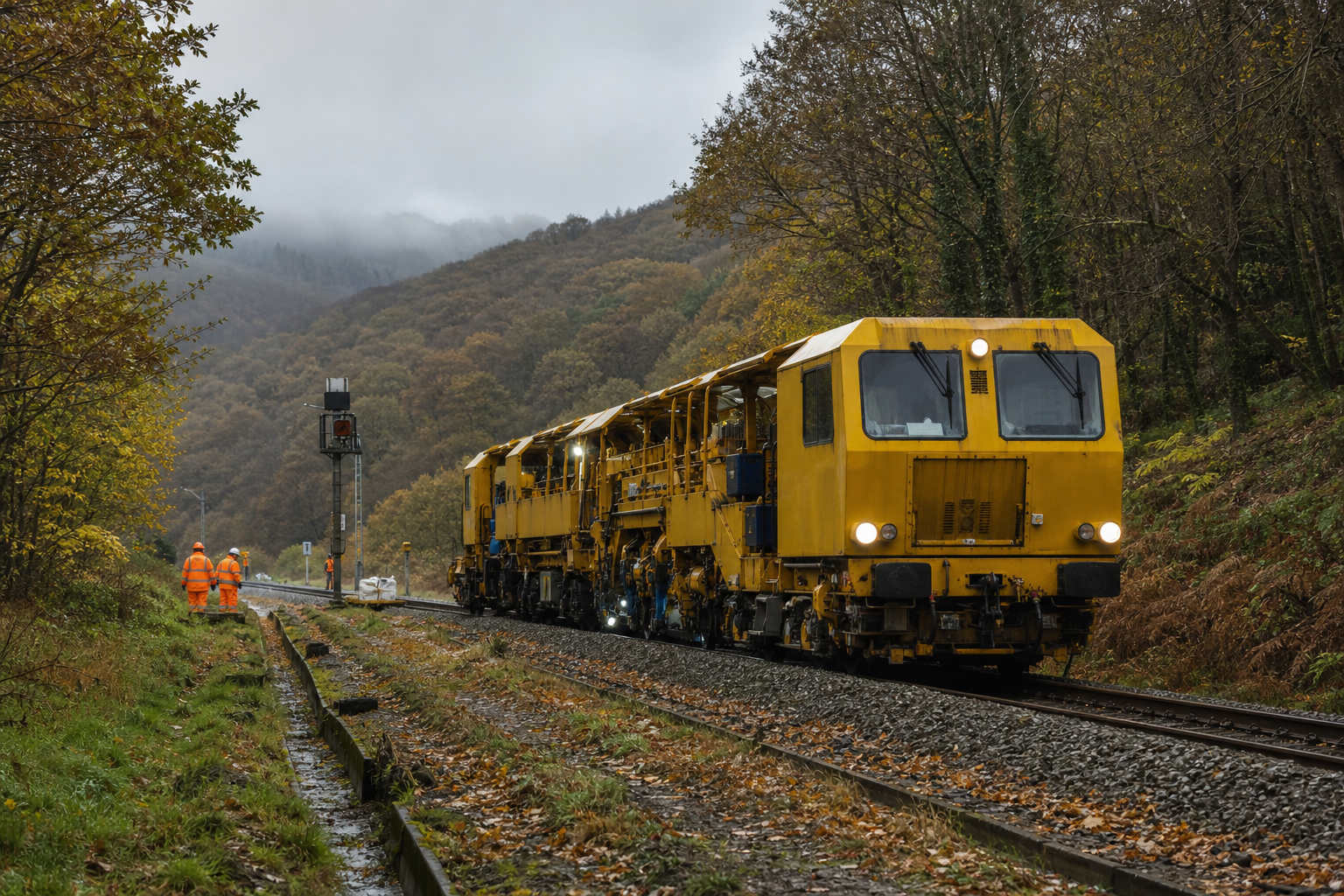
Network Rail is deploying four specialist treatment trains across Wales and the Borders to remove leaf residue from more than 87,000km of track on 224 circuits.
The autumn and winter resilience programme is being delivered with Transport for Wales (TfW) as the railway prepares for forecast wetter and windier conditions. Compressed leaves can create a slippery layer on rails, reducing wheel-rail grip and increasing the risk of wheel slips and flat spots.
Weather response measures
The Met Office’s latest long-range outlook indicates an increased chance of wetter and windier than average conditions through late autumn and early winter. El Niño is among several global weather patterns that could influence conditions, although its effect on UK weather is less direct than in some other parts of the world.
Network Rail has completed targeted drainage upgrades at locations that have repeatedly experienced flooding. It will also have 10 dedicated Autumn Response Teams ready to respond to changing conditions.
For the first time, 10 weather stations have been installed across the Wales and Borders route. The stations will provide real-time local weather information to help operational teams respond earlier to changing conditions.
Depot investment
TfW is strengthening its fleet maintenance capability with a new wheel lathe at Canton depot, as part of a £2.5m investment. It follows the opening of a new wheel lathe at Holyhead earlier this year.
Wheel lathes reprofile wheels to remove flat spots caused by wheel slips. This helps improve reliability, passenger comfort and the time trains remain available for service.
Network Rail Wales and Borders chief infrastructure officer Martin Taylor said: “By planning early, making use of the latest operational and weather intelligence, and working closely with industry partners, we can manage safety, risk, minimise disruption and keep services running reliably throughout the autumn period.
“We’re continually looking to improve our capabilities, making greater use of intelligence-led data and technology to support our decision-making. This helps us adapt to changing weather patterns and prepare for future challenges”.
Heavy rain can increase flood risk, particularly after a hot, dry summer when hard ground may be less able to absorb sudden downpours. Strong winds can also bring trees and other debris onto railway infrastructure.