

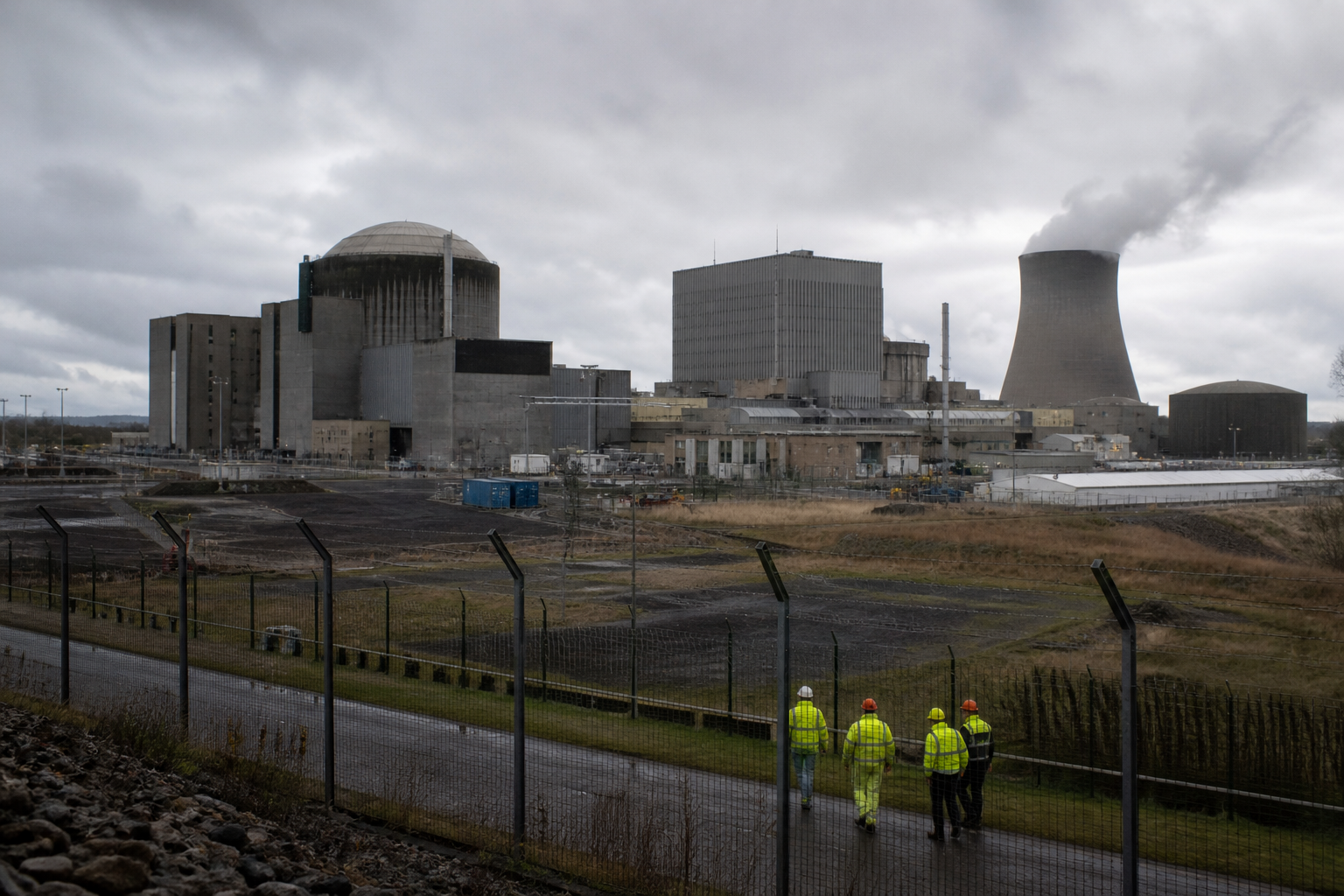
Great Britain’s nuclear sector remains safe and secure, but improvements in leadership, governance and cyber security have not been embedded consistently, the Office for Nuclear Regulation (ONR) has said.
The assessment was made in the Chief Nuclear Inspector’s annual report, published on 8 October, covering the 2025/26 reporting period. ONR chief executive and chief nuclear inspector Mike Finnerty said the sector’s performance remained variable despite its overall safe operation.
“The sector continued to operate safely and securely, but performance remained variable, reinforcing the importance of reflection and learning in sustaining high standards and responding effectively to current and future challenges,” Finnerty said.
Cyber security maturity below expectations
Finnerty identified cyber security and nuclear site health and safety (NSHS) as his main themes for 2025/26. The report said a thematic inspection programme had found improving baseline cyber capability, but overall maturity remained below the expected level.
The weaknesses covered strategy, governance, risk management, reporting, resourcing, organisational culture and leadership. Finnerty said maturity, resilience and delivery discipline also needed to improve in higher-risk and more complex environments.
He warned that global geopolitical uncertainty meant physical security at nuclear sites should receive attention comparable with nuclear safety.
Construction and industrial safety concerns
NSHS performance also remained a concern, with accident and incident rates above the industry’s long-term average. The ONR highlighted construction-related risk, fire safety and control of work as areas requiring continued regulatory attention.
“Industrial safety performance and incident reporting require more consistent control,” the report said. It added that the quality, timeliness and consistency of incident reporting remained variable, including late notifications and inconsistent reporting thresholds.
The regulator said the sector had shown a clear capacity to improve, but progress was not consistent. It called on dutyholders to demonstrate stronger ownership and sustained improvement.
Enhanced attention at Hartlepool
The report identified industrial safety shortfalls at Sellafield, continued enhanced regulatory attention at Dounreay, significantly enhanced regulatory attention for safety at EDF’s Hartlepool site, and the need for improvements to the periodic safety review at Sizewell B.
Hartlepool began the reporting period under enhanced regulatory attention. Although the site developed and implemented an improvement plan with the regulator, the ONR said the number of events increased consistently during the period.
The events primarily concerned site health and safety rather than nuclear safety. However, the regulator said workers were harmed in some cases and that other incidents had a high or medium potential for harm. The ONR continues to judge that Hartlepool remains safe to operate.
Sellafield said it welcomed the report’s recognition of progress at the site and its “open and positive reporting culture” covering security, nuclear, radiological and conventional safety. A spokesperson said safety remained the company’s “number one priority” and that it continued to work with the ONR on safe, secure and cost-effective decommissioning.
An ONR spokesperson said the report confirmed that the nuclear sector had operated safely and securely throughout 2025/26, while the regulator would continue to apply more focused attention where improvements were required.