

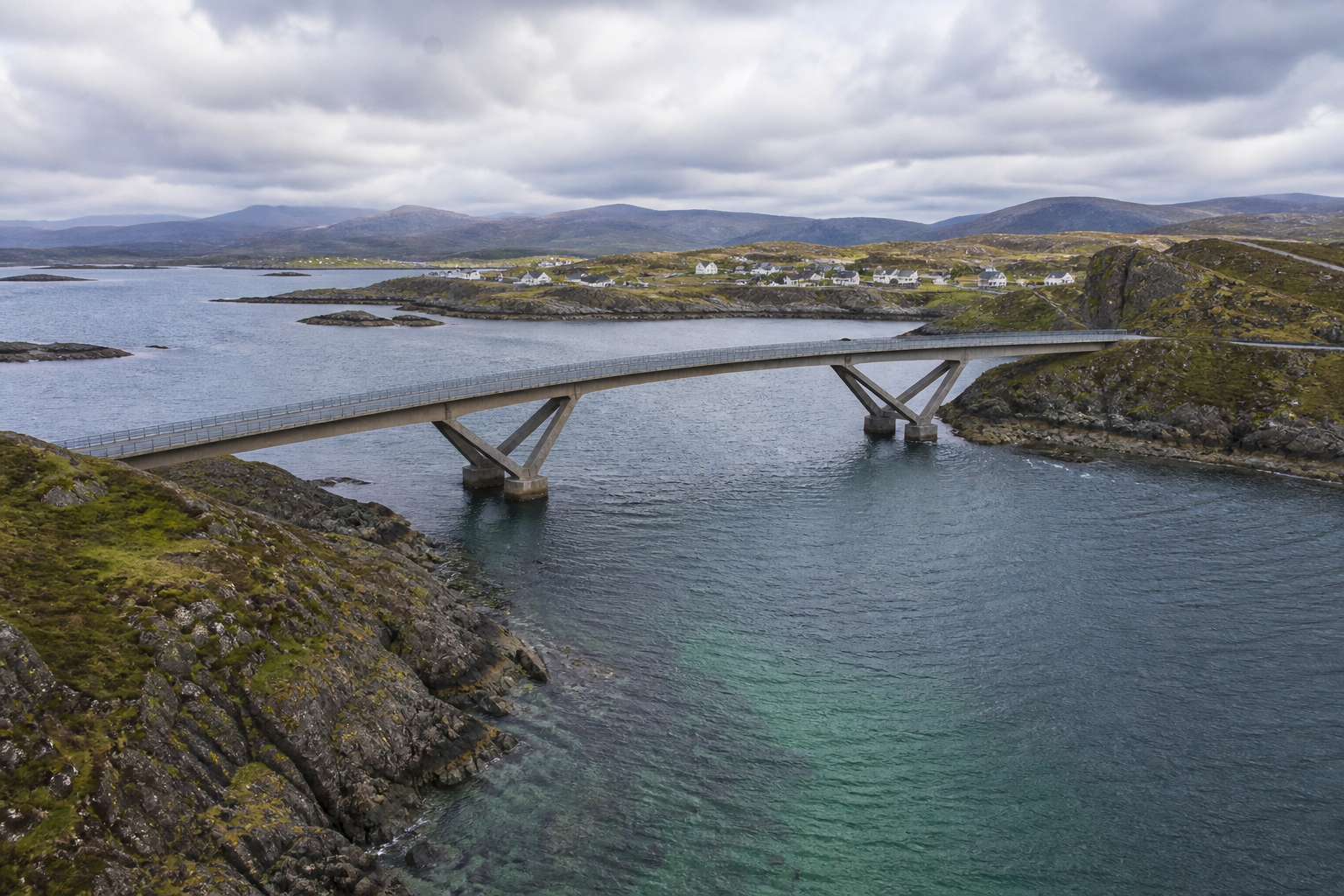
Bridges and tunnels could deliver transformative benefits for some of Scotland’s island communities, while complementing rather than replacing ferry services, according to a report by the Scottish Affairs Committee.
The committee says unreliable ferries are imposing “intolerable limitations” on islanders and businesses, affecting access to healthcare, education and employment and contributing to depopulation and the out-migration of younger people.
Island-led decisions
Patricia Ferguson MP, chair of the committee, said fixed links should only be pursued where they are viable and with island communities leading decisions about whether projects should proceed.
Proposals under development in Shetland and the Western Isles deserve “serious consideration”, the report says, although it stresses that bridges and tunnels would be suitable only for some shorter crossings. Ferries would continue to be a lifeline for many communities, making improvements to their reliability an urgent priority.
“Scotland’s island communities deserve better than their unreliable ferry services, which place intolerable limitations on islanders going about their daily life – from accessing healthcare and education, to running businesses,” Ferguson said.
“Our report finds that, where viable, fixed links like bridges and tunnels could bring transformative benefits to these communities.”
UK Government support
The committee argues that devolved responsibility for transport should not restrict the UK Government’s involvement in fixed-link schemes. It points to the potential contribution of improved connections to strategically important sectors, including space launches and clean energy, as well as to the preservation of island life, culture and heritage.
Given the scale, complexity and cost of such projects, the report says local authorities would struggle to deliver them without wider government support. It calls on the UK Government to engage constructively with proposals and to assess them on their full social and cultural benefits, rather than economic return alone.
“Of course, any decision to pursue these projects rests first and foremost with islanders themselves,” Ferguson said. “It’s also crucial to recognise that bridges and tunnels would complement, not replace, ferry services. For many, ferries will remain essential – improving their reliability must remain an urgent priority.”
She added: “The UK and Scottish Government have an important role to play in supporting projects. If proposals go ahead, our report shows that local authorities and communities would benefit enormously from government support.”
The committee’s findings draw on evidence gathered in the Faroe Islands, where bridges and tunnels connect 18 islands.