

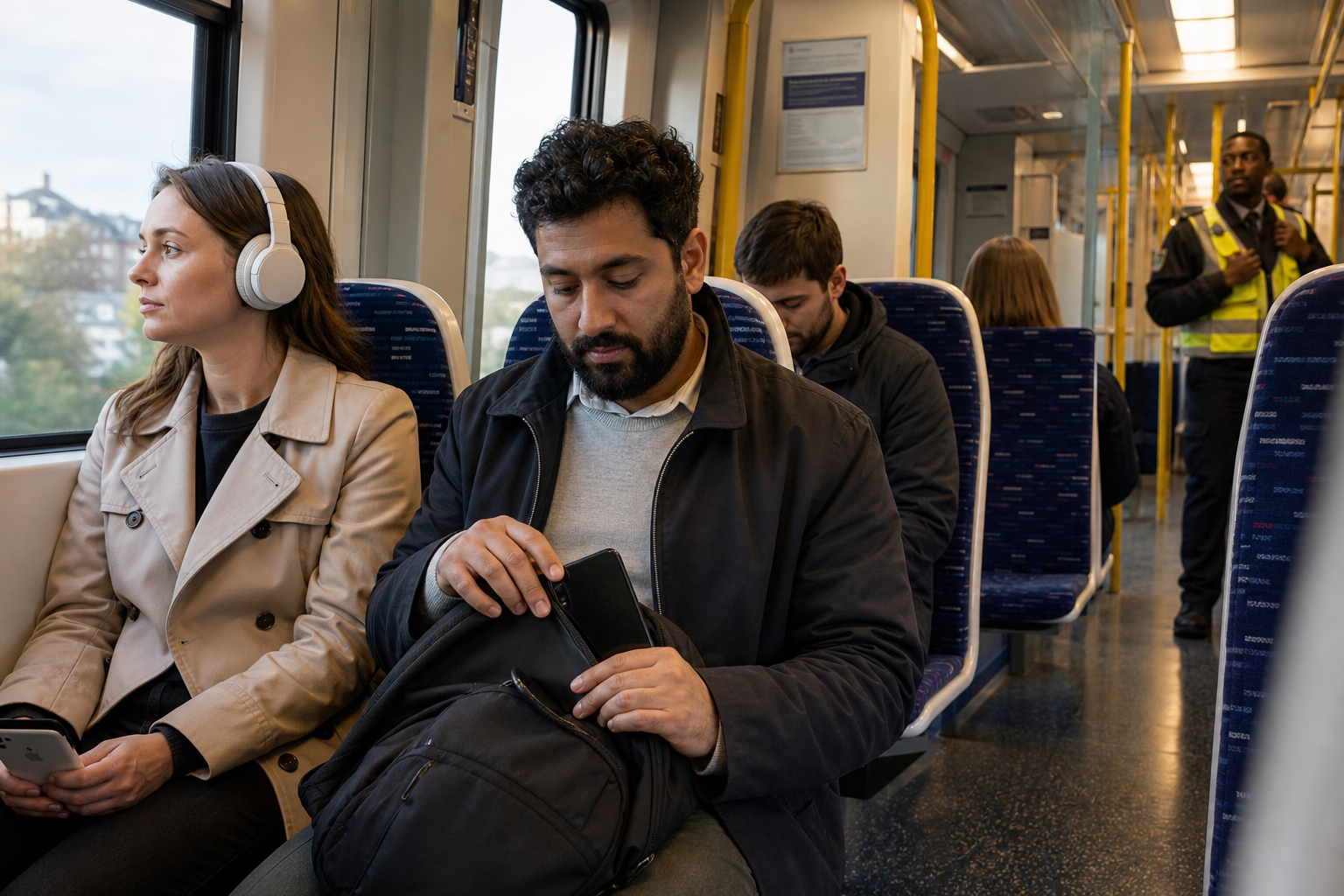
The Government has launched measures to tackle antisocial behaviour on public transport, including fines of up to £100 on buses and a national campaign urging rail passengers to use headphones.
Guidance published on 19 October 2026 is intended to help local transport authorities in England use new powers against loud music, littering, vaping and threatening behaviour on buses. Authorised officers, including transport safety officers and police, will be able to issue fixed penalties where passengers refuse to comply.
Three-step enforcement approach
Bus drivers will not be responsible for enforcement. Officers are expected first to engage with the passenger, explain the rules and their effect on others, and take enforcement action if the behaviour continues.
The powers were enabled by the Bus Services Act 2025 and came into force on 5 August 2026. Each local bylaw must be approved by the Secretary of State before it can be enforced.
The Government said the guidance would allow local authorities to set and enforce rules that reflect the needs of their communities.
Rail campaign targets ‘loudcasting’
An industry-led campaign across the rail network will use posters, station announcements, carriage messaging, websites and social media to promote the message: “share the carriage, not the noise”. It is intended to replace the patchwork of separate campaigns used by individual operators with a more consistent approach.
Passengers who refuse to stop playing music or videos aloud after being asked by authorised rail staff can be removed from a train at the next station or face fines of up to £1,000, according to the Government.
Prime Minister Andy Burnham said: “We’ve all been on the train when someone starts blasting music or videos from their phone. It gets on your nerves and can quickly spoil the journey.
“So, we’re launching a nationwide campaign reminding passengers to use headphones on trains. On top of that, we’re giving local leaders new powers to tackle loud music, vaping and littering on buses.
“It’s a simple thing, but one that will make journeys that little bit better for all of us.”
Transport Secretary Heidi Alexander said the measures would help address behaviour including vaping, littering and playing music aloud, adding that publicly owned train operators could support a more joined-up focus on passenger experience.
Richard Parker, Mayor of the West Midlands, said the region’s Safer Travel Partnership and transport safety officers were already helping to improve journeys, but added that the new guidance and government backing would allow further action.
Ben Plowden, chief executive of Campaign for Better Transport, said antisocial behaviour could deter people from using public transport, particularly those with different accessibility requirements. He said the new powers should help if they were “properly and visibly enforced”.