

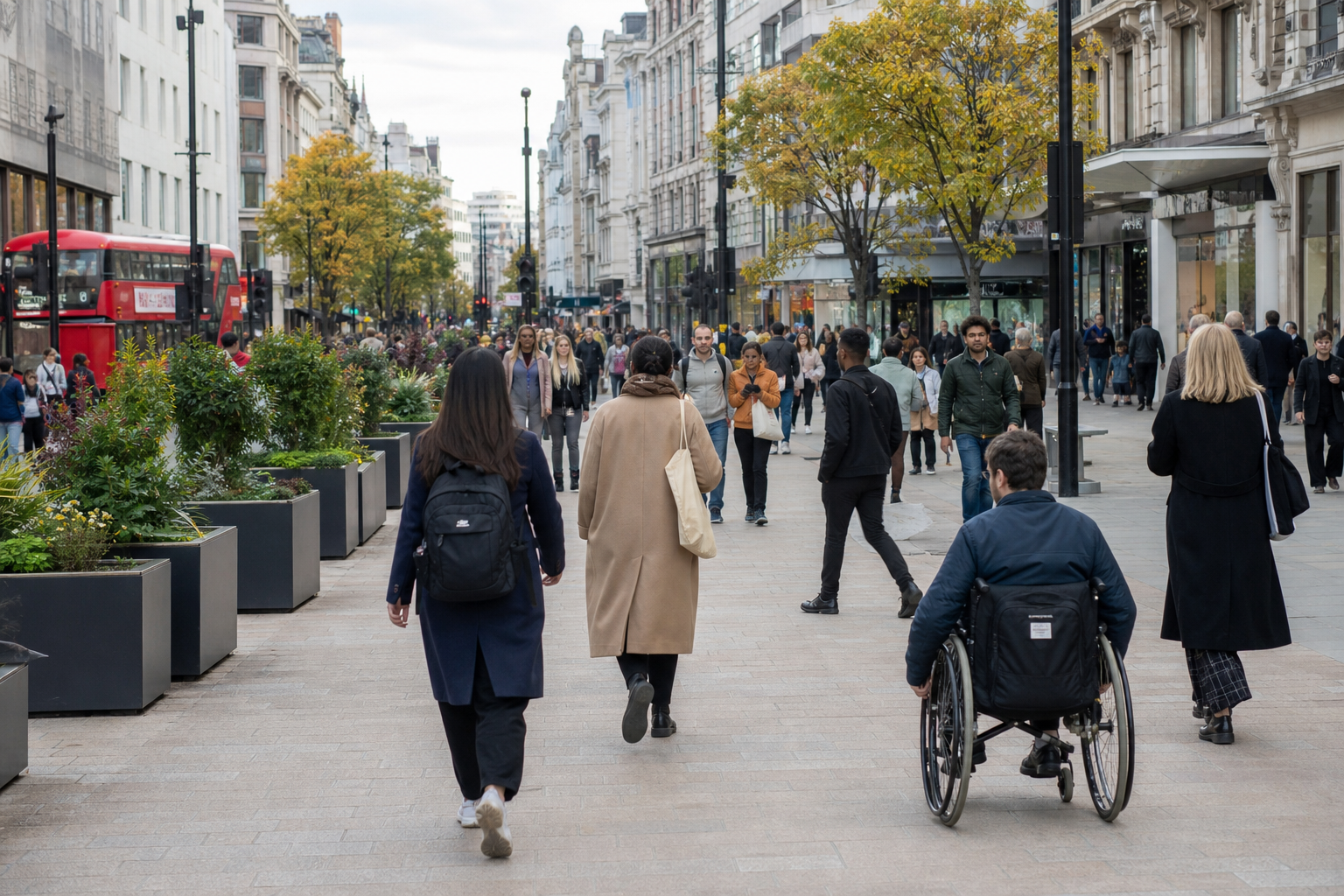
Sections of Oxford Street will be pedestrianised from 26 October 2026, launching a long-planned scheme to transform one of central London’s busiest shopping streets.
Delivered by the Mayor of London and Transport for London, the project will remove traffic from a 0.7-mile stretch between Oxford Circus and Marble Arch stations. It was approved following two public consultations.
Walking and retail benefits
Living Streets, which has campaigned for the scheme for more than a decade, said pedestrianisation should improve safety, accessibility and health for people living, working and visiting the area.
The charity cited the results of a one-day traffic closure in September 2025, when it said footfall increased by 45%. It also reported that 80% of visitors had a positive experience and felt safe, while 77% said the closure improved their perception of Oxford Street.
Catherine Woodhead, chief executive of Living Streets, said: “With families enjoying the school holidays and Christmas around the corner, we want people to feel safe and happy to spend time on Oxford Street.
“For too long, vehicles have been prioritised over people, making the street unsafe and polluted. By making it easier for people to walk, we can create a healthier environment while attracting business and economic growth. Putting people first on one of the country’s most famous streets will hopefully inspire a whole host of walkable high streets across the UK.”
Living Streets said its Pedestrian Pound research demonstrated the potential economic benefits of designing streets around people walking and wheeling.
Call for wider rollout
Cat Kenyon, leader of the Central London Living Streets Group, described the Oxford Street project as a first step and called for similar measures across the West End and London.
“Other European cities like Paris and Barcelona have over double the length of pedestrian streets in comparison to London,” Kenyon said. “From Soho, Fitzrovia, Mayfair to Marylebone there are many spaces that would benefit from prioritising people over traffic.”
Central London Living Streets plans to bring together educational, cultural and health institutions with businesses to build on the Oxford Street project and promote more accessible, people-friendly spaces across the capital.