

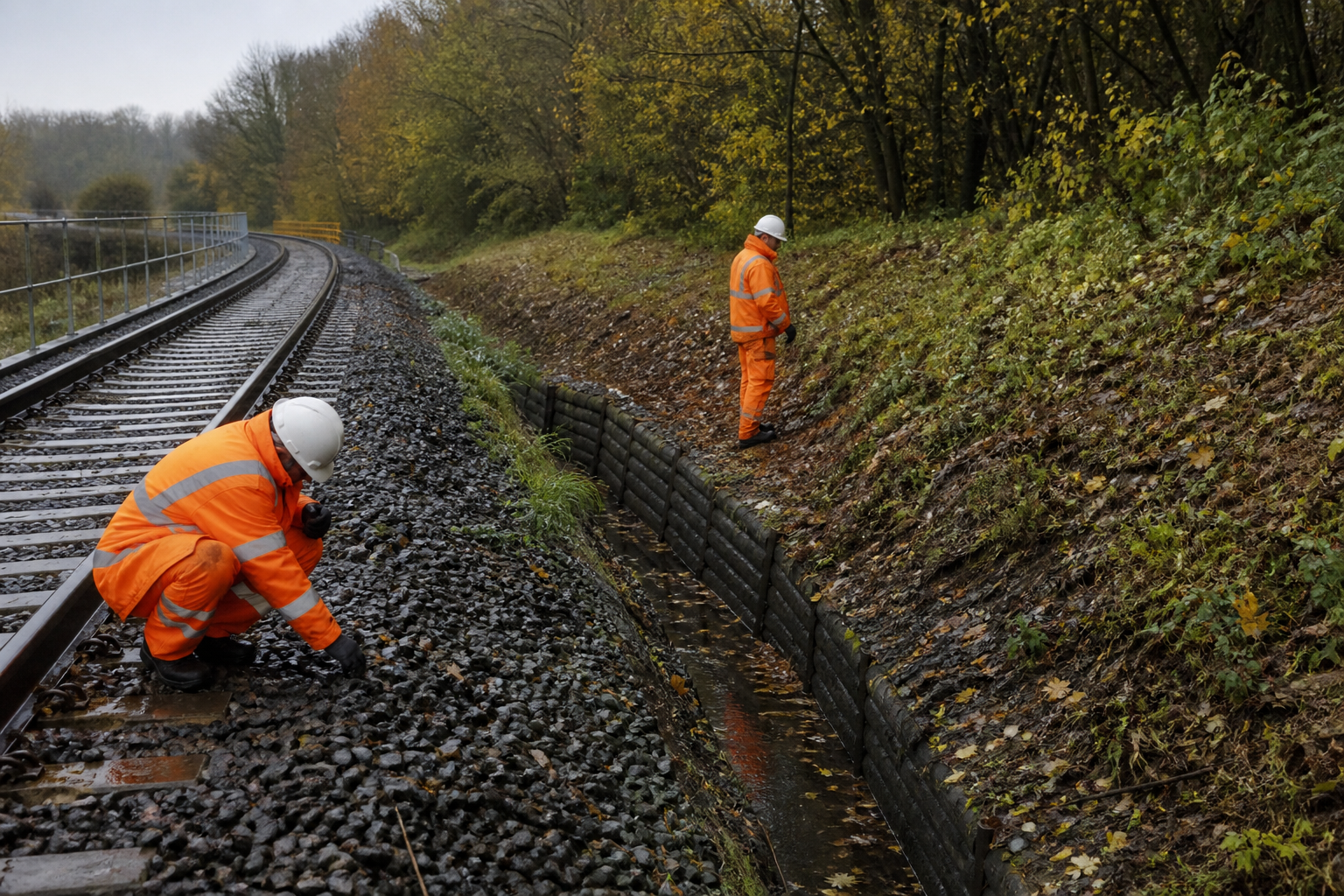
Network Rail is inspecting drainage and earthworks hotspots across the North West as it prepares for a winter that is forecast to bring significantly above-average rainfall.
The infrastructure manager said it expects to have inspected all 130 priority sites in the region by the end of October. It warned that flooding and fallen trees could still cause disruption during the coming months.
Investment at Chat Moss
One of the sites being assessed is at Culcheth on the Chat Moss line between Liverpool and Warrington, where Network Rail and contractor QTS Group have been carrying out resilience checks.
The section has previously been affected by flooding, with more than £1.5m invested in improvements since 2021. The latest inspection included checks on recently strengthened earthworks, vegetation clearance, drainage infrastructure and equipment used to monitor earth movement.
Network Rail said its North West route contains 65,000 individual drains, including ditches, pipes and culverts, which its asset management and maintenance teams oversee.
The organisation said rainfall could be 40% to 60% higher than usual in November and December, citing the climate phenomenon El Niño. Despite the focus on high-priority locations, it said disruption remained possible if wet and windy conditions affected the railway.
“Safety is always our number one priority, and we’ve been working since the summer to get the railway ready for what’s expected to be a very tough winter weather wise,” said Olivia Devan, Network Rail North West principal route engineer.
“While we will do everything we can to keep passenger and freight trains moving, there is a chance wet and windy conditions could cause disruption in the coming months. For that reason, while keeping an eye on the weather forecast, I’d also encourage those making any rail journey to also check National Rail Enquiries to make sure their train is running before you set out for the station.”
Autumn treatment trains deployed
Network Rail’s seven autumn treatment trains are already operating across the network to remove leaves from the line. The specialist fleet is scheduled to travel 100,000 miles before the start of December.