

The International Union of Railways (UIC) and a consortium of European railways have launched an initiative to create a common standard for exchanging maintenance, engineering and support data across the rail asset lifecycle.
The Rail Service Data Exchange (RSDEX) initiative will initially focus on developing a proof of concept to demonstrate how the approach could work in an operational environment.
Addressing fragmented data
UIC said digitalisation is advancing across railway operations and maintenance, but information remains fragmented between operators, manufacturers, component suppliers and maintenance organisations. These groups often use separate data models and proprietary formats, making it harder to share information consistently and plan interventions efficiently.
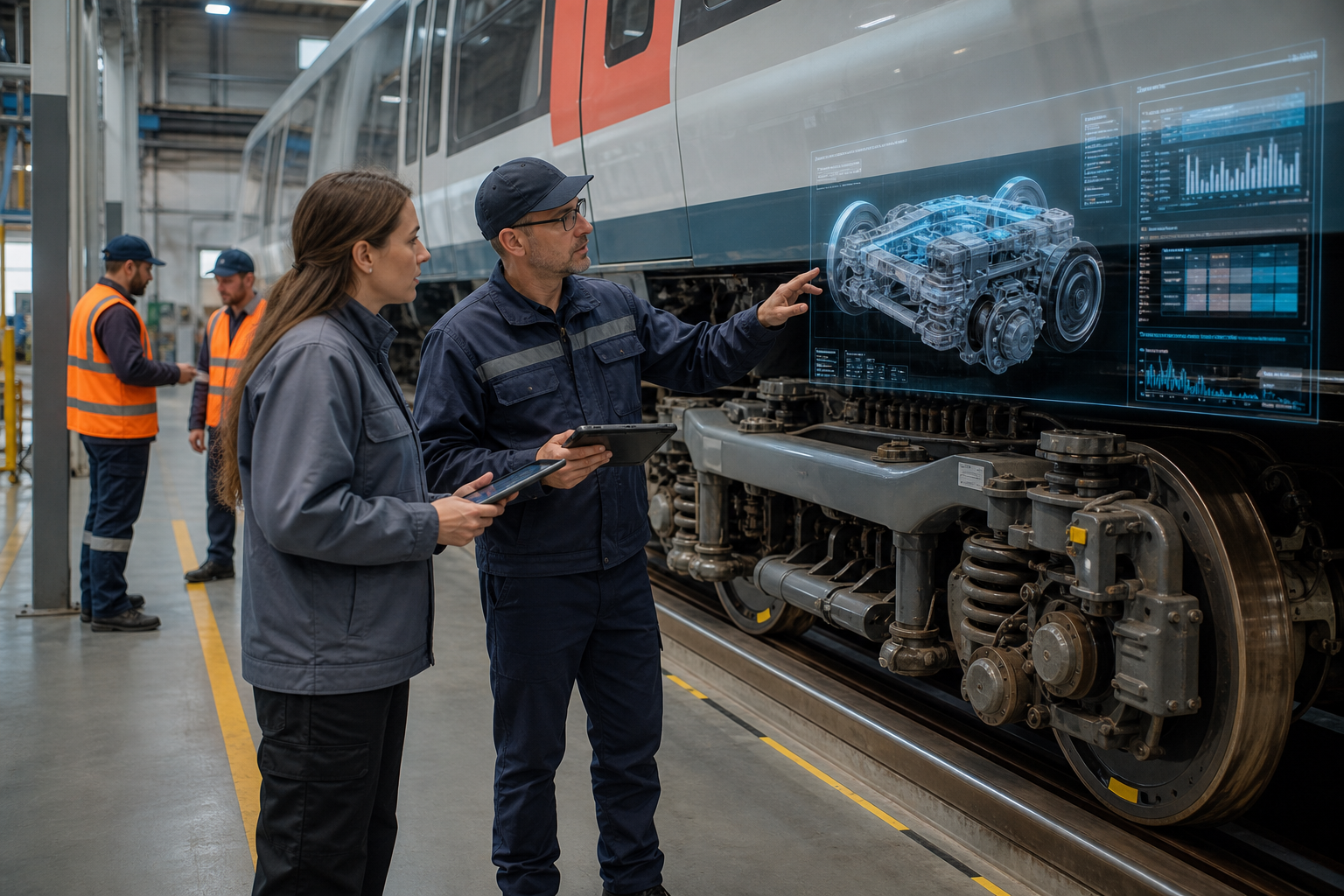
RSDEX is intended to improve interoperability, reduce reliance on proprietary formats and support more efficient cross-border operations. UIC also said the standard would be shaped around the practical needs of railway operations and maintenance, while helping organisations realise more of the potential of digital twin technology.
“Interoperable service data is the foundation on which the digital railway will be built,” said Jean-Michel Evanghelou, UIC’s director of digital systems and innovation. “By defining this standard together, as an industry, we will be protecting fair competition while unlocking shared value for operators, manufacturers and maintainers.”
Lessons from aerospace
The initiative is drawing on the aerospace and defence sectors, where the S-Series standards provide a framework for exchanging information between aircraft manufacturers, engine makers and airlines. Examples include S1000D for technical documentation, S3000L for logistic support analysis and S5000F for in-service feedback.
UIC said the aerospace experience showed that a data standard of this kind should be developed and adopted by the industry rather than imposed by a single technology supplier.
Dassault Systèmes, whose virtual twin technologies support implementation of aerospace S-Series standards, is contributing expertise to RSDEX. The company will provide a reference for how common standards can be applied in complex industrial environments.
“The railway sector doesn’t need to invent this from scratch. Aerospace has already shown that a shared standard, underpinned by the virtual twin, lets an entire industry collaborate on maintenance data without ever giving up its competitive edge,” said Guillaume Vendroux, chief executive of Dassault Systèmes’ DELMIA brand.