

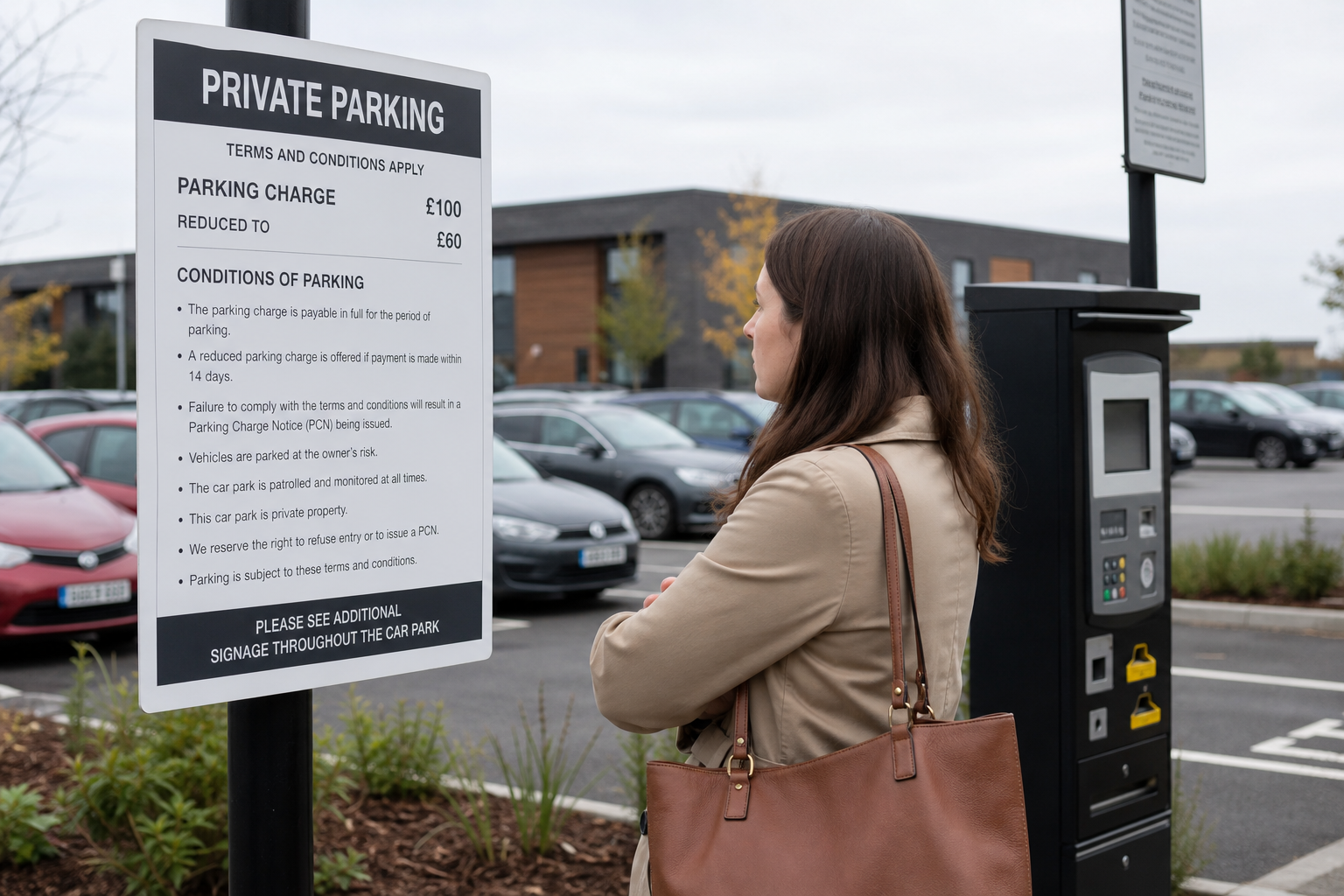
Drivers will be given new protections at private car parks under a government code of practice laid in Parliament on 20 October.
The code guarantees five minutes for motorists to decide whether to park after entering an off-street site, followed by a 10-minute grace period at the end of a parking session. It also provides for charges to be cancelled on appeal where drivers can show that circumstances covered by the code prevented compliance.
Examples include a medical emergency, vehicle breakdown or a faulty ticket machine. Charges will also be scrapped on appeal for honest mistakes such as briefly stopping to check directions.
For less serious errors, including entering the wrong registration number, forgetting to display a permit or failing to confirm a session on a machine, the maximum charge following an appeal will be £20.
Operators risk losing DVLA access
The maximum private parking charge will remain at £100. Operators that fail to comply with the code risk losing access to DVLA data, making it harder for them to identify registered keepers and pursue unpaid charges.
The government said just under 17 million private parking charges were issued in the UK last year. RAC analysis of government data put the number issued in 2025-26 at about 17 million, a 17% increase on the previous year.
Prime minister Andy Burnham said: “Being a few minutes late back to your car or typing one digit of your numberplate wrong shouldn’t end with a hefty fine landing on your doormat. These charges leave people feeling ripped off and out of pocket, so I’m putting a stop to them. We are introducing clearer rules, longer grace periods and lower charges for genuine mistakes, while going after the deliberate scams that rip drivers off.”
The code will apply in England, Scotland and Wales. Operators will have to report data on the charges they issue and how appeals are handled, while a new independent Scrutiny and Oversight Board will be established to monitor the sector. The process of setting up the board will begin once the code comes into force.
Seven years after legislation
Parliament will now scrutinise the code, which is intended to replace the voluntary arrangements operated by the British Parking Association (BPA) and the International Parking Community (IPC). The Ministry of Housing, Communities and Local Government said ministers planned to bring it into force as soon as possible.
The framework fulfils the government’s duty under the Parking (Code of Practice) Act 2019. A code created under the legislation was withdrawn in 2022 after opposition from the private parking industry, while an interim code produced by the BPA and IPC was introduced in 2024.
The government consulted on a revised code between July and September 2025, receiving 4,526 responses from the public and industry. It said motorists had called for fairer appeals and independent oversight.
Angela Rayner, secretary of state for housing, communities and local government, said: “Parking should be straightforward, not another everyday hassle. These changes mean drivers get a fairer deal, protected time to park and leave without fear of being unfairly charged, and confidence that private parking providers are held to a higher standard.”
Calls for further action
Motoring organisations welcomed the changes but said they did not go far enough. The RAC called for debt recovery fees to be banned and for a single independent appeals body to replace the two industry-run schemes.
RAC head of policy Simon Williams said the code was “a step in the right direction” but “not the leap we’ve been campaigning for so long”. He added that the new rules should help prevent wrongly issued tickets, while noting that debt recovery fees had not been addressed.
The AA also described the changes as a first step and called for further safeguards, particularly where a driver had done nothing wrong.
Consumer group Which? criticised the decision to retain the £100 maximum charge, having called for a £50 cap. “It is particularly concerning that the government has shied away from a £50 price cap,” it said.
The government plans to consult next year on private parking debt recovery fees, including whether to reduce the existing £70 cap or remove the fees altogether. It also intends to consult on Competition and Markets Authority recommendations relating to private parking.
The BPA and IPC said they were reviewing the code and supporting documents before briefing members on the provisions, implications and transition to the new framework.