

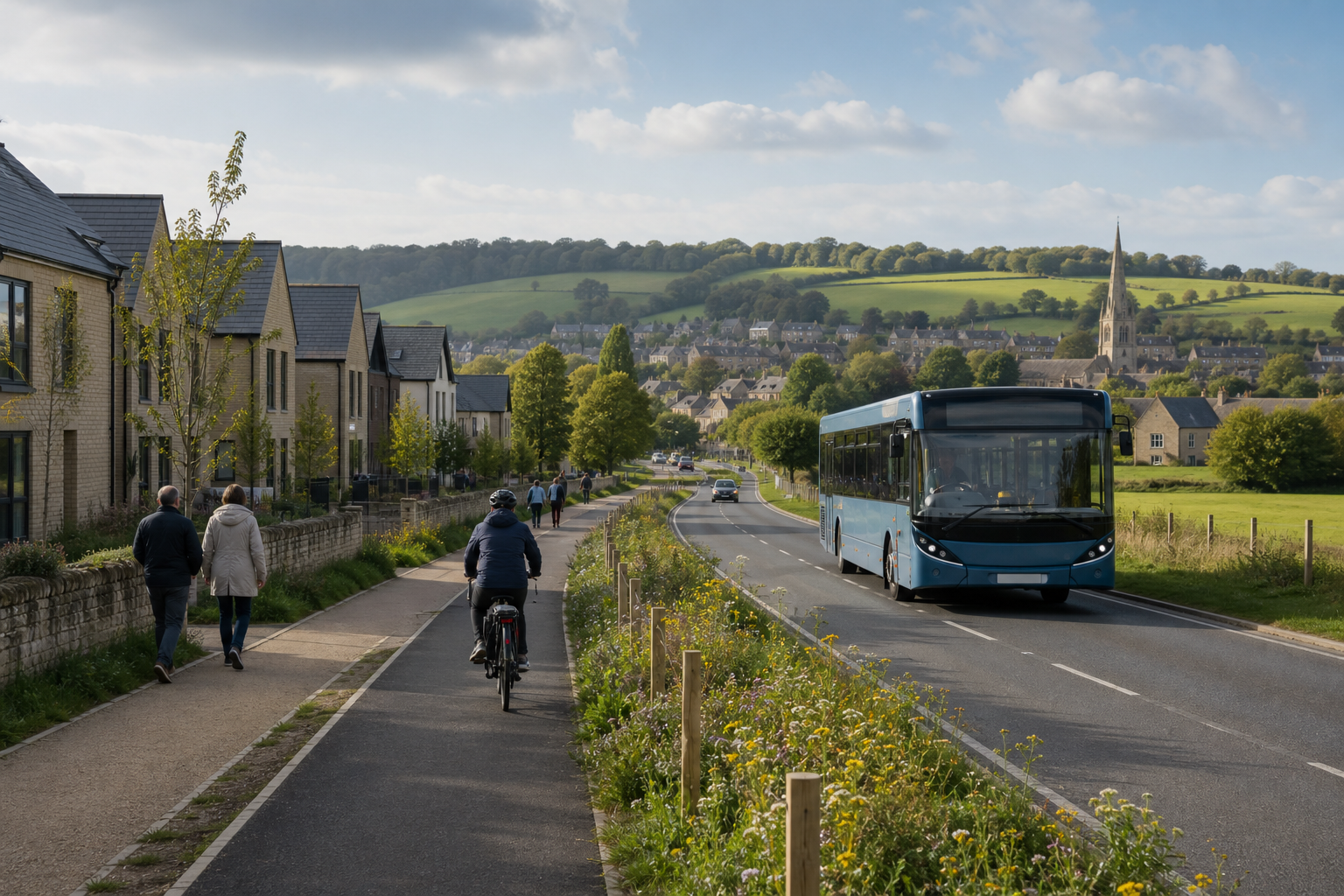
Oxfordshire County Council’s cabinet has approved a 25-year transport strategy for West Oxfordshire, covering Witney, Carterton and surrounding communities.
The West Oxfordshire Lowlands Movement and Place (MAP) Plan sets out 15 objectives and 114 actions intended to improve connections between homes, jobs, services and amenities. The council said the plan would guide future movement and place schemes and help secure funding.
Focus on active travel and public transport
The strategy prioritises walking, wheeling, cycling and public transport, while recognising that private cars will remain necessary for some residents. It also aims to support healthier, safer and more attractive places to live, work and visit.
Among its objectives are the delivery of a comprehensive and inclusive walking, wheeling and cycling network; improved provision for walking, wheeling and cycling in new developments; and the creation of transport hubs to make journeys more integrated and convenient.
The plan also proposes more frequent, reliable and integrated bus services, alongside work with partners to improve rail services and infrastructure.
Councillor Gareth Epps, Oxfordshire County Council’s cabinet member for transport, said: “For the West Oxfordshire area, including Witney and Carterton, this attention is essential and overdue. Since the closure of the railway to Witney in 1970, the people living along the Windrush valley have been subject to inadequate options for getting about.
“We are investing and making the plans for the future that the area urgently needs, including progressing a mass rapid transit study but also looking for short-term changes to provide better transport options.”
Third MAP plan adopted
West Oxfordshire Lowlands is home to around 87,000 people. The largely rural area includes employment sites such as RAF Brize Norton, business parks, industrial estates and commercial centres in Witney, Carterton and nearby settlements. It is also a tourism destination and connects with the Cotswolds National Landscape.
About 16% of residents commute to Oxford for work, making improved links between Oxford and other key destinations a central consideration for the plan.
The West Oxfordshire Lowlands strategy is the third of 12 proposed MAP plans for Oxfordshire to be adopted, following plans for Science Vale and the Bicester area earlier in 2026.
Cllr Epps said: “We are embarking upon sustainable and positive change – placing people, communities and places at the heart of this. The movement and place plans are key to this. They reflect the needs and aspirations of our communities, help to protect our natural environment and deliver the homes, businesses and leisure facilities that our communities need and enjoy.”