

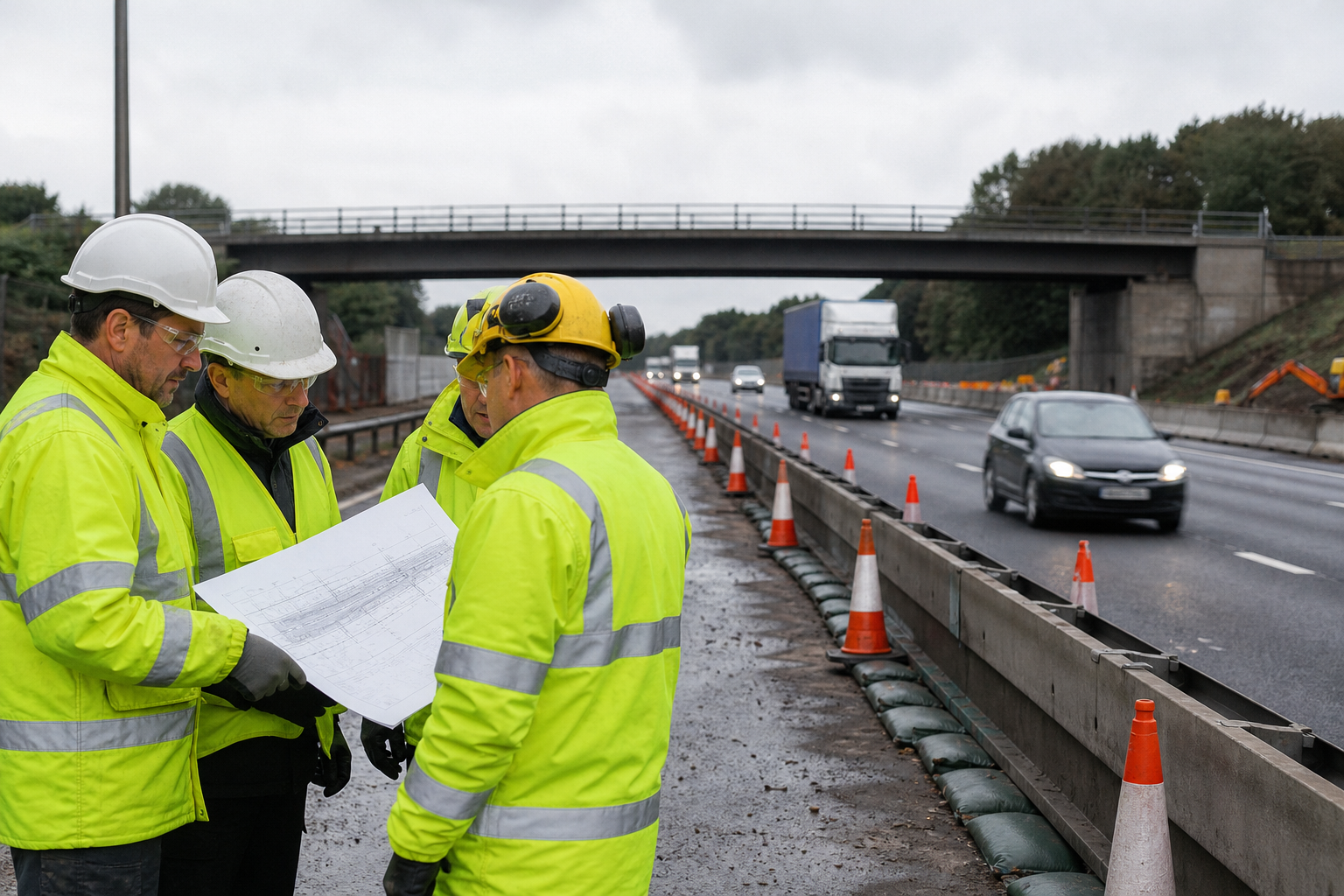
The third Road Investment Strategy (Ris3) will need to be managed as a single portfolio rather than a collection of individual projects, according to Turner & Townsend director Prashant Jagdale.
Writing for New Civil Engineer on 27 October 2026, Jagdale said the £27bn strategy’s focus on renewals, maintenance and enhancements might initially appear simpler than earlier investment cycles dominated by major capital projects. However, the breadth of interventions across different regions and asset classes could make delivery more complex.
He said ageing infrastructure, rising demand on the strategic road network and the need to maintain live operations would add to the challenge. Projects will also have differing objectives, stakeholders, access constraints and supply-chain requirements.
Coordinating work across the network
Jagdale argued that Ris3 should group complementary schemes into geographically aligned delivery tranches, such as routes, corridors or localities. Coordinating work in this way could improve network resilience and reduce disruption compared with delivering disconnected asset-level interventions.
A common approach to recurring types of intervention could also allow lessons, delivery methods and commercial strategies to be transferred between projects. Jagdale said this would support greater predictability and efficiency, while a central programme-control function could monitor performance across works types, delivery models and suppliers.
The approach will need to account for competition for skills and capacity from the £718bn of programmes in the National Infrastructure and Service Transformation Authority’s pipeline, he added.
Using data to guide investment
Jagdale said consistent data on cost, programme and risk would be essential as the strategy moved towards repeatable interventions. Connected records and digital tools could improve forecasting, identify emerging problems and support faster decisions, provided information was reliable and available in time to influence delivery.
Comparing performance with historic information and similar live programmes could help establish baselines and test assumptions. Over time, the resulting evidence could inform decisions about whole-life value, supplier performance and where standardisation would improve design, procurement or construction.
Jagdale also linked the quality of the road network to wider investment and development decisions. Reliable connections between sites, communities and supply chains could support regional growth, while changes to devolution and local government funding create opportunities for transport investment to deliver benefits beyond the strategic road network.