

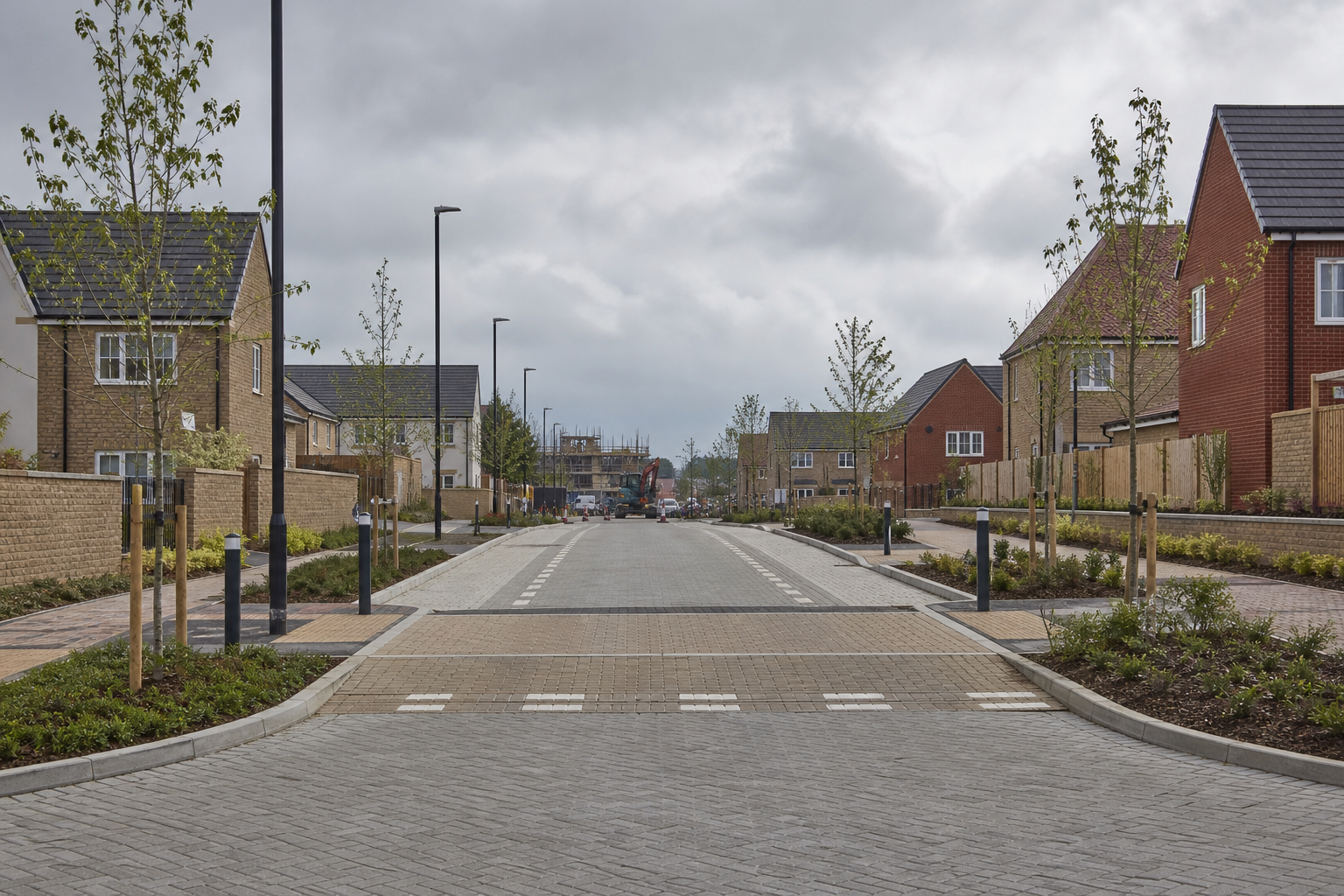
Worcestershire County Council is proposing to charge developers for the long-term maintenance of non-standard highway infrastructure, aiming to prevent future costs from falling on public maintenance budgets.
The council’s cabinet approved a commuted sums policy on 22 October, subject to consultation. The proposed charges would apply to features requiring a higher or different level of maintenance than the authority’s standard specification.
Charges linked to asset lifespan
Assets covered could include bespoke paving, specialist street lighting, trees, landscaped areas and raised platforms. Standard roads and pavements would be excluded.
Commuted sums are one-off payments intended to cover the future maintenance of such assets for an agreed period. Worcestershire said it does not currently have a formal policy for charging developers for these types of highway infrastructure.
The proposed maintenance periods would be 60 years for most infrastructure, 120 years for bridges and 20 years for traffic signals. After the relevant period, maintenance costs would return to the council.
Tom Wells, the council’s cabinet member with responsibility for highways and transport, said the policy would protect council budgets and taxpayers while ensuring new infrastructure remained financially viable throughout its life.
“This will protect the highways maintenance budget, it will protect taxpayers and provide transparency,” he said. “It will ensure new infrastructure remains financially viable for the duration of its life.”
Wells said Worcestershire would use national guidance from the Association of Directors of Environment, Economy, Planning and Transport when setting charges. He added that other authorities, including Leicestershire, had adopted similar arrangements.