

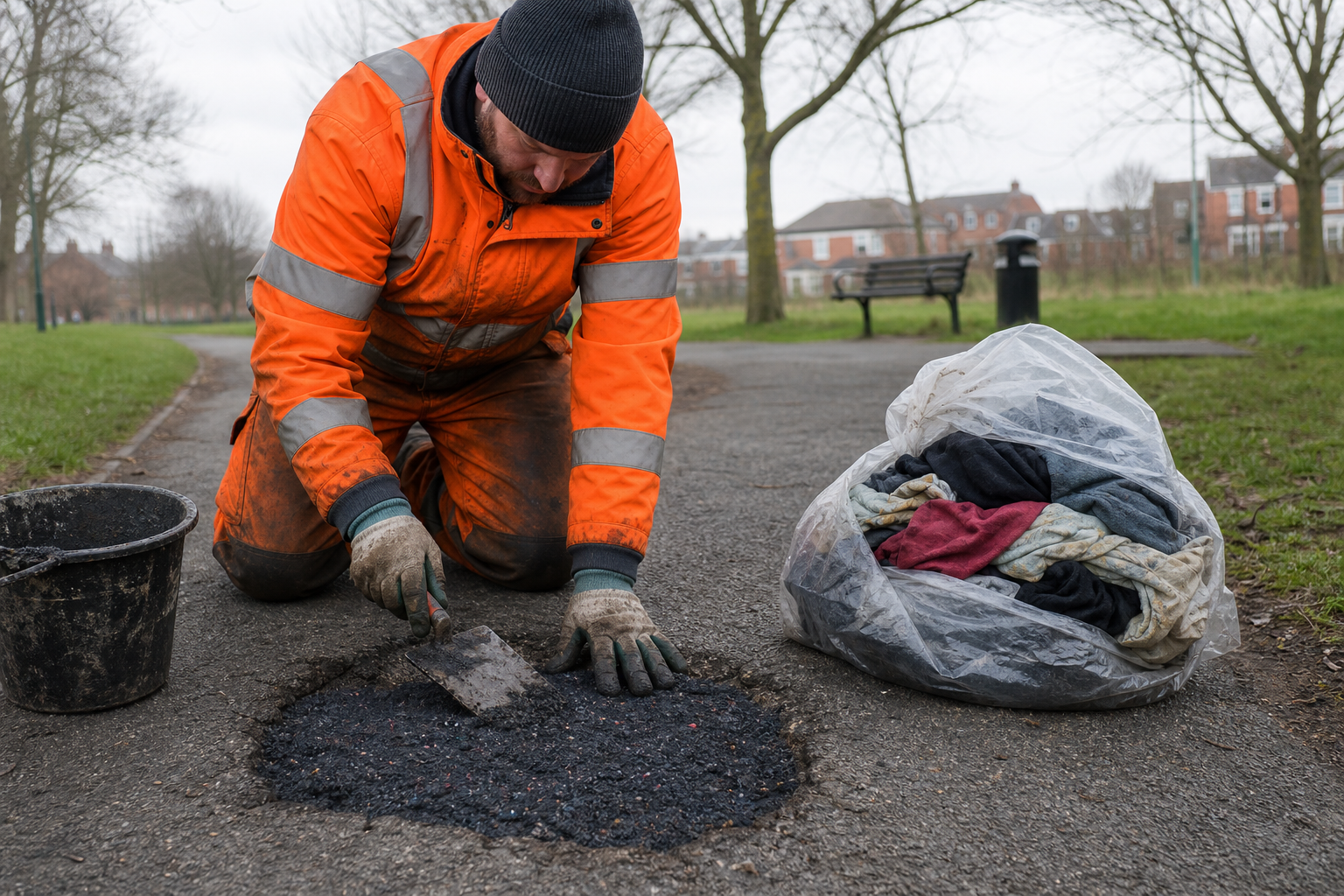
Maidstone Borough Council is testing a pothole repair material made using recycled textiles on paths in the borough’s parks.
The trial is examining whether old clothes that might otherwise become waste can be given a practical second use in maintaining public paths. The council has presented the work as a sustainable approach to pothole repairs.
Trial rather than replacement
The park setting allows the material to be assessed in a real outdoor environment without presenting it as an established replacement for conventional repairs on busy public roads.
The key test will be whether the material remains suitable for the surface and conditions in which it is used. The council has not claimed that recycled clothing can solve the wider pothole problem or replace conventional road construction materials.
Using waste textiles in maintenance could provide an additional route for materials that would otherwise be discarded, particularly where clothing contains mixed fibres and is difficult to recycle through other routes.
Assessing practical potential
The council has published the trial under the title “From rags to resurfacing”, although the work is more accurately described as localised pothole patching rather than resurfacing. Resurfacing generally involves replacing the surface across a wider area.
For maintenance teams, the immediate question is whether the textile-based material performs effectively in practice. Positive results could support further investigation into its use, while a poor outcome would still provide evidence about where the approach is unsuitable.
The trial forms part of wider interest in recycled and alternative materials for routine infrastructure maintenance. Its next significance will depend on the performance evidence gathered from the park paths.