

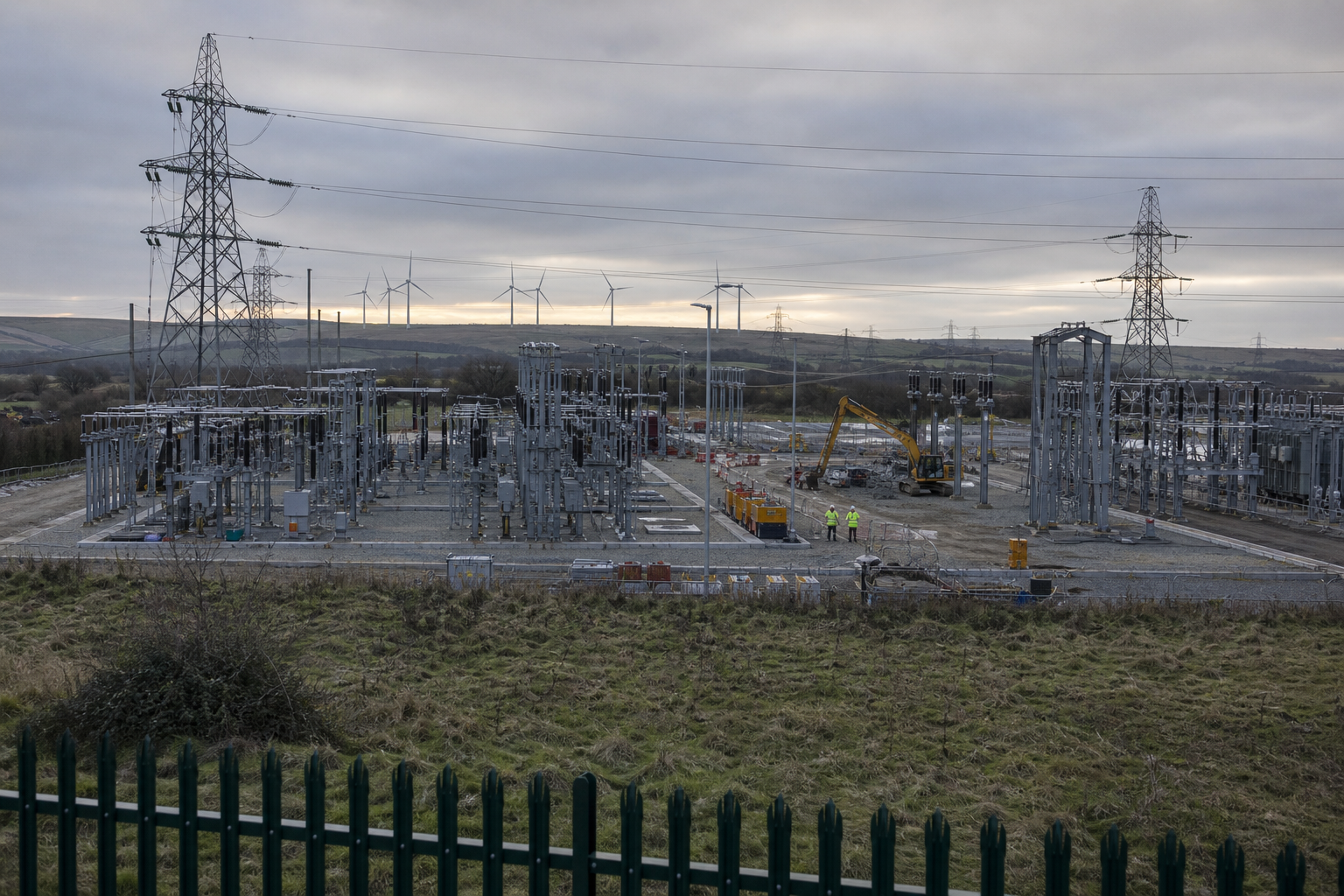
Grid and network readiness is one of the biggest barriers to delivering energy infrastructure in the UK, according to a survey of energy sector leaders by Jacobs.
Some 59% of UK respondents ranked it among their top three delivery barriers, a higher proportion than in the United States, Germany, Singapore and Australia. The findings were published in Jacobs’ The Energy Readiness Equation report on 27 October, which analysed responses from 600 energy leaders across the five countries.
The respondents were responsible for strategy, procurement, capital programmes and major project delivery, according to Jacobs.
Investment and regulatory constraints
The report found that 69% of UK respondents believed sufficient capital was available for the energy sector, but only 31% thought there were enough investable projects.
Policy and regulatory uncertainty was ranked among the top three barriers to investment readiness by seven in 10 UK respondents. A further 66% identified permitting or land constraints as a barrier, while 57% said the readiness of infrastructure systems outside their direct control created a major or critical constraint on energy infrastructure delivery.
Jacobs global low carbon solutions director Alan Fotheringham said: “The UK is making important progress in planning its future energy system, but a plan only delivers value when it becomes infrastructure on the ground.
“The investment appetite and engineering capability are there. What developers need now is greater certainty around grid connections, permitting and the regulatory framework so they can commit capital and resources with confidence.”
National Energy System Operator strategic energy planning director and chief engineer Julian Leslie said: “It is much harder to invest if businesses can see only five years ahead.
“A credible long-term plan gives industry and those financing the energy transition the confidence they need to decision-make.”
Network reforms
An Energy Networks Association spokesperson said most smaller generation and demand projects were connected by distribution networks within customer timescales. The organisation said its Connect Direct platform was auto-approving up to 40% of applications on average.
For larger generation projects requiring a transmission impact assessment, the spokesperson said connections reform led by NESO and carried out with network companies was under way. Projects must meet readiness criteria and be strategically needed for Clean Power 2030 to receive a connections offer, the association said, adding that NESO and electricity networks had issued offers to more than half of the energy projects needed by 2030.
Ofgem said lengthy waits for grid connections could hold back viable projects and investment. An Ofgem spokesperson said the regulator was introducing reforms to speed up critical infrastructure projects, unblock connection queues and strengthen incentives for network companies to deliver efficiently and on time.
The Department for Energy Security and Net Zero said the UK’s “outdated grid” was holding back new wind farms, solar projects and businesses. It pointed to reforms to the connections queue, the Great British Grid initiative and plans to allow developers to build their own connections.
The survey included contributors from organisations including Marinus Link, PUB Singapore, Westnetz, Onyx Power, Statkraft, NESO, the Corporate Energy Buyers Association, RDQ and National Grid.
Separately, companies involved in operating and upgrading the UK’s electricity transmission and distribution networks said in their Electricity Networks Sector Growth Plan that they expected to generate £58bn in gross value added for the economy by 2035, following £200bn of investment over the next 10 years.