

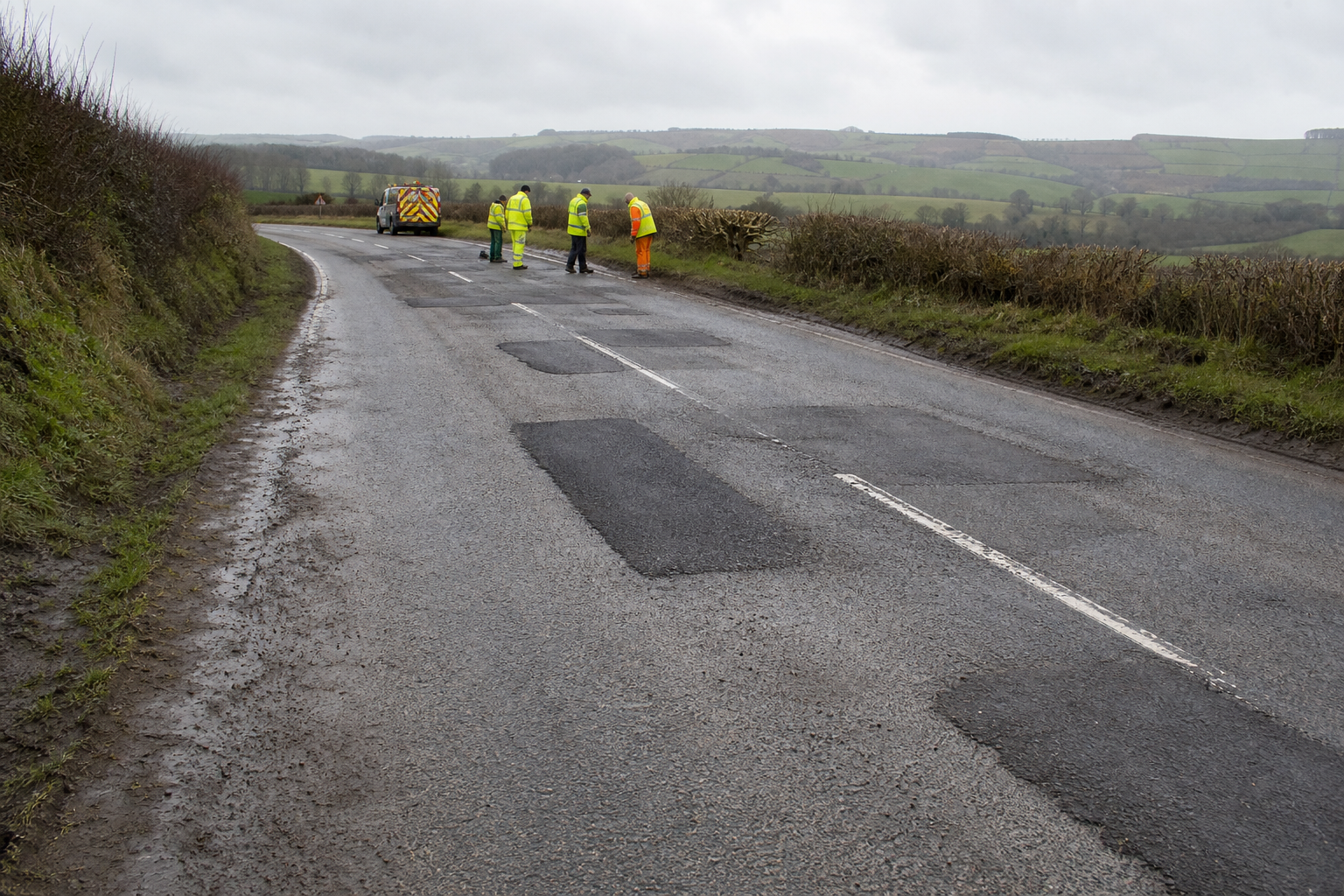
Carmarthenshire County Council estimates that £77.1m of carriageway maintenance work is outstanding, as reduced long-term funding puts further pressure on the county’s road network.
The figure comes from the council’s 2025 highways report and covers carriageway maintenance only. It does not represent the total cost of work across the wider highway network, including bridges, drainage, street lighting and footways.
Funding pressure shifts maintenance towards repairs
Audit Wales says real-terms funding for highways and roads has fallen by 40% since 2008–09. The auditor said the reduction had limited the council’s ability to manage its network sustainably and cost-effectively, with its approach becoming increasingly risk-based and reactive rather than preventative.
The council has maintained the condition of classified roads, according to Audit Wales, but this has come at the expense of unclassified roads, which account for almost half of the network. The number of unclassified roads requiring urgent work has also increased.
Recorded potholes across the network rose by 456% between 2020 and 2024. Audit Wales’ figure relates to reported potholes and is an indicator of pressure on the network, rather than a like-for-like count of every defect.
Shortfall against annual maintenance requirement
Carmarthenshire’s 2025 highways report estimated that at least £8m a year was needed to maintain current road conditions. Planned capital investment in road surfacing and preventative treatments across 2025/26 and 2026/27 totalled almost £9.5m.
That two-year allocation was £6.5m below the report’s estimated requirement for keeping the network from deteriorating further. The programme is not presented as sufficient to clear the £77.1m backlog.
Audit Wales warned that the increasingly reactive approach was not sustainable over the longer term and could lead to worsening road conditions and higher costs. The council must therefore prioritise work according to road condition and risk, determining which locations receive treatment and when.