

Local authorities and national agencies are directing millions of pounds towards highway drainage, culvert repairs and flood resilience schemes in 2026, although the funding comes from a range of budgets rather than a single road-flooding fund.
Dorset Council has approved up to £5.25m for countywide flood resilience. The package includes a £5m capital fund for drainage upgrades, culvert repairs and surface treatments, alongside £250,000 for a dedicated gully-cleaning crew. It was approved by the council’s full council on 10 February.
Oxfordshire County Council has added £4m for gully infrastructure repairs over two years, with £1.7m released for 2026/27 and £2.3m planned for 2027/28. That is in addition to the authority’s annual drainage budget of £2.746m.
Funding comes from several programmes
The Department for Transport’s highways maintenance block provides £7.3bn of capital funding between 2026/27 and 2029/30. The allocation for 2026/27 is £1.62bn, comprising £1.09bn of baseline funding and £525m of incentive funding. The money is not ring-fenced for drainage, leaving councils to decide how much is spent on gullies, pipes and culverts.
Separately, the government has committed £4.2bn to flood defence over the three years from April 2026 to March 2029, within a longer-term commitment of £7.9bn to March 2036. The Environment Agency’s 2026/27 programme includes £830m for more than 600 flood schemes, as part of £1.4bn being invested in flood defences during the year.
Wales is allocating more than £85m to flood and coastal risk management in 2026/27. This includes almost £43m of capital funding for new schemes, more than £7.4m through the Small Scale Works Grant for 106 local projects, and £5.26m for 35 natural flood management schemes.
Named highway schemes
Derbyshire County Council has included £2.57m for flooding and drainage improvements in its 2026/27 highways capital programme. Individual allocations include £150,000 for Church Drive in Shirebrook, £100,000 for the A5132 Twyford Road, £80,000 for Hall Lane in Staveley and £60,000 for Straw Lane in Stretton.
Lincolnshire County Council has approved £606,000 for drainage improvements at Aslackby, covering Temple Road, Aveland Way and Kirkby Underwood Road. The scheme will address runoff from the A15 and repair highway drainage infrastructure, including a partially collapsed section of pipe.
North Yorkshire Council has proposed £910,000 for drainage works on the ‘Caravan Route’, a diversion used when the A170 at Sutton Bank is closed. The funding remains proposed for 2026/27 rather than confirmed.
On the strategic road network, National Highways’ £5.9m drainage programme near junction 26 of the M5, close to Wellington in Somerset, included ditch de-silting, camera surveys, gully renewal and replacement of blocked pipes. Work began in October 2025 and was due to finish by the end of February 2026.
Sustainable drainage and coastal protection
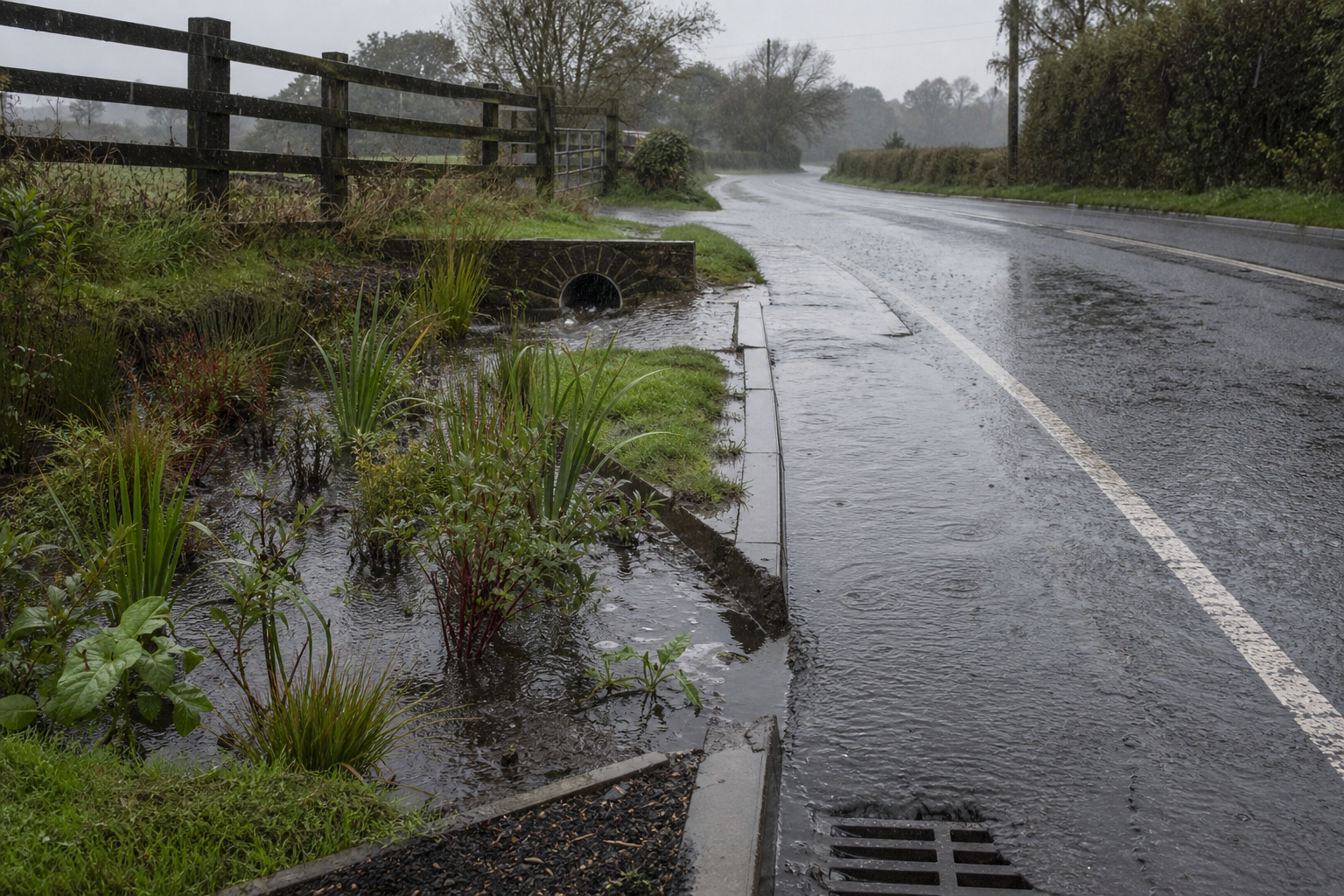
Hampshire County Council has approved the second phase of a sustainable drainage pilot in Fareham, delivered with Southern Water. The scheme will create two permanent rain gardens on Southampton Road and one on Serpentine Road to slow the flow of rainwater into the combined sewer. The overall cost has risen to £1.31m, with the county temporarily underwriting £191,000 while a revised funding agreement is completed. Construction is due by March 2027.
Cardiff Council is delivering the £35.2m Rover Way coastal defence scheme. The Welsh Government is providing 85% of the construction funding and all development costs. The project is intended to reduce flood risk to about 2,300 homes and 204 other properties.
Herefordshire Council has approved £445,000 for drainage works through its Drainage Town and Parish Grant, with a further £57,000 carried over from the previous funding round. The programme covers 89 town and parish councils. West Sussex County Council has also approved more than £32,000 for culvert, ditch and resurfacing works at Honeybridge Lane and Pepper’s Lane in Ashurst.
Gully cleaning remains a local decision
Authorities set their own gully-cleansing cycles, generally using risk-based approaches. Leicester City Council cleans gullies in areas at high risk of surface-water flooding, on main arterial routes and in non-residential locations annually, while other gullies are cleaned every two years.
Oxfordshire inspected and cleansed about 147,000 gullies and catchpits during a 12-month programme from April 2025, identifying a backlog of damaged gullies. Leicestershire County Council is trialling a 40-month interval for its lowest-priority gullies, while Dorset’s new crew will support its wider flood resilience package.