

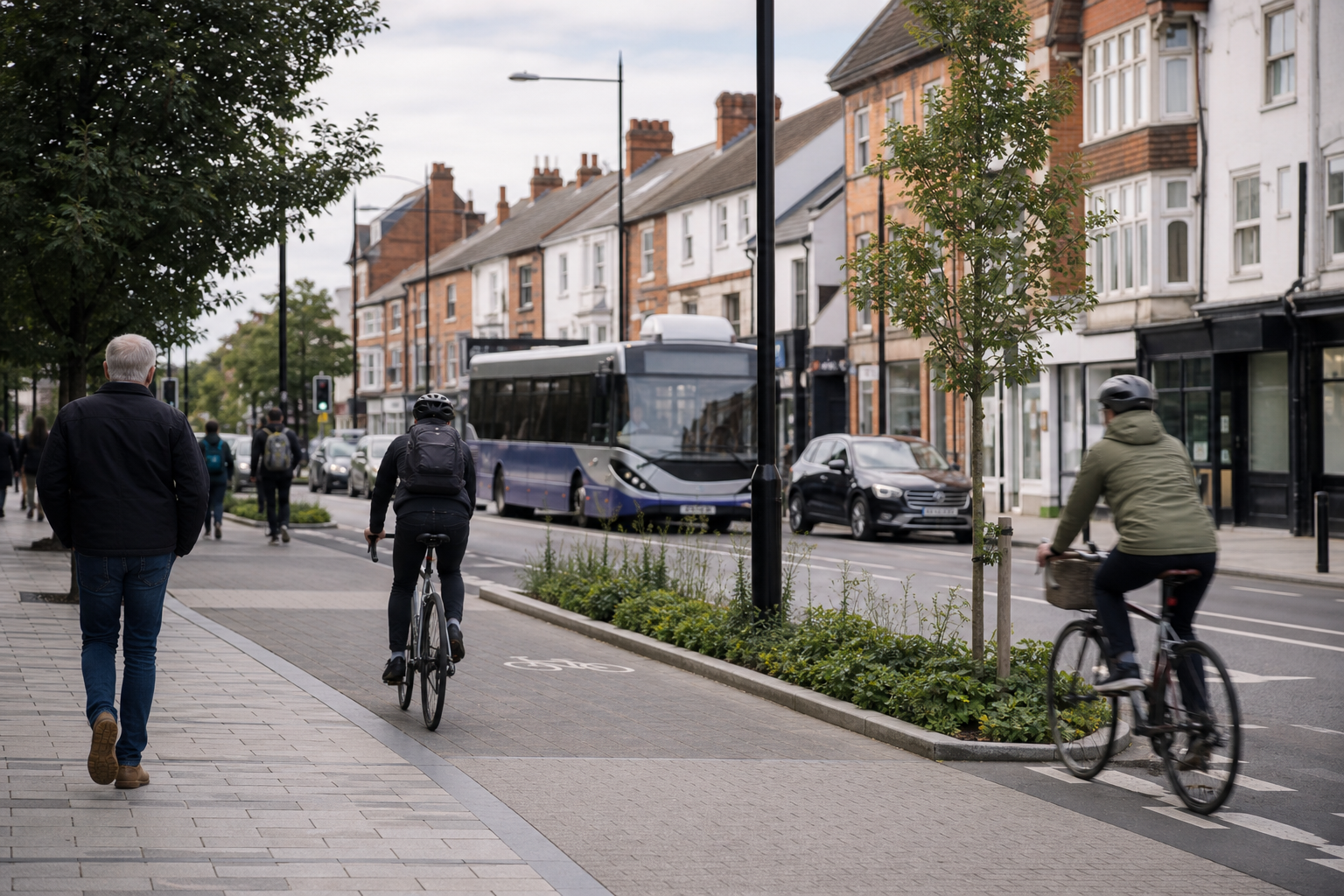
The Department for Transport (DfT) has published revised statutory guidance encouraging councils to plan transport around sustainable travel and long-term outcomes rather than forecast traffic growth.
The guidance promotes a ‘vision-led’ approach, replacing the traditional ‘predict and provide’ model in which authorities forecast future demand for road space and build capacity to accommodate it.
Road user priorities
Councils are advised to establish hierarchies for different road users according to the type of road. On streets, the hierarchy should broadly follow the principles in the Manual for Streets, putting people walking and wheeling first, followed by cyclists, public transport users and private motor traffic.
The approach is intended to give greater weight to walking, cycling and public transport when local authorities plan and design transport networks. The guidance also links elements of central government transport funding to compliance with relevant guidance.
Political criticism
Shadow transport secretary Richard Holden criticised the changes on behalf of the Conservative Party, arguing that councils should retain greater discretion to respond to local priorities.
Holden accused the Government of waging a “war on motorists” and questioned the link between funding and adherence to the guidance. He said residents should be able to express their preferences on measures including cycling infrastructure and pedestrianisation.
The revised guidance forms part of the Government’s wider policy to reduce transport emissions and support its net zero objectives.