

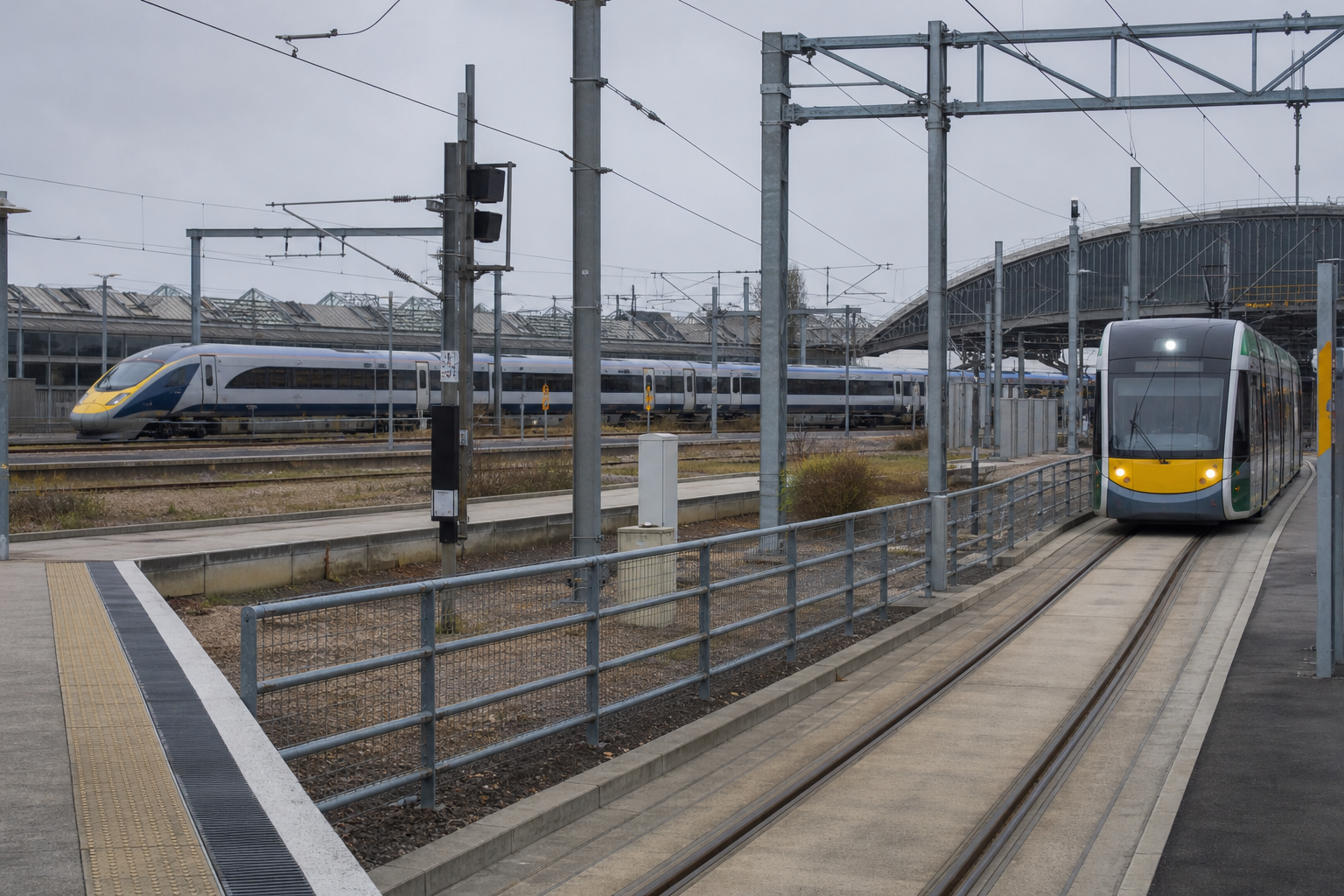
The Government’s new strategy for rolling stock and rail infrastructure has raised questions over how Great British Railways (GBR) will address high-speed and tram-train services.
Published last month, the GBR Rolling Stock & Infrastructure strategy supports direct procurement of new trains by GBR where this is judged to offer the strongest overall outcome, according to TransportXtra.
The strategy is intended to go beyond the question of who buys trains. It seeks to bring decisions on rolling stock and infrastructure closer together, ending what the publication describes as their previous separation.
TransportXtra reports that the Department for Transport has provided explanations for several notable omissions from the document. However, the report’s headline focus is on the apparent lack of detail relating to high-speed and tram-train fleets.
A more integrated approach
Under the proposed model, GBR would take a more strategic and consistent approach to specifying and acquiring rolling stock. The organisation would be able to purchase trains directly when that provided the best overall result, rather than relying solely on existing arrangements.
The strategy’s wider rationale is illustrated by changes on the Core Valleys network, where discontinuous electrification and battery-electric trains have reduced delivery costs, disruption and construction time, TransportXtra reports.
The publication’s analysis, by Rhodri Clark, examines how the new approach could affect future train specifications and procurement, while highlighting areas that remain insufficiently explained in the strategy.