

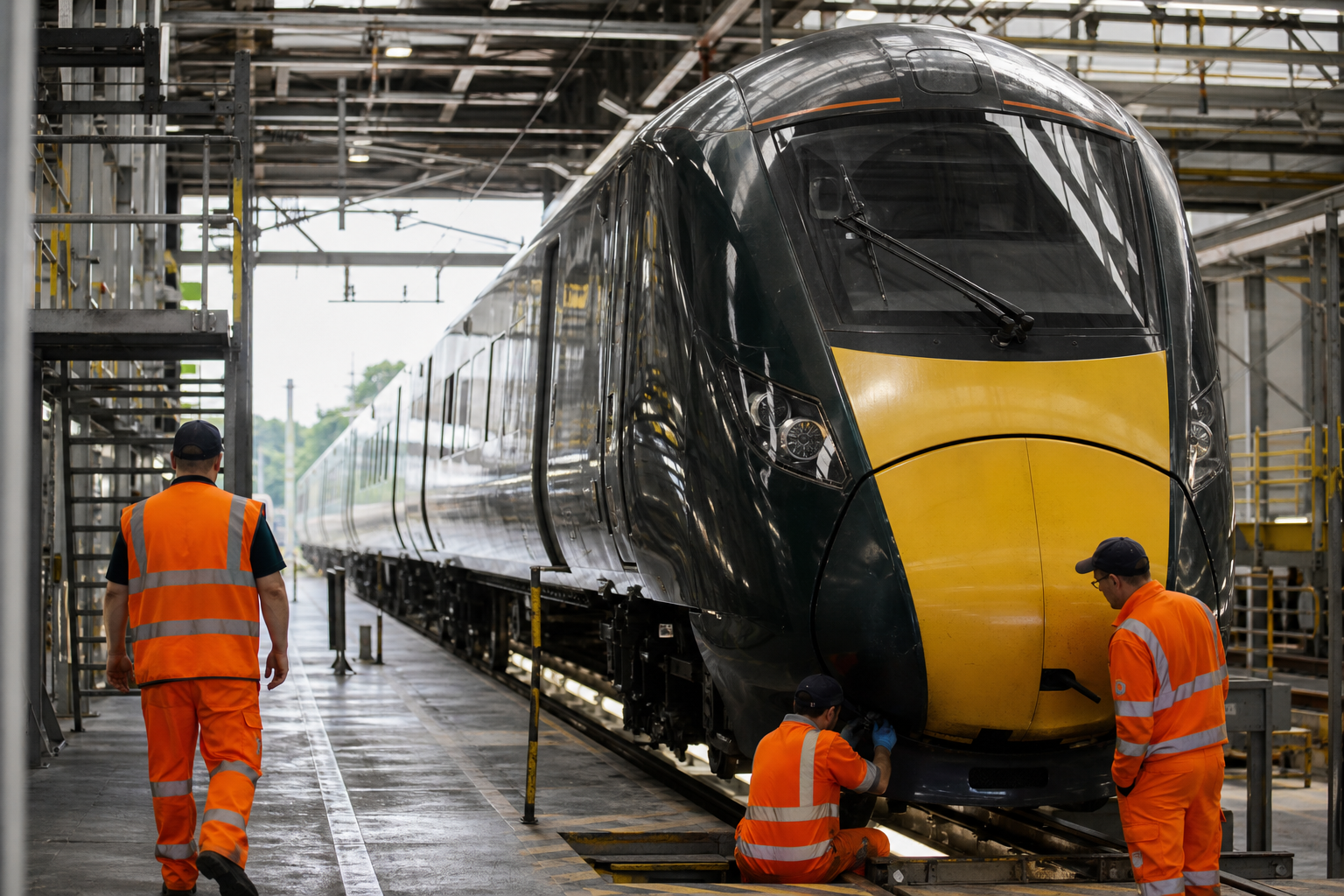
The Government has published a long-term strategy to coordinate decisions on rolling stock and railway infrastructure through Great British Railways (GBR).
Published on 28 September, the Rolling Stock and Infrastructure (RSI) Strategy covers trains, track, traction power, signalling, depots and maintenance over the next 35 to 40 years. The Department for Transport (DfT) said it was the first strategy of its kind in three decades.
Integrated planning
The DfT said rail decisions had historically been made by different organisations, often on differing timescales. It argued that this had contributed to fragmented fleet procurement, infrastructure constraints and a stop-start work pipeline for suppliers.
Under the proposed approach, trains and infrastructure will be planned as a single integrated system. Depots, maintenance, materials and logistics will be considered as part of system design, with the strategy also setting out a move towards condition-based and predictive maintenance.
GBR is expected to act as a single coordinated buyer for trains and develop a Fleet & Infrastructure Plan (FIP). The DfT said the FIP would provide a credible long-term pipeline for rolling stock and infrastructure work, giving suppliers greater certainty to invest in skills, apprenticeships, facilities and innovation.
Train procurement and traction
GBR will assess on a case-by-case basis whether direct public ownership, leasing or other financing arrangements provide the best value for taxpayers and farepayers. Leasing will continue under existing contracts but, according to the DfT, will no longer be the default option.
The strategy proposes “fleet families” with more standardised designs across train types, allowing fleets to be managed as a national portfolio. It also sets an ambition to move progressively away from diesel through battery-electric trains and targeted electrification, including discontinuous electrification on routes where battery-electric multiple units replace diesel trains.
Industry response
The Railway Industry Association (RIA) welcomed the strategy but said the forthcoming FIP must turn it into a credible and investable programme. Darren Caplan, the organisation’s chief executive, said the document was “a welcome step towards a more joined-up and long-term approach to investment in the railway”.
Caplan said the strategy did not address freight sufficiently and called for the FIP to support the Government’s target of increasing rail freight by 75% by 2050. He also said the plan should account for passenger growth and set out the implications for electrification, signalling and rolling stock.
Campaign for Better Transport chief executive Ben Plowden said coordinating train planning with infrastructure, improving standardisation and creating a more predictable investment pipeline should support a more reliable and accessible railway. He added that the key test would be how quickly the proposals translated into improvements for passengers.