

The Green Party has approved a revised transport policy aimed at cutting carbon emissions by 75% within ten years through reduced travel demand and the electrification of all modes.
The policy was agreed at the party’s Autumn Conference in Brighton on 15 October 2026. It proposes a 50% increase in rail travel, more frequent and reliable bus services, and opposition to almost all new road building.
Active travel and shared mobility
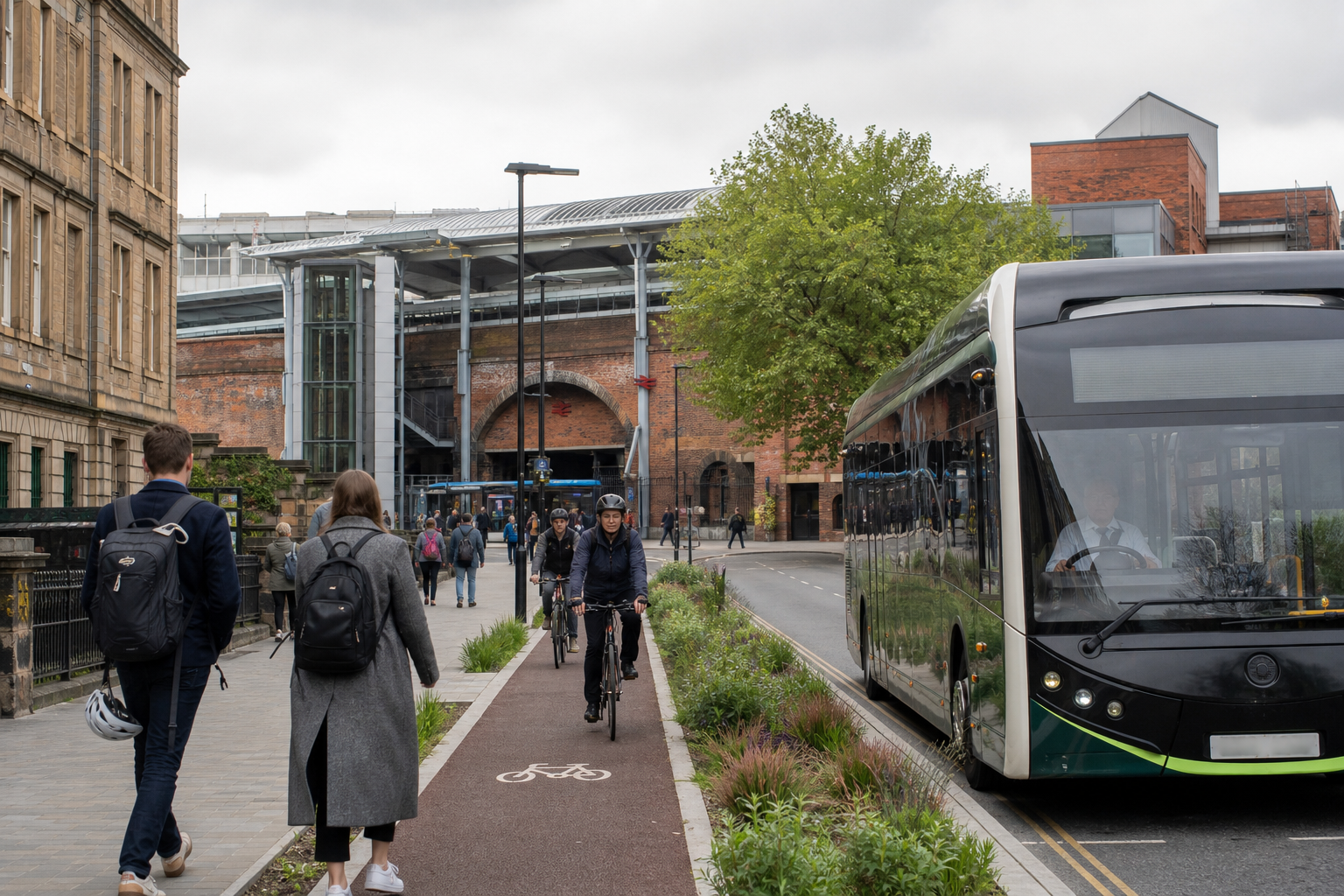
The party wants at least half of journeys in England’s towns and cities to be made by walking, wheeling or cycling within five years. That compares with a stated proportion of one third in 2025.
National bodies, strategic authorities and local authorities would be required to develop comprehensive active travel networks. The proposals include reallocating road space and time from private motor vehicles to create dedicated infrastructure or make existing roads suitable for walking, wheeling and cycling.
The Green Party also proposes transferring responsibility for coordinating the National Cycle Network in England and Wales from Walk Wheel Cycle Trust to national governments, with the network expanded into a National Active Travel Network.
Its policy calls for greater fiscal and legislative support for shared mobility, including bike hire, e-scooter hire and car-sharing clubs. Strategic authorities would be supported in regulating shared mobility schemes, including their parking and integration with public transport.
Flights and private car use
The policy seeks to reduce demand for passenger and freight flights, halt airport expansion and make people responsible for the most polluting and unnecessary flights pay more. It specifically identifies private jets, premium-class travel and frequent flyers.
The party says it recognises that poor public transport and spatial planning can leave people dependent on private cars. It proposes providing more attractive alternatives before implementing measures intended to reduce driving.
For rural areas, the policy focuses on making active travel viable for short trips within and between settlements, particularly around market towns, and improving links with public transport.
It also calls for infrastructure to accommodate people with different abilities and mobility aids, including disabled people and their carers. The party says it will review international evidence on whether e-scooters, e-mobility aids and similar devices should be legalised, alongside introducing standards for higher-quality electrically assisted devices.
Party response
Sian Berry, MP for Brighton Pavilion and the Green Party’s transport spokesperson, said: “For too long transport policy has focused on moving vehicles rather than helping people to get where they need to go. Our new policy is about giving everyone genuine choices – reliable and affordable public transport, safe walking, wheeling, and cycling, and communities where owning a car is not essential for getting to work or seeing friends and family.
“We desperately need to tackle transport’s contribution to the climate crisis in a fair way. That means providing attractive alternatives to car and air travel, moving more freight onto rail, and rapid electrification of all modes of travel. Those responsible for the most polluting and unnecessary journeys, including very wealthy private jet users and the most frequent flyers, should pay their fair share for the damage they cause.”