

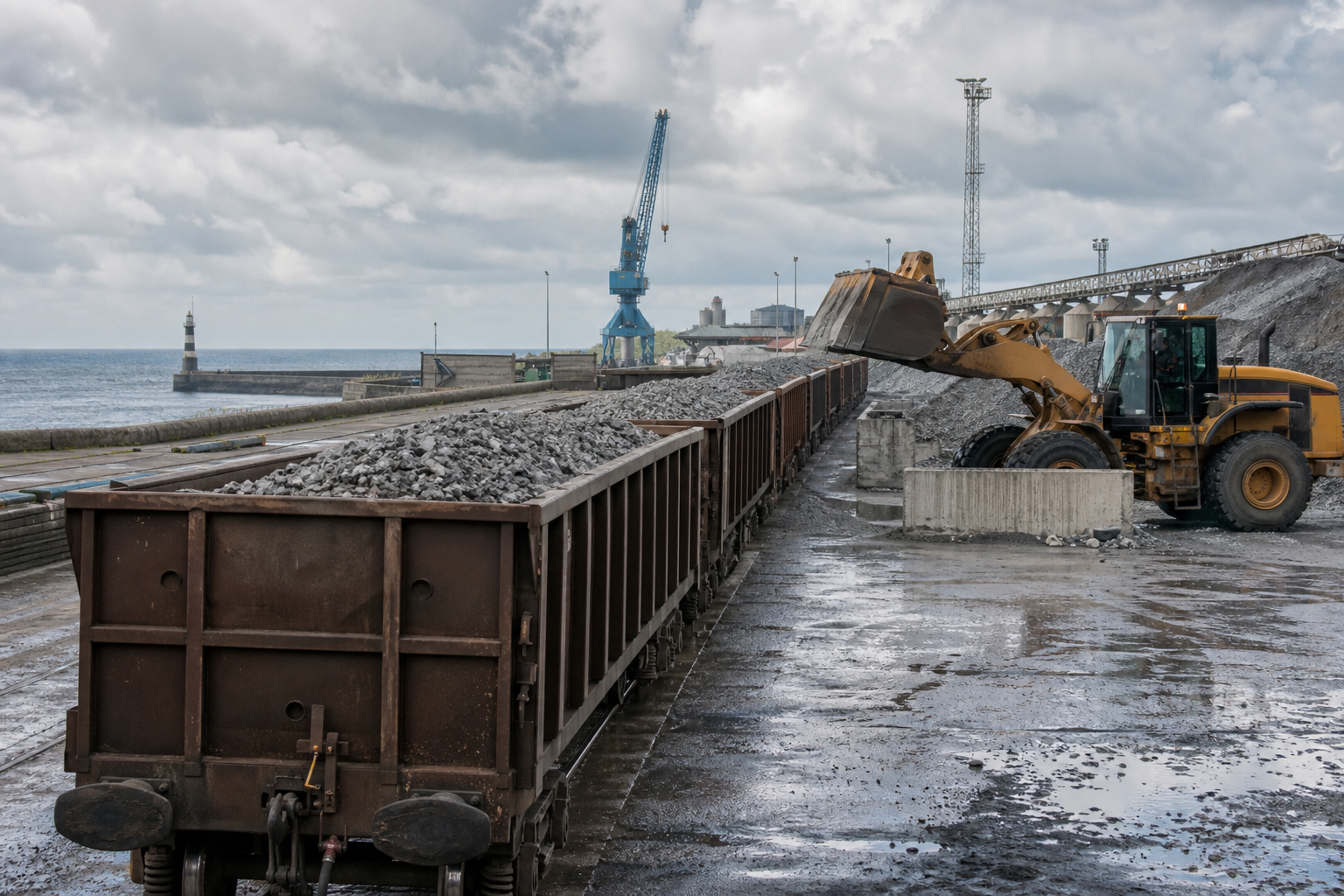
Holcim UK has started a new rail freight service into the Port of Sunderland, creating an alternative supply route for aggregate used in asphalt production across the North East.
The service began in summer 2026 and currently runs at around one train per week. Each train carries 19 wagons and approximately 1,425 tonnes of material. Fourteen services have so far delivered nearly 20,000 tonnes, with the flow expected to reach about 100,000 tonnes during its first 12 months.
Alternative route into the region
Holcim said the route was developed in response to changing supply arrangements at the Port of Tyne, which had increased pressure on established logistics routes. Material arriving at Sunderland will primarily support Northumbrian Roads, with additional supply for Hulands Asphalt and the wider regional market.
The company said using the port’s existing railhead, storage facilities and handling equipment would help limit exposure to road haulage costs and improve the resilience of local asphalt production. The Port of Sunderland can store up to 6,000 tonnes of material.
Mustapha Nyass, regional operations manager at Holcim UK, said: “Reliable asphalt supply is critical to keeping North East construction and infrastructure projects moving, from road maintenance to wider regional development. This new route gives us a stronger, more resilient way to get essential materials into the market, so customers can plan with greater confidence.”
Existing infrastructure
The project was delivered by Holcim’s asphalt, aggregates and logistics teams in cooperation with GB Railfreight and the Port of Sunderland. Open box wagons are being used because they can operate without significant new fixed infrastructure and can be unloaded with existing port equipment, although they require more manual handling than automated bottom-discharge wagons.
Damien Preece, general manager for rail at Holcim UK, said the route required the right combination of material, wagons, train paths, route knowledge and receiving facilities. He added that increased use of existing wagons and the Sunderland railhead would strengthen the economics of the operation.
The company said the service provides a practical example of modal shift in a live construction-materials supply chain. The UK Government has set a target for rail freight to grow by at least 75% by 2050.