

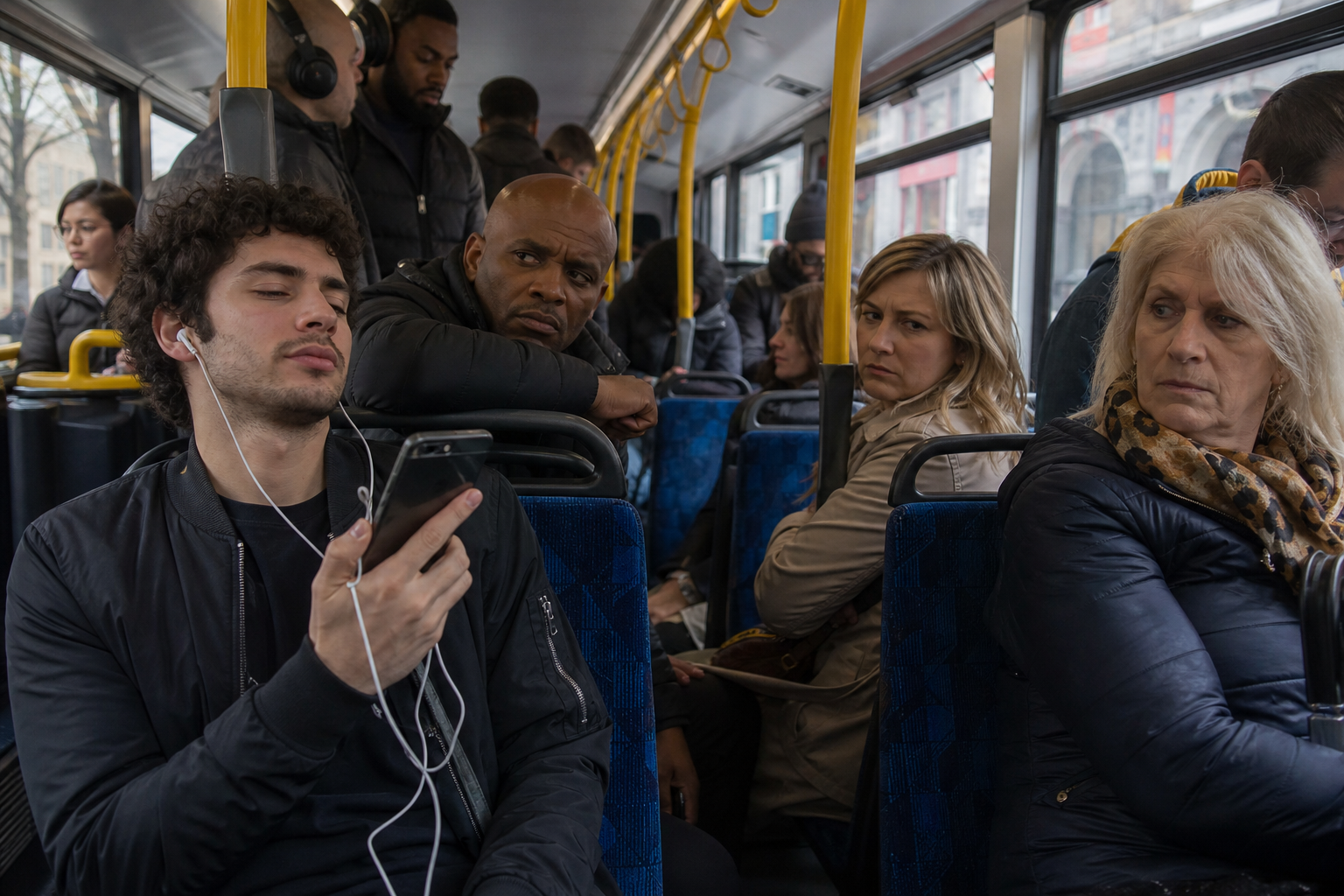
London commuters have called for tougher action against noisy and inconsiderate passengers after Singapore introduced fines of up to S$500 (£293) on buses.
The new Singapore rules cover behaviour including putting feet on seats, playing loud audio, eating, drinking and littering. More serious offences include causing an obstruction or danger at a bus terminal and soiling part of a bus, interchange or terminal.
Singapore brings bus rules closer to rail network
Singapore’s Land Transport Authority (LTA) said the measures were intended to create “a safer, more considerate and pleasant public transport environment for all”. The rules were announced on Monday and bring bus regulations closer to those already applying on Singapore’s Mass Rapid Transit network.
Authorised bus staff, including ticket inspectors and interchange staff, can issue official notices to passengers suspected of committing an offence. Drivers will not have the same powers, with the LTA saying they are expected to focus on operating vehicles safely. They can still tell passengers to stop disruptive behaviour, while those who refuse may be asked to leave and, in serious cases, face police involvement.
London debate focuses on enforcement
The Singapore policy has resonated with Londoners because complaints about passengers playing music or videos aloud on phones are familiar on the capital’s transport network.
Existing UK rules prohibit some forms of anti-social behaviour on trains and at stations, including using sound-producing equipment without permission where it annoys other passengers. Liberal Democrat politicians have also advocated fines of up to £1,000 for people who use phones without headphones on public transport.
Online discussion about the Singapore rules produced disagreement over whether passengers should challenge noisy travellers themselves. One commenter argued that the problem would be smaller if people simply asked: “Hey, do you have some headphones?” Another said they had challenged passengers several times but had never seen anyone else do so.
Others warned that confrontation could carry risks. Contributors described arguments after asking passengers to turn down music or video sound, while one cited an account of a mother who was allegedly assaulted after making a similar request.
‘Our problem isn’t that we don’t have any rules’
The discussion broadened into concerns about the enforcement of existing standards on London’s public transport, including eating smelly food, vaping, placing feet on seats, carrying large rucksacks during rush hour and moving through ticket barriers without paying.
“Our problem isn’t that we don’t have any rules. The problem is that we don’t enforce the rules we do have,” one commenter wrote.
Another described the behaviour as having become normalised, while questioning whether London had reached a point where the network was effectively “Wild West”.
Singapore’s LTA said: “Every commuter has a part to play in ensuring a gracious and pleasant commuting environment.” Similar measures have also been reported in Kraków, Poland, where passengers can face fines of up to 200 złoty (£39) for disturbing the peace and quiet of a vehicle with mobile phones or other electronic devices.