

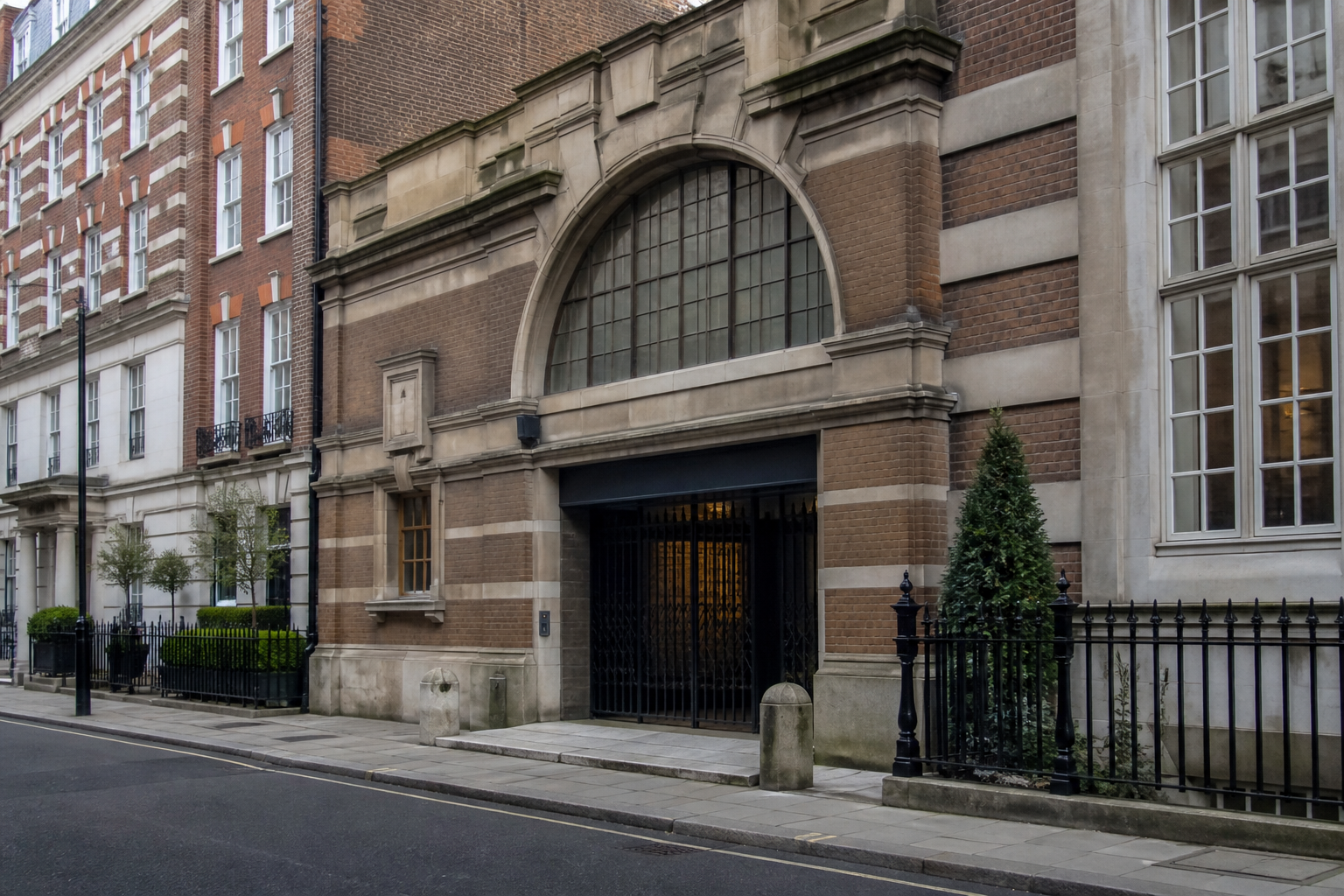
A London Underground station in Mayfair was opposed by local residents before it opened and later closed after attracting few passengers.
Down Street station opened on 15 March 1907 on the Great Northern, Piccadilly and Brompton Railway, whose route largely corresponds with today’s Piccadilly line. Residents objected to the proposed station, fearing it would bring “undesirables” into the area.
The railway company had wanted an entrance on the main road, as it did at other stations along the route. Local resistance instead led to the entrance being placed on a side street, leaving Down Street less visible and less convenient than nearby Hyde Park Corner and Dover Street.
Passenger numbers were weak from the outset and the station was closed in 1932. Its tunnels later gained a more significant role when they were converted into an underground bunker for the Railway Executive Committee after the outbreak of the Second World War in 1939.
From Tube station to wartime bunker
The former station was fitted out with offices, bathrooms, dining rooms and dormitories. Atlas Obscura has reported that the corridors were narrow enough for a tea trolley to pass through.
A small section of the former platform was retained, allowing railway executives to signal an approaching train with a red lamp and board beside the driver. Winston Churchill and members of his government also used the bunker before the Cabinet War Rooms in Westminster were completed. Churchill reportedly called it “The Barn”.
After the war, London Transport used the site for engineering access and as an emergency exit. The London Transport Museum now runs guided tours of the abandoned station, with parts of the platform-level offices still intact.