

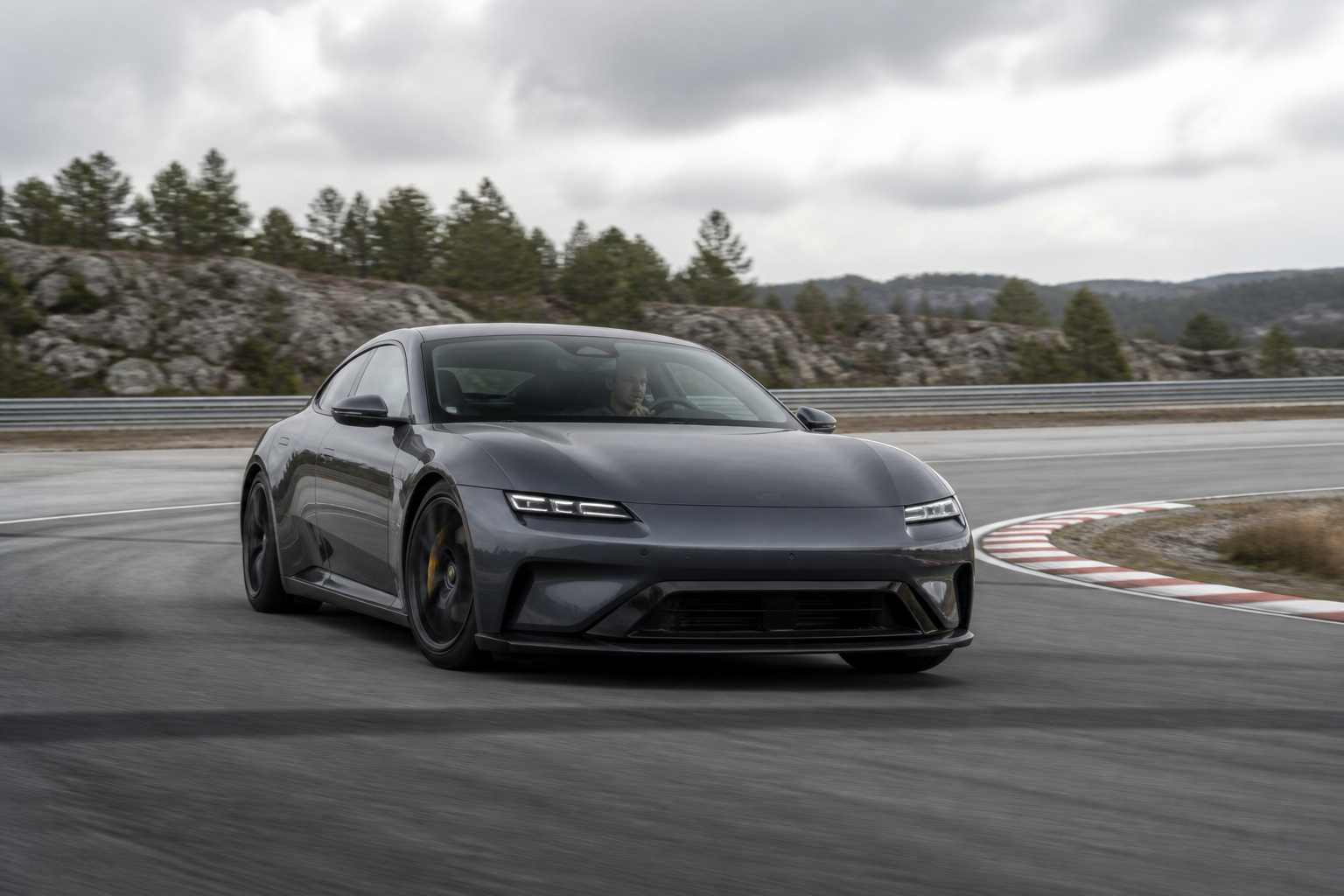
A University of Oxford pilot study with Polestar has examined how drivers experience electric vehicle performance without the sound and vibration of an internal combustion engine.
The study, conducted by Oxford’s SDG Impact Lab, involved 12 drivers testing two versions of the Polestar 4 at Sweden’s Gotland Ring. Participants drove the rear-motor model and the dual-motor version with the Performance pack in both calm and dynamic conditions.
Telemetry and driver responses
Researchers combined vehicle telemetry with heart-rate monitoring, eye tracking, psychological assessments and interviews. The aim was to compare the car’s physical performance with the driver’s physiological and psychological response.
During dynamic driving, participants blinked less, their pupils became larger and they held their gaze for longer. The researchers said these patterns were consistent with deeper attentional engagement. Vehicle data could also be linked to changes in drivers’ physiological activation.
On matched fast laps, the 400kW (544hp) dual-motor Performance version recorded 32% higher peak acceleration than the 200kW (268hp) rear-motor model, while requiring 15% less steering effort. It also generated greater cornering loads and more frequent hard-acceleration events.
Performance measured beyond speed
The Performance version scored 89.2 out of 100 on the study’s Performance/Dynamics scale, compared with 67.7 for the rear-motor car. It also achieved a higher overall experiential-quality score of 93.0, against 77.9, with most drivers rating it more highly on both measures.
Participants described performance as a combination of physical excitement, trust, control and intense focus. Several compared the experience with a “controlled roller coaster”, while one said the car “makes you feel like a better driver than you are.”
The researchers said the findings provide a basis for a larger Phase 2 study intended to develop a more extensive way of measuring the thrill of driving an electric car.
Christian Samson, head of product attributes at Polestar, said: “As electric cars redefine what performance can be, we wanted to understand something that can’t be captured by a specification sheet alone: the human experience behind the wheel. Working with University of Oxford allows us to look at performance through a different lens – connecting the engineering of the car with the experience of the person driving it.”
Maxwell Klapow, MPhil scholar at Oxford’s SDG Impact Lab, said: “Performance is not simply about going faster. It is about giving the driver a sense of confidence and control through predictable vehicle responses. Our research takes a step towards measuring that human experience, by connecting what the car does with what happens to the driver.”