

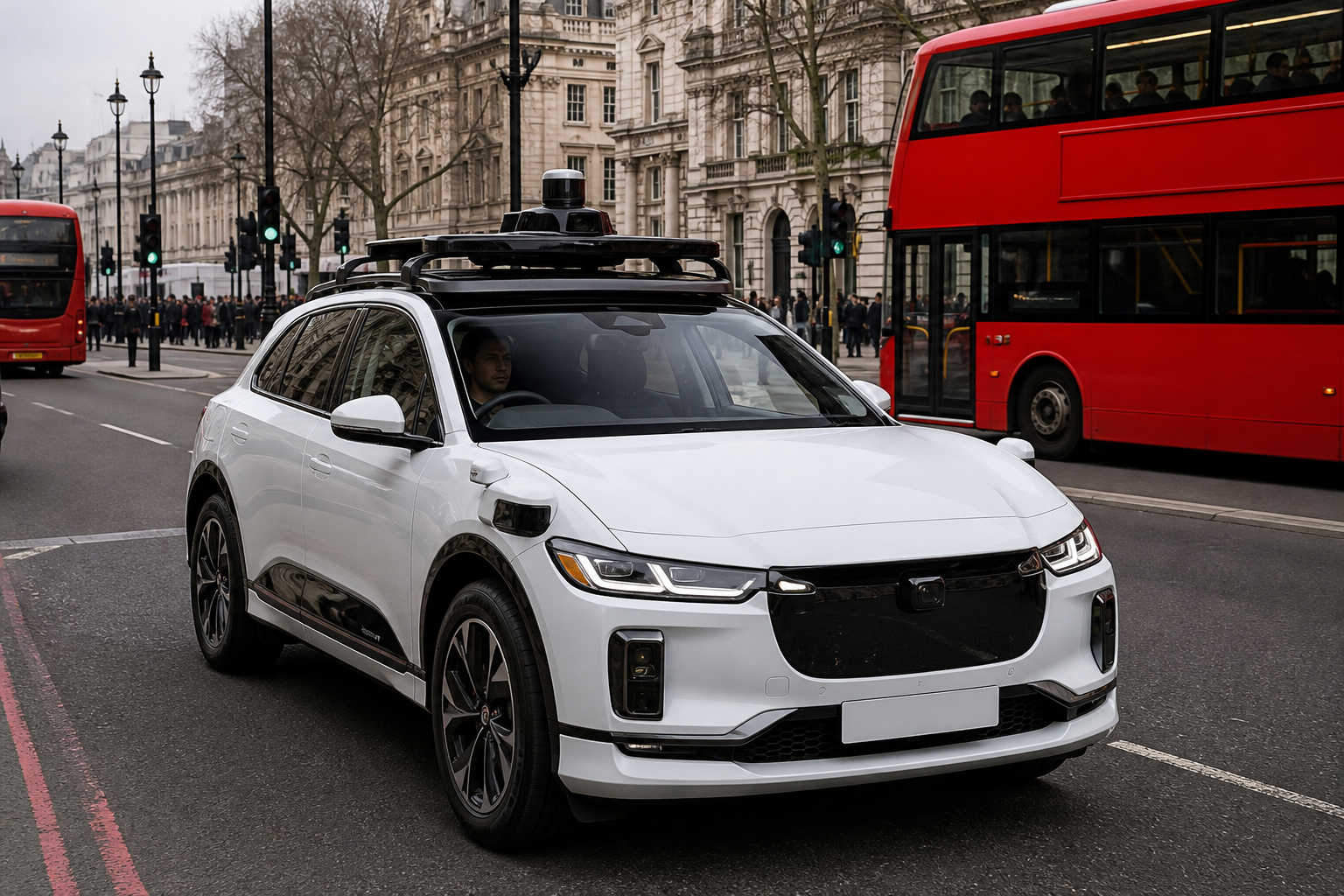
Pony AI is preparing to begin testing its seventh-generation robotaxis in London through a partnership with Uber, potentially making it the ride-hailing company’s second autonomous vehicle technology partner in the capital.
Testing is expected to start in the coming weeks, although the plans remain subject to UK regulatory requirements and engagement with national and local authorities. Any fully driverless passenger service would require approval under the Automated Passenger Services framework established by the Automated Vehicles Act 2024.
Second autonomous technology partner
Uber already offers supervised autonomous rides in London using vehicles supplied by UK company Wayve. The service launched earlier this year with 15 modified Ford Mustang Mach-Es licensed by Transport for London.
Pony AI and Uber first partnered in 2025 and are operating autonomous rides in Zagreb, Croatia, where passengers can book Pony AI-powered vehicles through the Uber app. The proposed London testing programme would extend that relationship into a more complex urban operating environment, with dense traffic, vulnerable road users and complex junctions.
James Peng, Pony AI’s founder and chief executive, told Zag Daily at MOVE 2026 that the company saw significant potential in the capital.
“London is such a huge market with great potential,” Peng said. “So I think competition is great.”
Regulatory approval still required
Pony AI had previously identified London as a target market but had not set a timetable for entering it. The company said it looked forward to working with government officials and partners as it develops plans for trials under the UK’s autonomous vehicle regulations.
The addition of Pony AI gives Uber another autonomous driving platform as it develops its longer-term strategy. It does not necessarily mean that Pony AI and Wayve will compete for the same contracts or deliver identical services.
The timing and scope of any passenger service will depend on regulatory approvals and the progress of testing. The plans nevertheless indicate growing interest in London as a market for autonomous mobility, while raising questions about how multiple technology providers could be integrated into the capital’s transport network.