

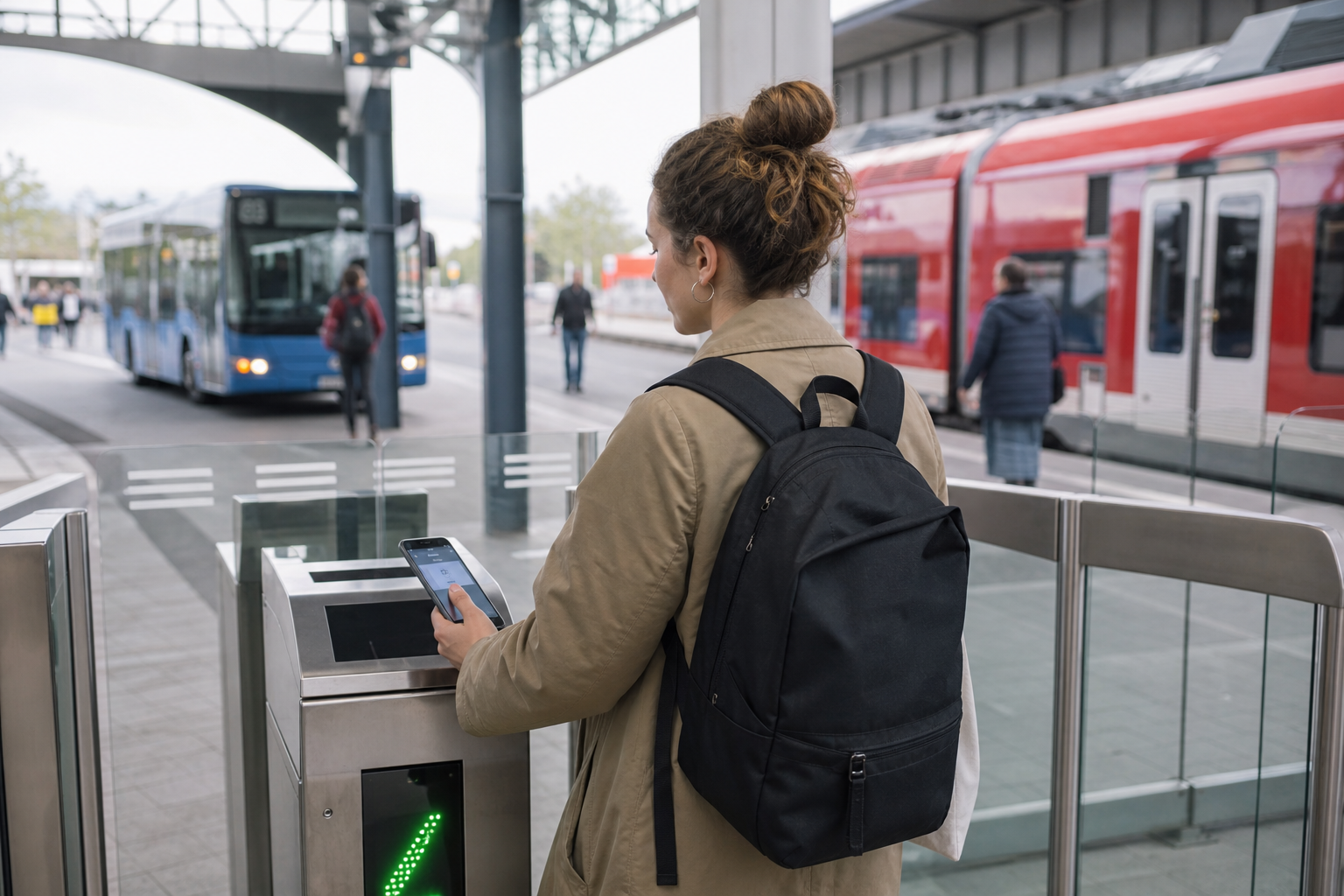
Transport authorities seeking to replicate the simplicity of London’s public transport ticketing should prioritise mobile pay-as-you-go (PAYG), rather than copying the capital’s contactless infrastructure, according to a new report.
Stop Talking about London-Style: Why Digital PAYG is now the Future of Ticketing was independently written by Thomas Ableman, formerly director of strategy and innovation at Transport for London. It was commissioned by Swiss ticketing technology company Fairtiq.
Lower-cost alternative
The report distinguishes between the passenger proposition associated with “London-style ticketing” and the technology used to deliver it. It argues that mobile PAYG can provide simple, multimodal journeys without the extensive validators, ticket machines, wiring and civil engineering required by a conventional contactless system.
One estimate cited in the report puts the cost of a mobile PAYG scheme at less than 5% of an equivalent contactless ticketing scheme. It also says mobile systems can be deployed more quickly and adapted more easily.
Drawing on European examples, including Denmark and Switzerland, and interviews with ticketing specialists, the report concludes that many of the features that have made contactless popular also apply to mobile PAYG. It argues that smartphones are increasingly suitable as the customer token because, in countries including the UK, they are carried by more people than contactless bank cards.
Call for updated investment decisions
Ableman said: “London’s Contactless system was a wonder of the world when it was launched; deservedly one of the greatest global transport innovations of the 21st century. But things have changed since 2012. It’s now possible for customers to use a device they already carry; making it easier for them and saving multiples of millions of pounds in platform validators and ticket machines.”
He added: “Policymakers need to give customers current technology, not one from the previous cycle. Transport authorities are custodians of public money and must not waste it by investing seven figure sums digging trenches and installing wiring when a better solution for their users is available.”
Fairtiq said its mobile PAYG technology had supported approaching 450 million multimodal journeys across Europe. The company said it operates in 12 countries, including national ticketing systems in Denmark, Austria and Switzerland, and has partnered with more than 100 transport authorities and operators.
Paula Ruoff, Fairtiq’s core markets lead, said the company was ready to help more authorities introduce multimodal ticketing. The report sets out more than a dozen recommendations for national and regional governments, rail operators, other transport operators and regional transport authorities.