

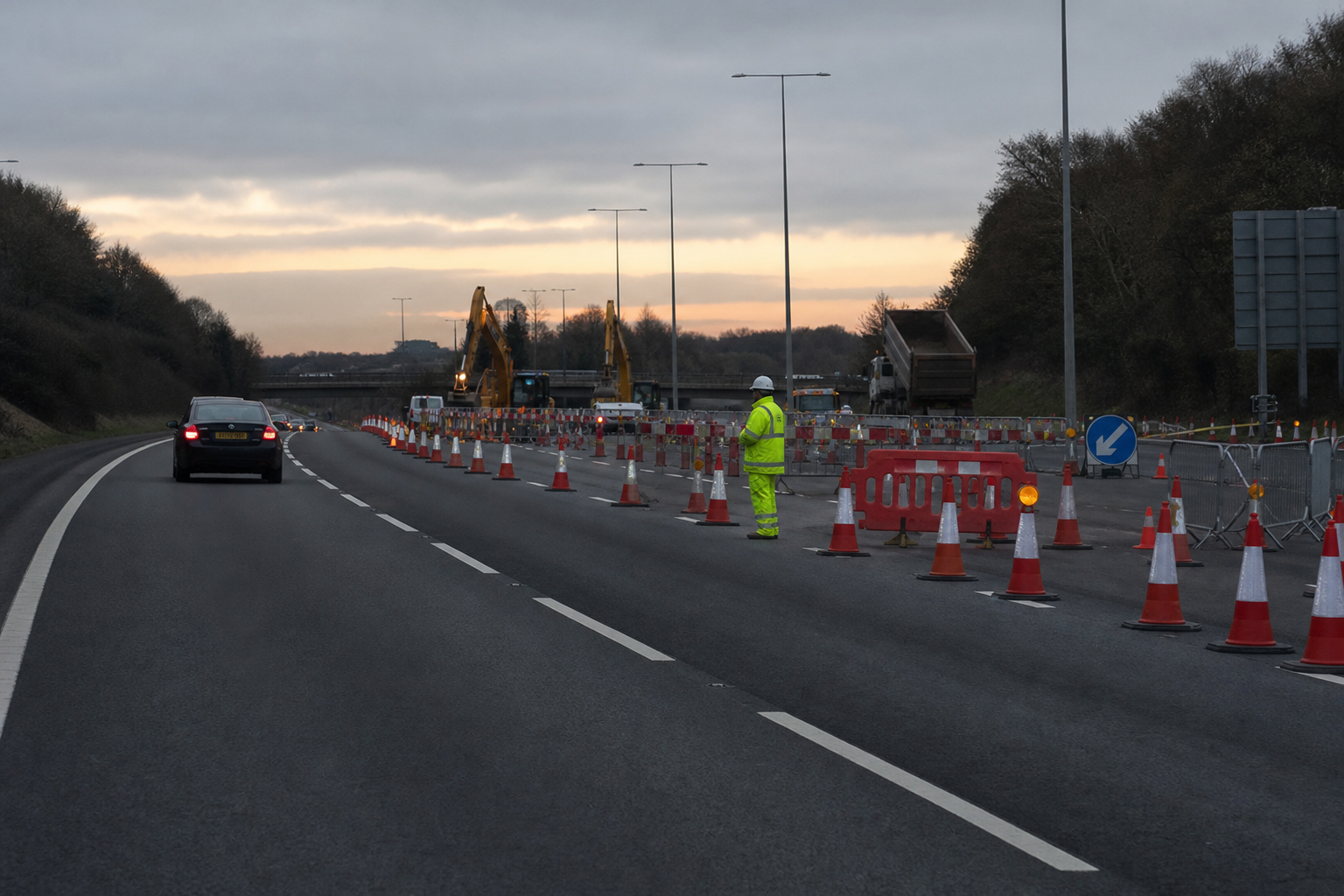
Incursions on the strategic road network fell by 39% month on month in September, according to the National Highways Incursions Working Group, but the organisation warned that the threat to roadworkers remains significant.
The group recorded 115 incidents during the month, 74 fewer than in August. However, 89 incidents—77% of the total—were classified as medium or high risk.
North West records highest total
The North West recorded the highest number of incursions, with 31, followed by the South East with 22 and the Midlands with 20. The East recorded 15 incidents, Yorkshire and the North East 14, and the South West 10.
Incursions affected 2% of closures in September, compared with an average of 3% during 2026 so far. The working group said incidents continued to involve drivers entering closed work areas deliberately, through confusion over temporary traffic management or by following authorised vehicles into a closure.
It identified 63 incidents, or 55% of the total, as cases where drivers were seeking a benefit. The group also highlighted weaknesses in closure integrity and in the control of site access and exit points, as well as risks to pedestrians, cyclists and e-bike users near roadworks and public access routes.
Warning technology reaches 2026 high
Use of Incursion Prevention and Alerting Systems reached 63% in September, the highest level recorded this year. The working group said effective deployment of warning technology, strong operational leadership, prompt escalation and the sharing of lessons between regions were examples of good practice.
It called for closure integrity to be monitored throughout shifts, particularly at access points and crossovers. It also urged teams to improve advance warning information, review sites with repeated incursions, brief workers on vehicle-following and deliberate-entry risks, and report incidents, near misses and abuse within 24 hours.
No injuries were recorded in September’s 115 incursions. The bulletin also listed four blue-light incidents, four breakdown incidents, 22 low-risk incursions and no incidents involving an impact protection vehicle.
“Although September saw a significant reduction in incursions, 89 incidents were still classified as Medium or High Risk. Never assume a closure remains secure,” the bulletin states. “Remain vigilant, monitor access points continuously and be prepared to respond to unexpected vehicle or pedestrian entry at any time.”
Fatal case reinforces warning
The bulletin also records the sentencing of Vilius Domarkas on 28 September. He was jailed for 10 years after admitting causing the death of highways worker Anthony Howe by dangerous driving.
Domarkas drove into a coned-off work area on the M23 near Gatwick Airport while significantly over the legal alcohol limit. He was disqualified from driving for 16 years and eight months.
The working group’s next priorities include targeted reviews of locations with repeated incursions, further deployment and optimisation of warning systems, and greater sharing of preventative measures between regions.