

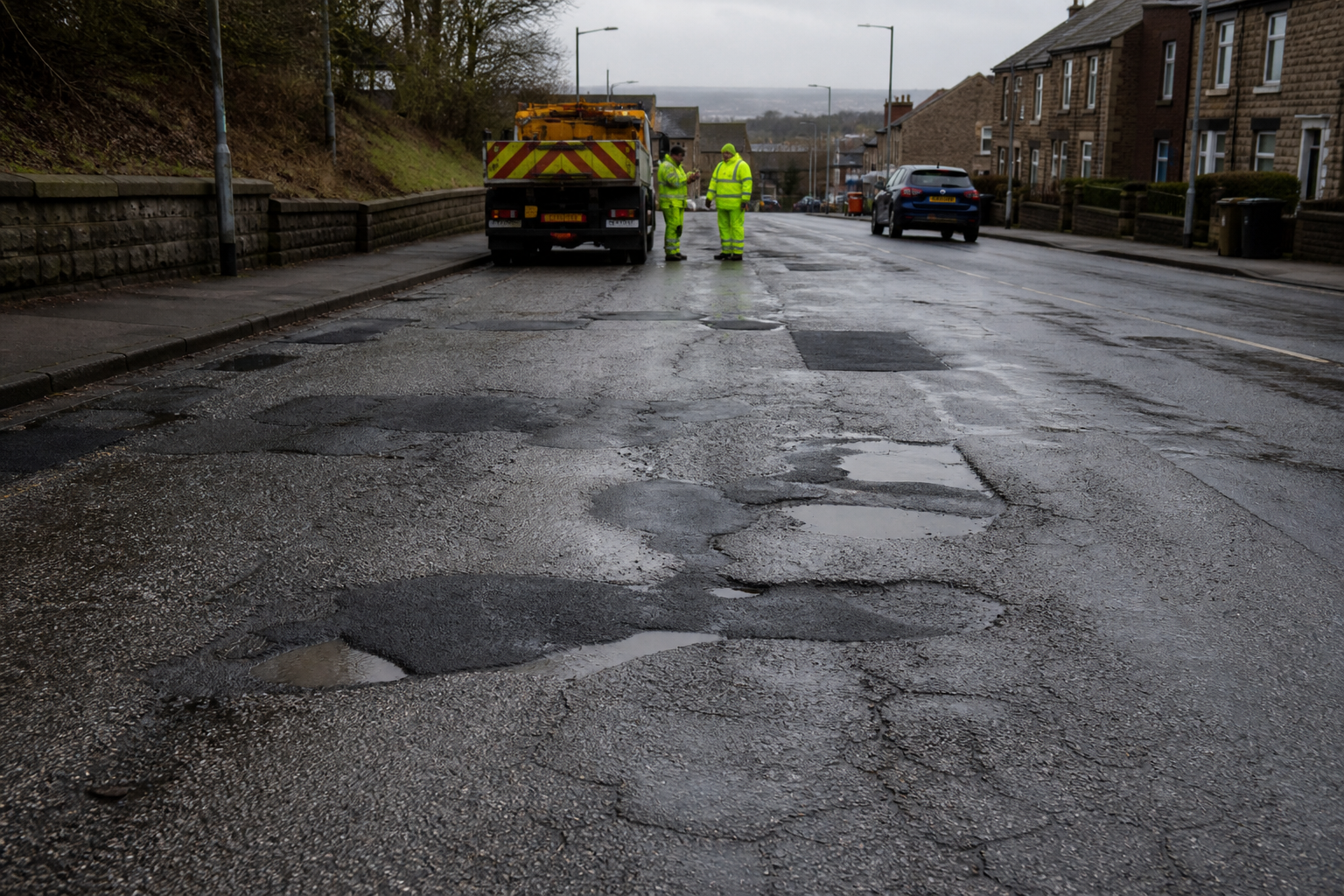
Sunderland councillors have called for a pothole emergency to be declared, prompting renewed scrutiny of the condition of the city’s roads and the council’s approach to highway maintenance.
Sunderland City Council has attributed pothole damage to a combination of factors, including adverse weather and ageing road assets. The authority has also pointed to its existing highways inspection programme, which it says is designed to identify defects and prioritise repairs according to condition and risk.
Inspection and repair pressures
The debate centres on whether current inspection and repair arrangements are keeping pace with deterioration across the network. Regular inspections do not mean every defect will be repaired immediately, as highway authorities must assess risk and allocate resources across the roads they manage.
Potholes can be accelerated by water, weather and repeated traffic loading. On older roads, individual defects may also reflect wider deterioration in the carriageway. In those cases, a temporary or isolated repair may not provide the same long-term benefit as larger-scale patching or resurfacing.
That creates a maintenance challenge for councils: reactive repairs can address visible defects, while preventative work and resurfacing may be needed to improve the condition of a broader section of road. Both approaches must be balanced within constrained highway budgets.
What would an emergency declaration change?
The councillors’ call increases political pressure on the council, although the authority’s response indicates that inspection and repair processes are already in place. The practical impact of any emergency declaration is therefore likely to depend on whether it leads to additional funding, changes in repair priorities or a wider maintenance programme.
For road users, the central concerns are whether reported defects are dealt with promptly, whether roads remain safe and whether repairs provide a durable solution rather than a short cycle of repeated patching.
The dispute illustrates the gap between managing a highway network through risk-based inspections and the public experience of travelling on individual roads. Potholes are among the most visible signs of road condition, making them a prominent test of how councils are managing ageing infrastructure and limited maintenance resources.