

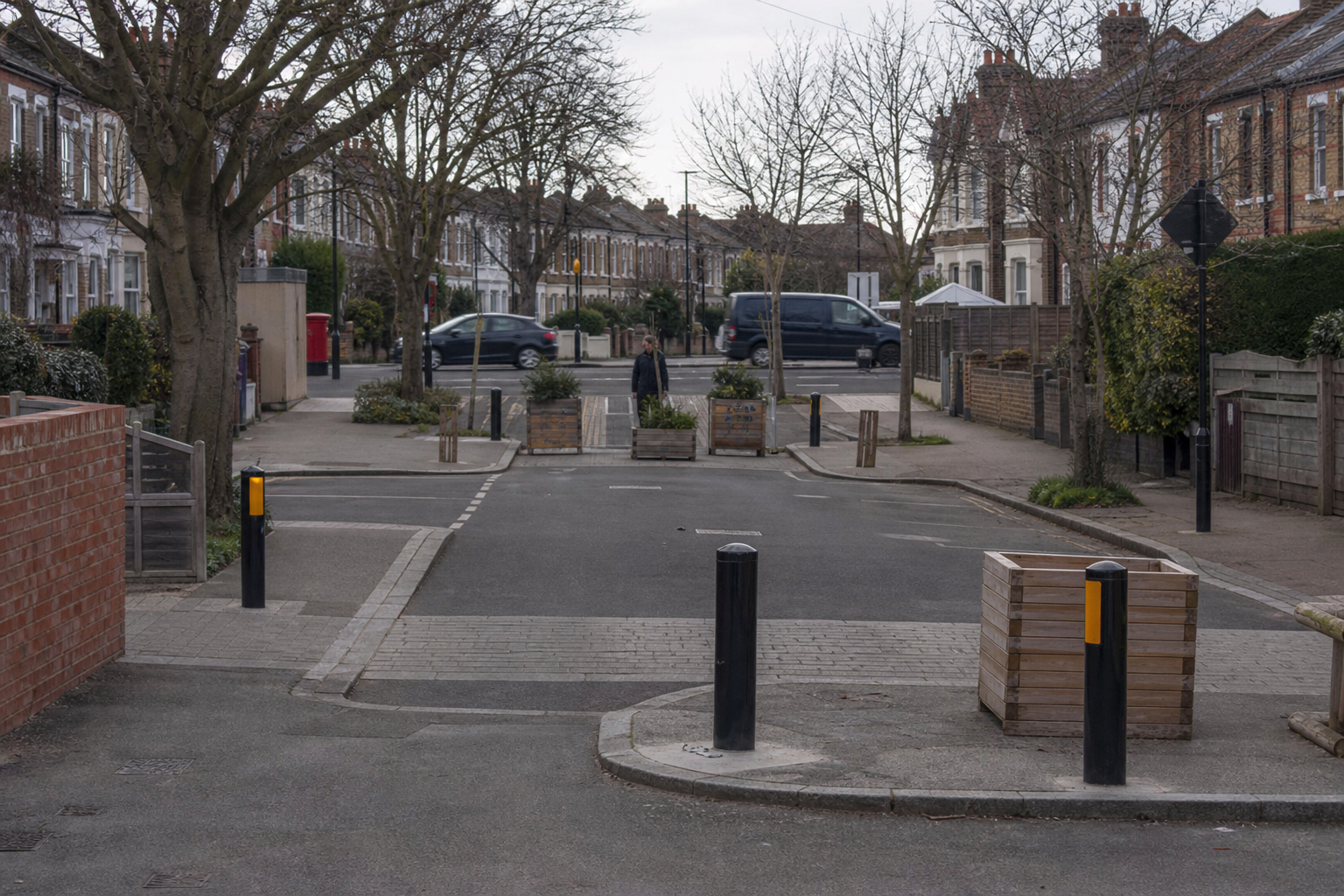
A low-traffic neighbourhood (LTN) in West Dulwich has been scrapped after Lambeth Council monitoring found no significant overall reduction in traffic and a rise in vehicle movements on roads around the scheme.
Traffic on the boundary roads increased by 4,079 vehicles a day, or 4%, according to the council’s street improvement report. The scheme was introduced in September 2024 to improve local streets and support climate resilience.
Traffic displaced to surrounding roads
CCTV enforcement and road closures reduced motor traffic within the LTN by 4,815 vehicles, an 85% fall. However, the report said much of this reduction was reflected in increased movements on roads outside the scheme.
“Monitoring data indicates there was no significant traffic reduction across the scheme area,” the council report concluded.
The data also showed a 1.4% increase in motorists exceeding the speed limit on boundary roads, despite a reduction in speeding within the LTN. Average bus journey times on roads outside the area were marginally higher than the 2019 baseline.
The scheme faced opposition from residents and businesses over its potential effects on traffic flows and air quality. In May 2025, the High Court ruled that Lambeth Council had introduced it unlawfully because it had not properly considered legitimate concerns raised by residents. The ruling led to the scheme being scrapped.
Mixed results for cycling
Cycling levels increased on some streets, although the results varied across the scheme. Tulsemere Road recorded the largest change, with 19 additional northbound cyclists a day, a 307% increase. The council identified it as one of the quieter roads within the LTN.
Reported figures put the scheme’s enforcement income from motorists at £1.4m.