

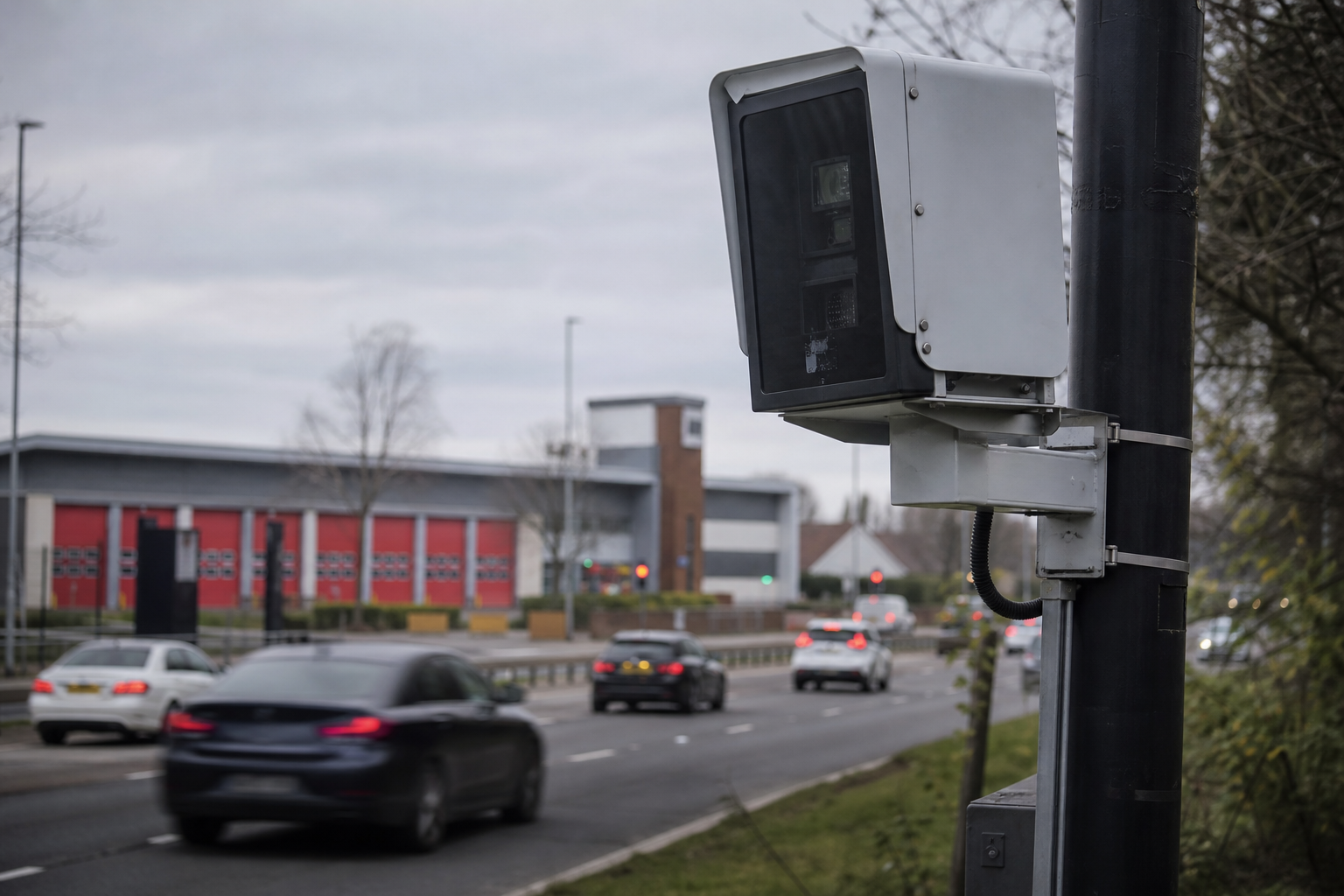
An artificial intelligence camera trial in the West Midlands flagged 18,995 potential mobile phone and seatbelt offences in two weeks, prompting calls for authorities to act on the findings.
The trial took place outside fire stations in Birmingham and Wolverhampton in March, with technology supplied by road safety company Acusensus. Initial scans at Ladywood fire station identified 11,045 potential seatbelt offences and 1,163 potential mobile phone offences. At Fallings Park, the corresponding figures were 6,030 and 757.
Acusensus UK general manager Geoff Collins said the results showed that dangerous driving behaviour continued to be widespread.
“Trial after trial tells the same story: people are continuing to ignore the law on using mobile phones at the wheel and wearing seatbelts,” he said. “These results provide yet more evidence that this is a real road safety problem which demands serious attention.”
Human review used to validate detections
Images highlighted during the exercise included a front-seat passenger carrying a small child on their lap without a seatbelt, and a driver holding a phone with both hands while looking at the screen.
Thousands of detections were checked by UK-based human reviewers. No enforcement action followed, as the trial was intended to help authorities assess the potential scale of the problem.
The work was funded by the West Midlands Combined Authority in collaboration with police and fire services. Its findings are now being evaluated as part of consideration of how the technology could support future police enforcement.
Collins said technology could help officers identify potential offences at a scale that would be difficult to achieve through conventional patrols, but argued that human review should remain part of the process.
“Detecting the problem is only the beginning,” he said. “We need to use that knowledge to support education and effective enforcement, so that putting the phone away and fastening a seatbelt become habits on every journey.”
Future enforcement under consideration
West Midlands Mayor Richard Parker has pledged to use available resources, including new technology, to improve road safety across the region.
Police and Crime Commissioner Simon Foster said the partnership was considering how AI cameras could be deployed for future enforcement.
Collins said the success of any intervention should be measured by whether fewer people take such risks and fewer families suffer the consequences.