

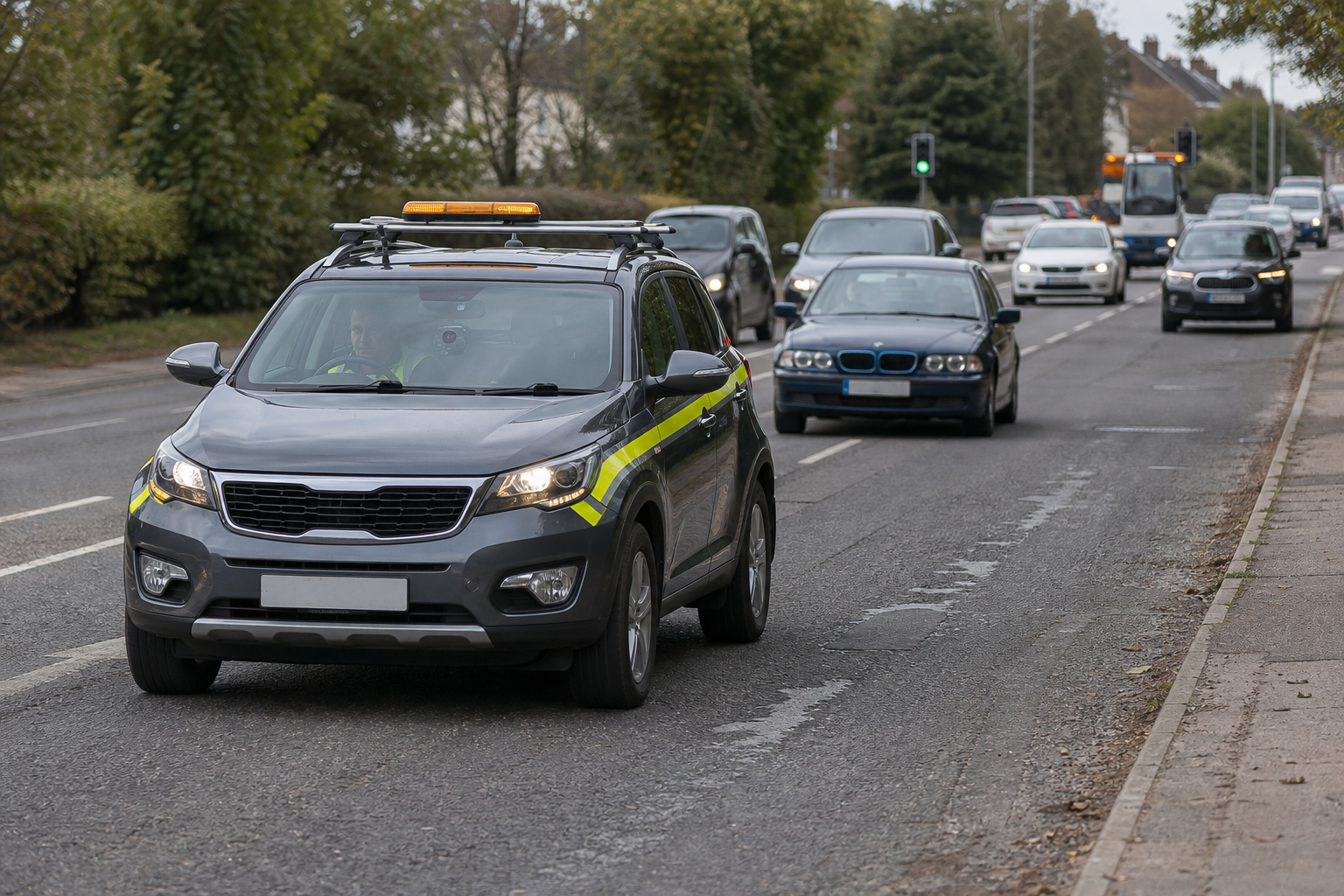
West Sussex County Council is planning a multi-year trial of artificial intelligence cameras in eight highway inspection vehicles, in an effort to reduce the need for inspectors to stop on busy roads.
The dashboard-mounted cameras will identify potholes, cracking, surface deterioration and faded road markings as the vehicles travel their inspection routes. The detected defects will be uploaded to the council’s Confirm asset management system, where inspectors will review and validate the findings.
Trial to test inspection efficiency and safety
Inspectors currently identify defects while driving, then stop to photograph and record each issue manually. The council says this process is time-consuming and can require vehicles to stop on busy roads.
Under the proposed approach, automated data collection would allow inspectors to spend more time surveying the network and supporting other operational work, while reducing administrative activity.
The council will assess the technology against several measures, including the number of miles inspected per shift, the speed of reporting, the frequency of repeat visits and inspector safety. It will also review potential environmental benefits, such as fewer unnecessary journeys and lower fuel use.
Part of wider roads programme
Cllr Erika Woodhurst-Trueman, West Sussex County Council’s Cabinet Member for Highways and Transport, said the trial formed part of the authority’s wider Better Roads commitment.
“Alongside investment in repairs and resurfacing, we’re exploring how new technology could help us work smarter, improve the information we collect and encourage more consistent and informed decision-making across our highways network.”
The council says successful deployment could improve inspection coverage and consistency and support more proactive maintenance. The trial will be reviewed regularly.
The authority has not disclosed the technology supplier, cost, start date or the precise duration of the trial beyond describing it as multi-year. A key practical test will be whether validating camera-generated findings takes less time than recording defects manually.